Commencement Ceremonies

Commencement Ceremonies

Commencement Ceremonies
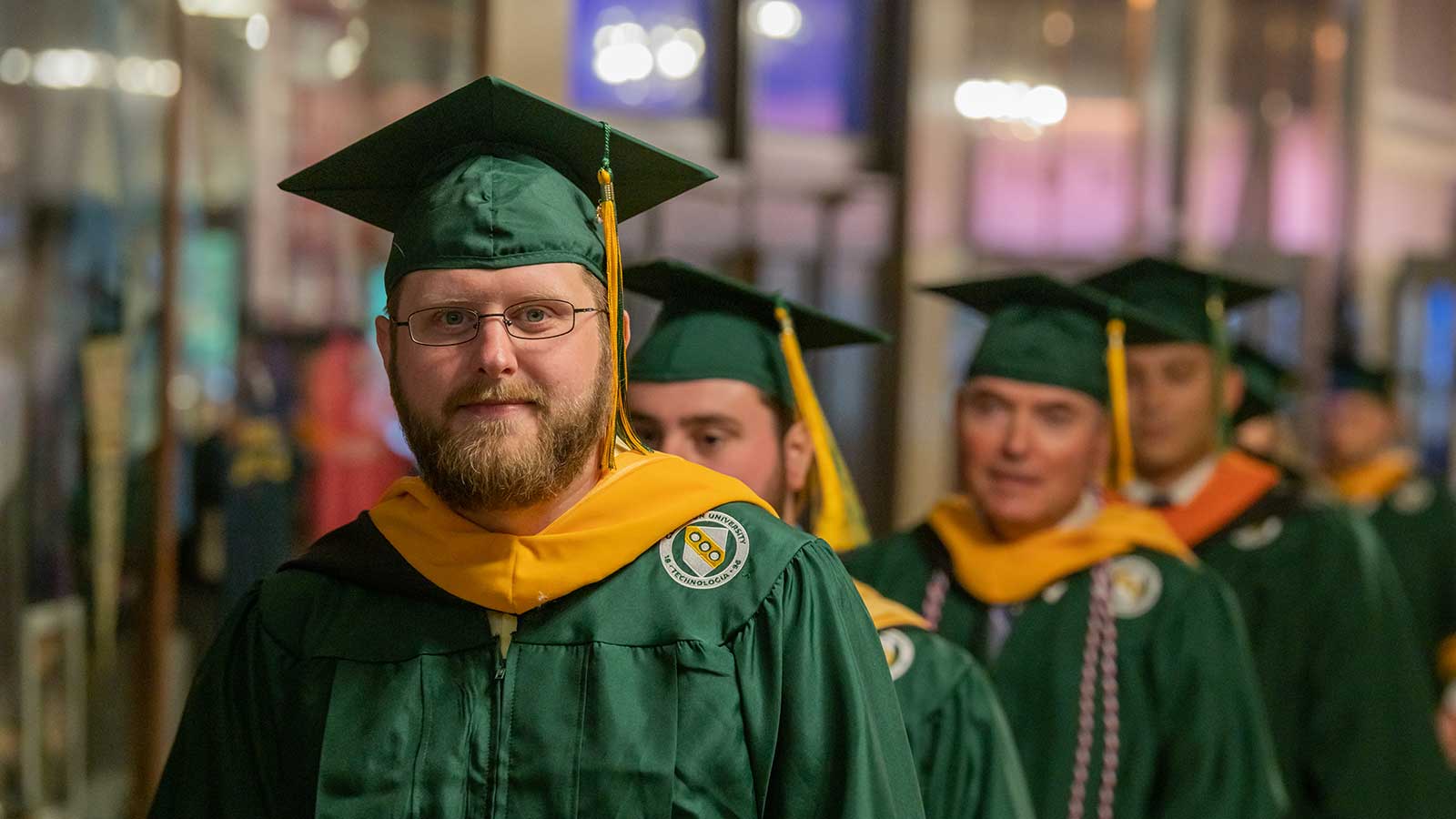
Clarkson University hosts several Commencement ceremonies per year. Eligible students are welcome to participate in ONE ceremony.

General Commencement Information:

  • Students will be sent information from Student Achievement Services (SAS) when they become eligible to graduate at one or more of the ceremonies.
  • Students are required to wear academic regalia at all Commencement ceremonies. Information on purchasing regalia will become available on each Commencement website.
  • At all ceremonies, graduates do NOT receive their diploma. Diplomas are mailed after the Commencement ceremony that the graduate participates in and successful completion of degree requirements.
  • For more information on each ceremony, please follow the links listed above.

For questions/information regarding your status to graduate, contact: 315-268-6451 | commencement@clarkson.edu

For questions regarding event logistics, contact: univevents@clarkson.edu

Clarkson Livestream Link

December Recognition Ceremony

Location: Potsdam, N.Y.
Eligible Degrees: Bachelor's, Master's and Doctoral

This ceremony takes place at the Schuler Indoor Recreation Center on Clarkson University's Potsdam campus at 11 a.m. It is open to eligible students in bachelor's, master's and Ph.D. programs. There is an 8 ticket limit for each graduate. This ceremony typically lasts approximately one hour with a celebratory reception before the ceremony for graduates and families in the same building.

More Information about the December Recognition Ceremony

Commencement Ceremony for Master's & Doctoral Degrees

Location: Potsdam, N.Y.
Eligible Degrees: Master's and Doctoral

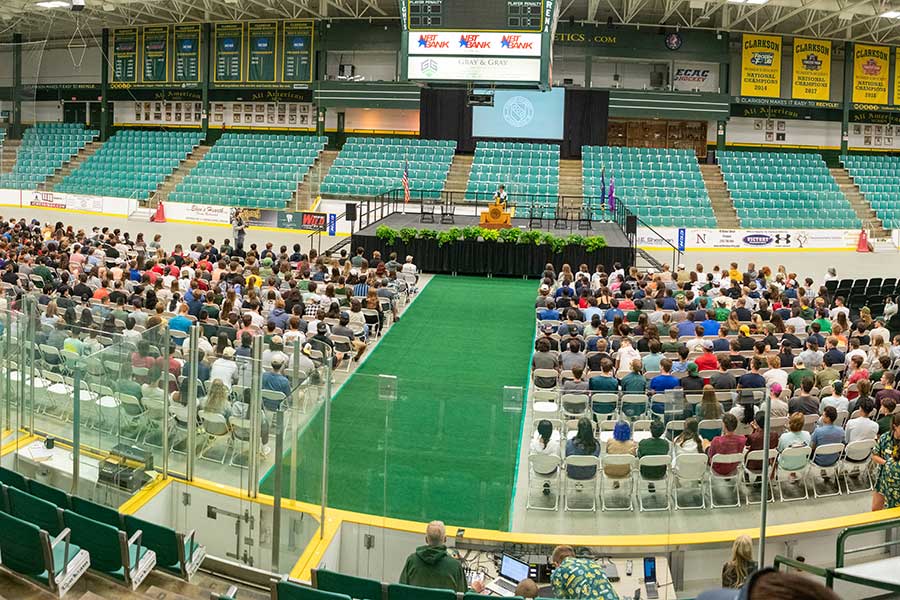
This ceremony takes place at Cheel Campus Center in Cheel Arena on Clarkson University's Potsdam campus at 6 p.m. It is open to eligible students in master's and Ph.D. programs only. There is no ticket requirement. This ceremony typically lasts approximately one hour and a celebratory reception follows.

More Information about the May Master's & Doctoral Ceremony

Commencement Ceremony for Bachelor's Degrees

Location: Potsdam, N.Y.
Eligible Degrees: Bachelor's

This ceremony takes place at Cheel Campus Center in Cheel Arena on Clarkson University's Potsdam campus. It is open to eligible students in bachelor's programs only. There is a SIX (6) ticket limit for each graduate, and all graduates must request tickets using myCU, students will receive notification when this form is available. Cheel Arena is at maximum capacity for this event. Ticket locations are assigned at random. This ceremony typically lasts approximately two and a half (2.5) hours. A celebratory reception is hosted directly following the ceremony.

More Information about the Undergraduate Commencement Ceremony
The Center for Rehabilitation Engineering, Science & Technology (CREST)

Center for Rehabilitation Engineering, Science & Technology (CREST)

Center for Rehabilitation Engineering, Science & Technology (CREST)

A Synergistic Approach

The Center for Rehabilitation Engineering, Science and Technology (CREST) educates, mentors and trains students to integrate and apply a combined scientific, analytical, technological and business approach to emerging biomedical engineering and biomedical science areas.

CREST is one of the five distinct yet related priority research and programmatic expansions funded by a $30 million grant — one of the largest gifts in the history of Clarkson University — from the Wallace H. Coulter Foundation.

We specialize in:

  • A balanced academic exposure to the medical, social and psychological aspects of disability and its remediation.
  • Current knowledge about the pathophysiology of disability and new research tools.
  • Analytical processes to model the impairment and its functional limitations.
  • The design and development of acceptable augmentation or replacement devices, strategies or concepts.
  • Real-world design, provisioning, marketing of and training in the use, psychology and sociology of such devices.

Contact Us

The Center for Rehabilitation Engineering, Science & Technology (CREST)

125 CAMP Building
Box 5720

Phone: 315-268-6528

Email: crest@clarkson.edu

I'm grateful for many things during my time at Clarkson, but the CREST lab is undoubtedly at the top of that list. I had taken many research and undergrad lab courses; however, the CREST lab allowed me to apply my engineering knowledge to investigate and solve complex biomedical problems. CREST connected the dots between many of my previous classes and taught me how to implement the short- and long-term goals needed to complete high-level research studies.

Austin Marshall '20 BS in Biochemistry, PhD candidate in Bioscience and Biotechnology

Research Focus

CREST's focus is spread across the Coulter School of Engineering and Applied Sciences and the Lewis School of Health Sciences.

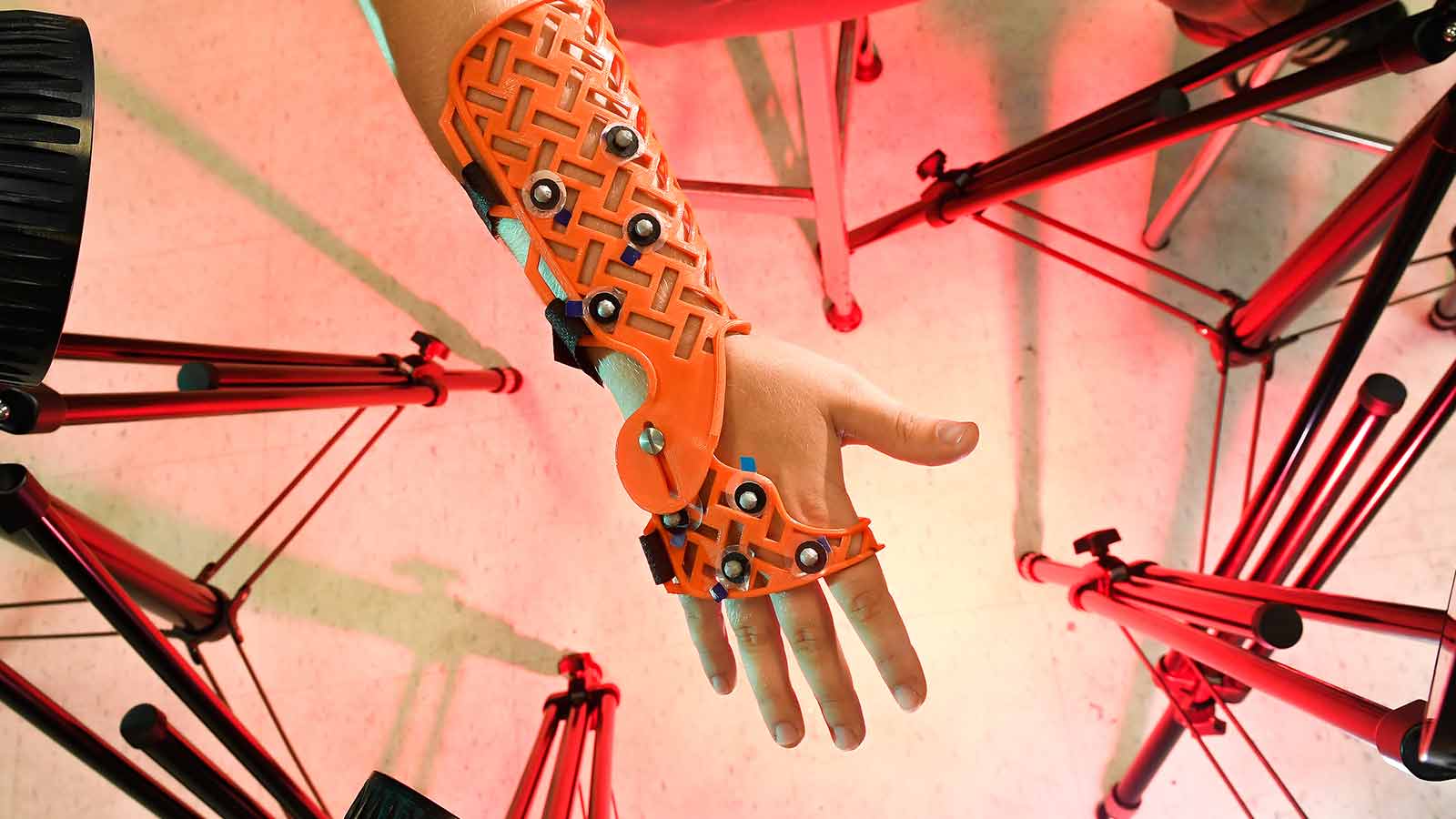
Stone working on research

Current Areas of Research

Areas of research include:

  • Neural engineering
  • Biomolecular engineering
  • Biosensors
  • Biosignal processing
  • Computational biology
  • Biomaterials
  • Bioinformatics
  • Biometrics
  • Bio-entrepreneurship
  • Tissue Engineering and Regenerative Medicine
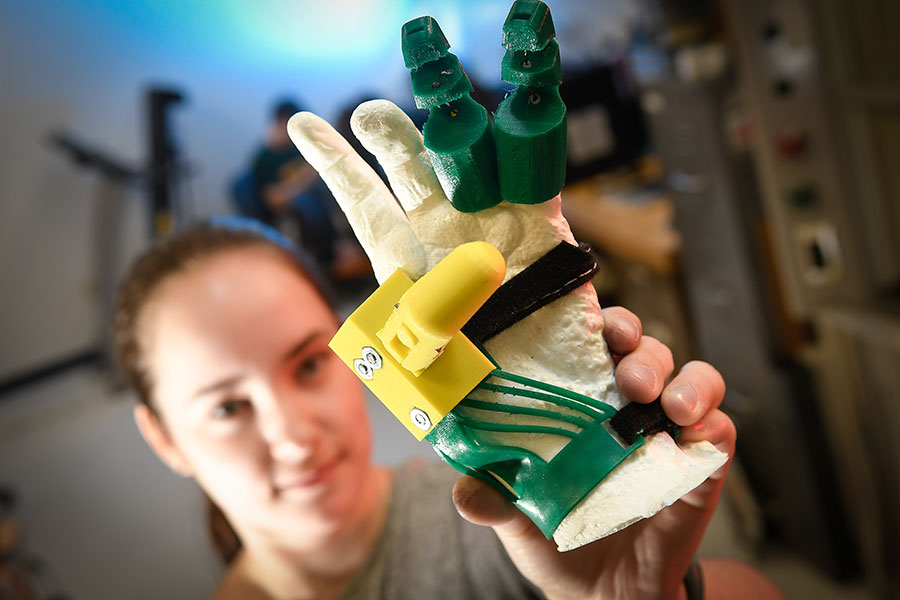
Student with a printed prosthetic

Rehabilitation Engineering

Rehabilitation engineering spans the entire engineering and research spectrum:

  • From basic science to mathematical models and sophisticated simulations/analyses.
  • From device design to clinical trials.
  • From mechanical, electrical, industrial and materials engineering to industrial design.
  • From measurement theory to human factors and quality control.
  • From clinical practice to the socioeconomic worth of technology.
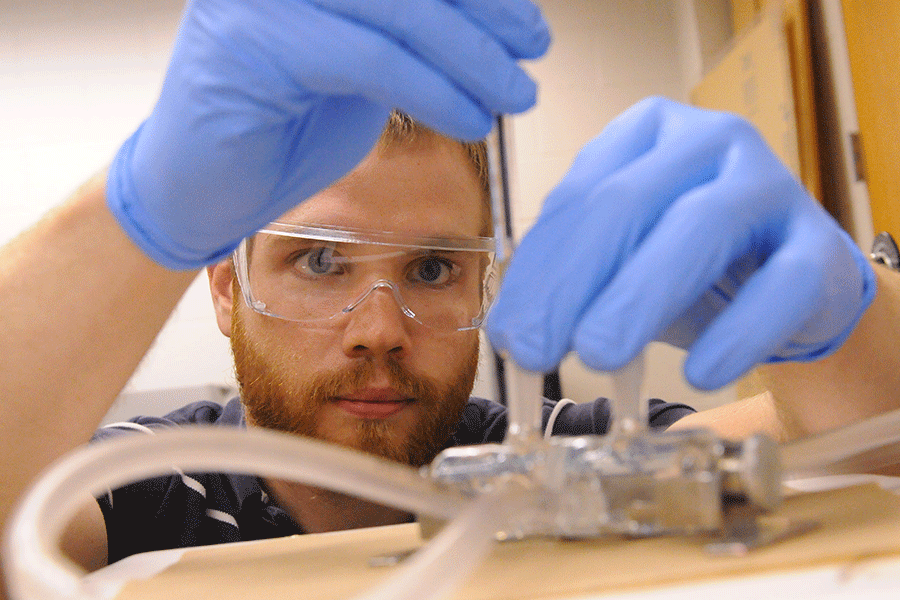
Student working in the biomolecular lab

Biomedical Engineering, Biomedical Science and Bio-Entrepreneurship

Our biomedical engineering/biomedical science focus leads to a unique and synergistic approach, especially when entrepreneurship is added as a key ingredient.

  • We focus on current science, engineering, technology and the marketplace.
  • Students at Clarkson receive sought-after cross-disciplinary training.
  • CREST is a university-wide endeavor, crossing the purview of all the major schools and centers.
  • Bio-entrepreneurship partners engineering senior design capstone courses with the Reh School of Business.

My most defining experience at Clarkson has been my engagement in the labs. I was given the opportunity to both participate in and lead research that furthered my understanding of my chosen topics. I was able to get hands-on project design exposure to real-world problems in both my graduate and undergraduate careers. Not only did this educate me, it also allowed me to directly contribute to my field of interest.

Camilla Ketola '21, BS in Biology, BS in Computer Engineering MS Candidate in Electrical Engineering

Center for Air and Aquatic Resources Engineering & Sciences (CAARES)

Center for Air and Aquatic Resources Engineering and Sciences (CAARES)

Center for Air and Aquatic Resources Engineering and Sciences (CAARES)

Addressing Complex Environmental Challenges

The Center for Air and Aquatic Resources Engineering and Science (CAARES) at Clarkson University is a state-of-the-art analytical instrumentation facility capable of performing trace level organic contaminant analyses. 

The facility houses numerous chromatography-mass spectrometry-based instrumentation capable of analyzing both polar and non-polar organic contaminants. CAARES has modernized legacy pollutant measurements by developing efficient sample processing and analysis procedures.  

CAARES has also developed non-targeted analysis (NTA) techniques with the use of state-of-the-art systems such as GCxGC-HRMS as well as the development of in-house data mining software tools. CAARES is also a leader in the analysis of PFAS and is a DoD-ELAP and New York State certified laboratory for EPA Method 1633. CAARES operates as a core facility providing research support for both internal and external researchers.

Current and Recent Research

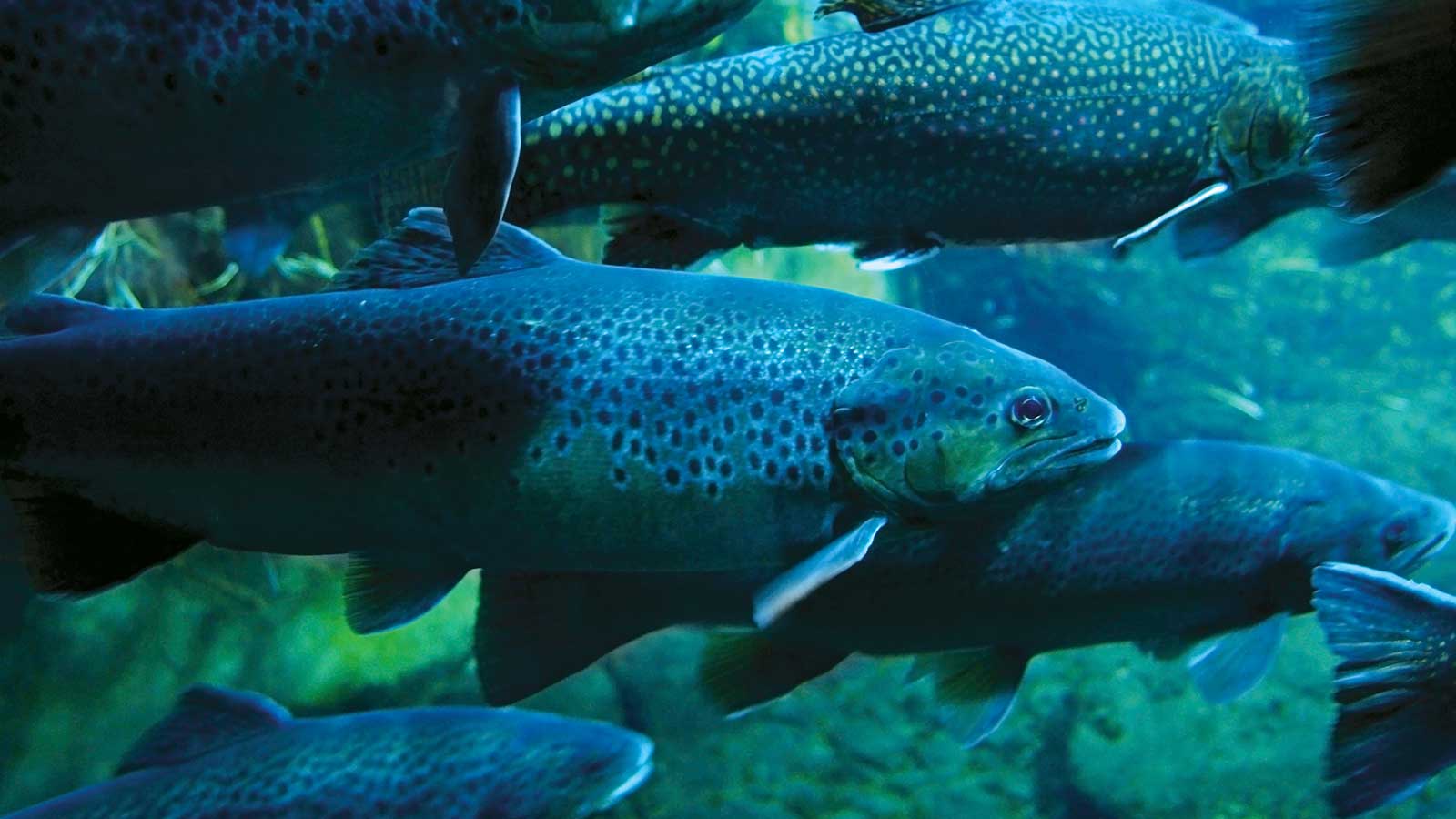
Great Lakes Fish Monitoring and Surveillance Program

This program is the revision of a program started in the 1970’s with the objective of monitoring fish contaminants in the Great Lakes. In this program, the sampling has been simplified, and additional emphasis has been placed on identifying emerging contaminants that may pose a risk to the Great Lakes. Clarkson has operated this program since 2005, and we have modernized legacy pollutant measurements by developing efficient sample processing and analysis procedures. Some of the legacy pollutants analyzed include PCBs, PBDEs, and dioxins/furans whereas emerging contaminants include PFAS, hexabromocyclododecane (HBCDD) and chlorinated paraffins (Cl-Pars). CAARES has also developed non-targeted analysis (NTA) techniques to further enhance the program with the use of state-of-the-art systems such as GCxGC-HRMS as well as the development of in-house high-resolution MS data mining software tools. We have also enhanced the program by developing working relationships with laboratories from other federal agencies, states and countries.

Toxic Chemical Signatures in Eastern National Parks Sports Fish

The National Parks represent some of the most pristine and protected landscapes in the     United States; however, they are not immune to the impacts of anthropogenic contaminants. CAARES has been collaborating with the National Park Service to assess the occurrence and impacts of both legacy contaminants, such as polychlorinated biphenyls (PCBs) and pesticides, emerging contaminants such as per- and polyfluoroalkyl substances (PFAS), and novel contaminants in sport fish from Eastern National Parks.

Impact of PFAS on the marine food webs in a New England estuary

 CAARES has been collaborating with researchers from Dartmouth college to investigate the pattern and profiles of per-and polyfluoroalkyl substances (PFAS) bioaccumulated in lower trophic level marine organisms and transferred to higher trophic levels in marine food webs and to determine toxicity of less studied PFAS compounds.

Center of Excellence for Healthy Water Solutions

In collaboration with researchers from Clarkson University and SUNY College of Environmental Science and Forestry (SUNY ESF), CAARES continues to provide analytical support for monitoring environmental contaminants, including per- and polyfluoroalkyl substances (PFAS) and microcystins. These efforts focus on monitoring contaminants on water bodies, biota, and avian species, helping to better understand contaminant transport, environmental fate, and potential ecological risks.

1,4-Dioxane in Consumer Products

CAARES has been working with the New York State Department of Environmental Conservation (NYSDEC) for several years to analyze 1,4-dioxane, a potential human carcinogen, in a variety of consumer products. This work supports regulatory efforts to identify sources of exposure, evaluate compliance with state regulations, and protect public health by reducing the presence of this contaminant in products used by consumers.

CAARES supplies analytical services to a variety of customers including faculty from Clarkson, faculty from other universities, environmental consulting firms and start-up companies.

Contact Us

Thomas Holsen, CAARES Director: tholsen@clarkson.edu
Sujan Fernando, CAARES Lab Director: sfernand@clarkson.edu
Ling Zhang, Administrative Assistant: lzhang@clarkson.edu

Phone: 315-268-3851

About CAARES

Learn more about our research center's efforts and collaborations:

DoD-ELAP Accreditation

CAARES currently holds an ISO/IEC 17025:2017 and US Department of Defense Environmental Laboratory Accreditation Program certification for testing of PFAS using EPA Method 1633. CAARES routinely analyzes samples under the QA/QC requirements of this standard to produce high-quality data to support in-house research and external clients.

CAARES Equipment and Facilities

CAARES has analytical facilities that house a number of major instruments, as well as laboratory space specifically designed to support research. The analytical instrumentation is capable of analyzing for polar and non-polar organics along with metals and elements. The major types of instruments include liquid chromatography-mass spectrometry (LC-MS), Gas Chromatography-Mass Spectrometry (GC-MS, inductively coupled plasma-mass spectrometry (ICP-MS) and Ion Chromatography (IC)/Combustible Ion Chromatography (CIC) systems.

Capabilities

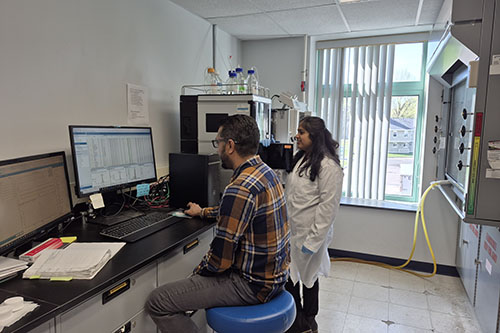
A Thermo Vanquish UPLC coupled to an Altis Triple Quadrupole Mass Spectrometer is available for targeted analysis of polar organic compounds in ESI or APCI modes. Instrument is typically used in Multiple Reaction Monitoring (MRM) mode for targeted analysis of polar organic contaminants including PFAS.

Image
Two researchers collaborating in a laboratory, with one sitting at a computer workstation and another standing in a white lab coat reviewing data on the monitor.

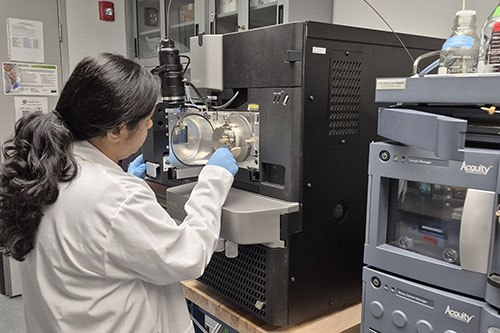
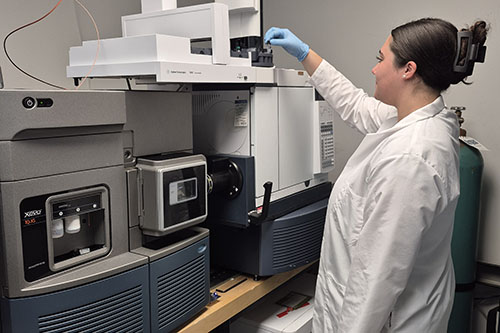
A Waters Xevo Absolute Triple Quadrupole LC-MS system is available for the targeted analysis of polar organic contaminants including PFAS.

Image
A researcher wearing a white lab coat and blue gloves adjusts the open ion source chamber of a large mass spectrometer in a university laboratory.

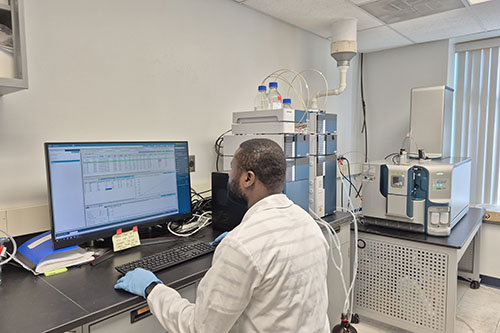
A Sciex X500B Quadrupole Time-of-Flight (QToF) High Resolution Mass Spectrometry is available for accurate mass measurement (>20,000 res). The instrument can be used for both small (contaminants, metabolites) and large (polymers, proteins) molecule analysis.

Image
A researcher wearing a white lab coat and blue gloves sits at a computer workstation, analyzing data next to a liquid chromatography mass spectrometry setup in a laboratory.

Single and Tandem Mass Spectrometry

Image
A researcher wearing a white lab coat and blue gloves places a sample vial into the autosampler tray of a high-performance liquid chromatography mass spectrometer in a lab.

An Agilent 7890GC coupled to a 5977A MSD (single quadruple) is available for targeted analysis of volatile compounds. This instrument can be used coupled to a liquid injector or to a headspace sampler. A Waters Xevo TQ-XS triple quadrupole system is available for targeted analysis using MRM mode. The instrument is coupled to a GC using an atmospheric pressure chemical ionization source which is a soft ionization technique that creates stable molecular ions compared to traditional electron ionization. Legacy contaminants such as Dioxins/Furans, PCBs, PCNs and OCPs are routinely analyzed using this system.


Two-Dimensional Gas Chromatography-High Resolution Mass Spectrometry (GCxGC-HRMS)

Image
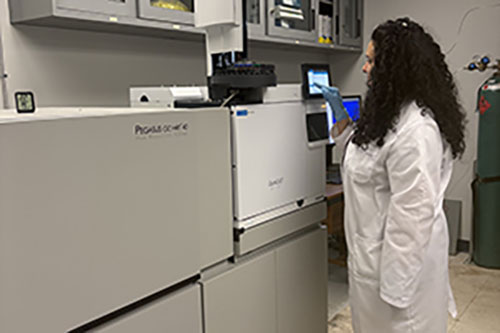
A researcher in a white lab coat and blue gloves operates a touchscreen on a large gas chromatography mass spectrometer instrument in a university laboratory.

A GCxGC-HRMS system (LECO Pegasus GC-HRT + 4D system) is utilized for the non- targeted analysis of volatile contaminants in complex environmental media. This state- of-the-art system combines enhanced chromatographic separation with accurate mass measurement to help identify novel contaminants. The instrument can be operated in both electron ionization and chemical (positive/negative) ionization modes.

Image
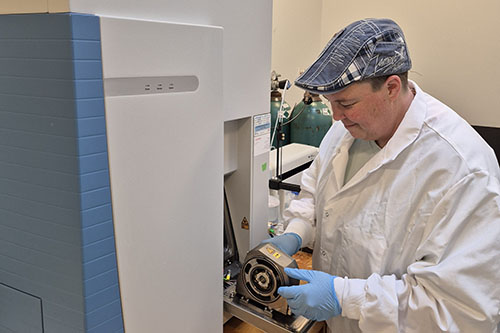
A researcher wearing a flat cap, white lab coat, and blue gloves works on a component of a large analytical mass spectrometer in a university lab.

A Thermo iCAP-RQ ICP-MS system is available for elemental/metals analysis. The instrument can be operated in kinetic energy discrimination (KED) mode to remove interfering polyatomic species. The instrument is used for both environmental and biological sample analysis.

Image
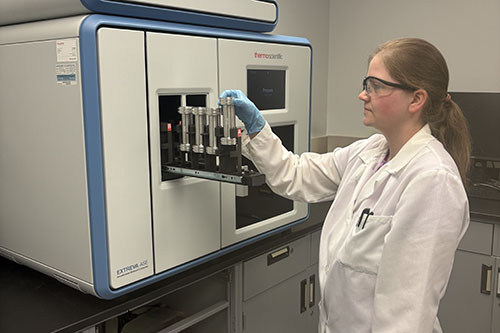
A researcher wearing a white lab coat, safety glasses, and blue gloves adjusts sample cylinders on an automated tray connected to a large analytical instrument in a laboratory.

A Thermo EXTREVA accelerated solvent extraction (ASE) system is available for the extraction of a wide range of samples. This fully automated system can be used for in-cell cleanup and evaporation of extracts. 

Automated SPE systems are available for cleanup of legacy contaminants including PCBs, Pesticides and Dioxins as well as emerging contaminants such as PFAS.


Image
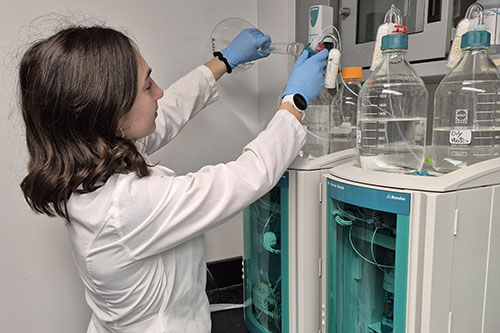
A researcher wearing a white lab coat and blue gloves carefully adjusts glass solvent bottles on top of an ion chromatography system in a university laboratory.

A Thermo Integrion IC is available for the analysis of cations and anions. A CIC from Metrohm is available for Fluorine measurement including extractable organic fluorine (EOF).

A Milestone DMA-80 is available for mercury analysis. Biological samples such as fish tissue and hair are routinely analyzed.

A Shimadzu TOC-L is available for the analysis of total organic carbon. 

A Shimadzu LC-2040C HPLC is available with a photodiode array (PDA) detector. The instrument is used for analysis of polar organic compounds.

Faculty and Staff

Many faculty from different departments collaborate with CAARES. In addition, we work closely with the Institute for a Sustainable Environment, where we also have faculty appointed.

Meet Our Faculty and Staff