Financial Aid
Financial Aid
We're a Best Value College
100%
of Clarkson undergraduate students receive financial aid.
That means that 0% of Clarkson students pay full tuition
Nearly 60%
Of Clarkson students pay less than half of the total cost of attendance.
$41,285
Is the average yearly financial aid award for Clarkson students, compared to a national average of $7,535.
$82,786
Is the average starting salary for Clarkson graduates for the Class of 2025.
25%
Of Clarkson students graduate without debt, and for 80% of graduates, their debt totals less than their starting salary.
96%
University Placement Rate - Class of 2025, within 6 months of graduation in their chosen field
$100M
In scholarships and aid awarded to the Class of 2028
Tuition and costs
Review the total cost of attendance for the upcoming academic year — from tuition and fees to housing, books and other projected expenses — based on how you’ll attend Clarkson.
Net Price Calculator
If you’re an incoming, first-time undergraduate student, calculate how much a Clarkson education could cost based on last year’s tax return and your academic record.
Scholarships and Other Types of Financial Aid
We’re a community where leaders take shape and ideas progress into innovative concepts. Scholarships and other merit- and need-based awards support your endeavors here and harness your potential to propel you to many different places. Explore all awards available to you.
Undergraduate Students
As an incoming undergraduate, you’re eligible for institutional, federal and state need-based grants as well as several merit-based scholarships and Alumni Connection awards, along with work-study and loans. While submitting your FAFSA® places you into consideration for need-based grants, certain awards may involve a separate application.
Transfer Students
As you start the next segment of your educational journey, Clarkson opens up multiple awards to transfer students, including space in our Honors Program.
Graduate Students
Pay for your education and build your résumé with research and teaching assistantships. Clarkson also extends industrial and government fellowships, stipends, partial-tuition scholarships and corporate partner discounts to graduate students.
International Students
Our hands-on, discovery-fueled programs draw students from all over the globe. We embrace the talents and perspectives our international students bring — and we also reward them with merit-based scholarships, Honors stipends and assistantships.
The Clarkson School Students
These awards recognize your ambition and outstanding academic record as a high school student getting an early start on college — with many carrying over once you choose Clarkson University for your bachelor’s degree program.
Military and Veterans
You’ve dedicated your service to our country, and now, we dedicate ourselves to your next adventure. Understand how to apply the benefits you’ve earned toward a Clarkson education, from the Yellow Ribbon and Tuition Assistance programs to ROTC and Air Force
scholarships.
Grants and Outside Scholarships
“What’s the difference between a scholarship and a grant — and what other options do I have to pay for my education?” Our resources break down the details and point you toward additional funding.
Loans
Beyond your awards, loans help you finance your studies but need to be paid back with interest. While our institution has low default rates compared to other schools (1.6% versus a 10.1% average), you’re advised to thoroughly review this funding source, including terms and other factors, before you approve your aid package.
The Presidential Fellowship
Open to incoming first-year, international and Clarkson School students, this merit-based award covers all tuition costs over eight semesters for five first-time students.
I decided to attend Clarkson because, as a Higher Education Opportunity Program (HEOP) student, I have amazing aid. I figured if I was getting this much financial aid, why wouldn’t I accept? I wanted to leave for college. I didn't want to stay in the city, so with my aid, I was able to go away for college like I wanted.
Adriana Gonzalez '26
Solinsky Engineers Program
Up to 100 first-year engineering students each receive $5,000 per year for all four years they attend Clarkson. Along with this scholarship, participants have access to networking opportunities, mentorship, research projects and company visits and can get a head start on their master’s.
How to Apply for Aid
The first step to receiving financial support is submitting the FAFSA®. Whether you’re applying as a first-year, transfer or graduate student, are incoming or are continuing your education, completing this form allows us to accurately select awards in line with your background. Get a step-by-step overview of this process, or review our FAQs for additional information.
Key Undergraduate Financial Aid Deadlines
December 1
Early Decision deadline for scholarships and the FAFSA® for the Fall semester.
Transfer student FAFSA® deadline for the Spring semester.
February 1
First-year student FAFSA® deadline for need-based aid.
Last day to submit recommendations for the Holcroft Alumni Recognition Awards.
February 1
Deadline to submit the Presidential Fellowship application.
April 15
Transfer student FAFSA® deadline for the Fall semester.
"I chose Clarkson University not only for the education but also for the good mentorship from truly distinguished professors and the opportunity to meet students who are equally driven and motivated. Clarkson's network of people is one of the motivating factors in my decision to attend Clarkson."
Bizimana Valesi '25
Have Questions About Financial Aid?
The Clarkson’s Office of Financial Aid and Student Achievement Services (SAS) are ready to help. Here’s how you can contact us.
Office of Financial Aid
Phone: 315-268-6413
Email: finaidletters@clarkson.edu
CU Outing Club (CUOC)
CU Outing Club (CUOC)
About CUOC
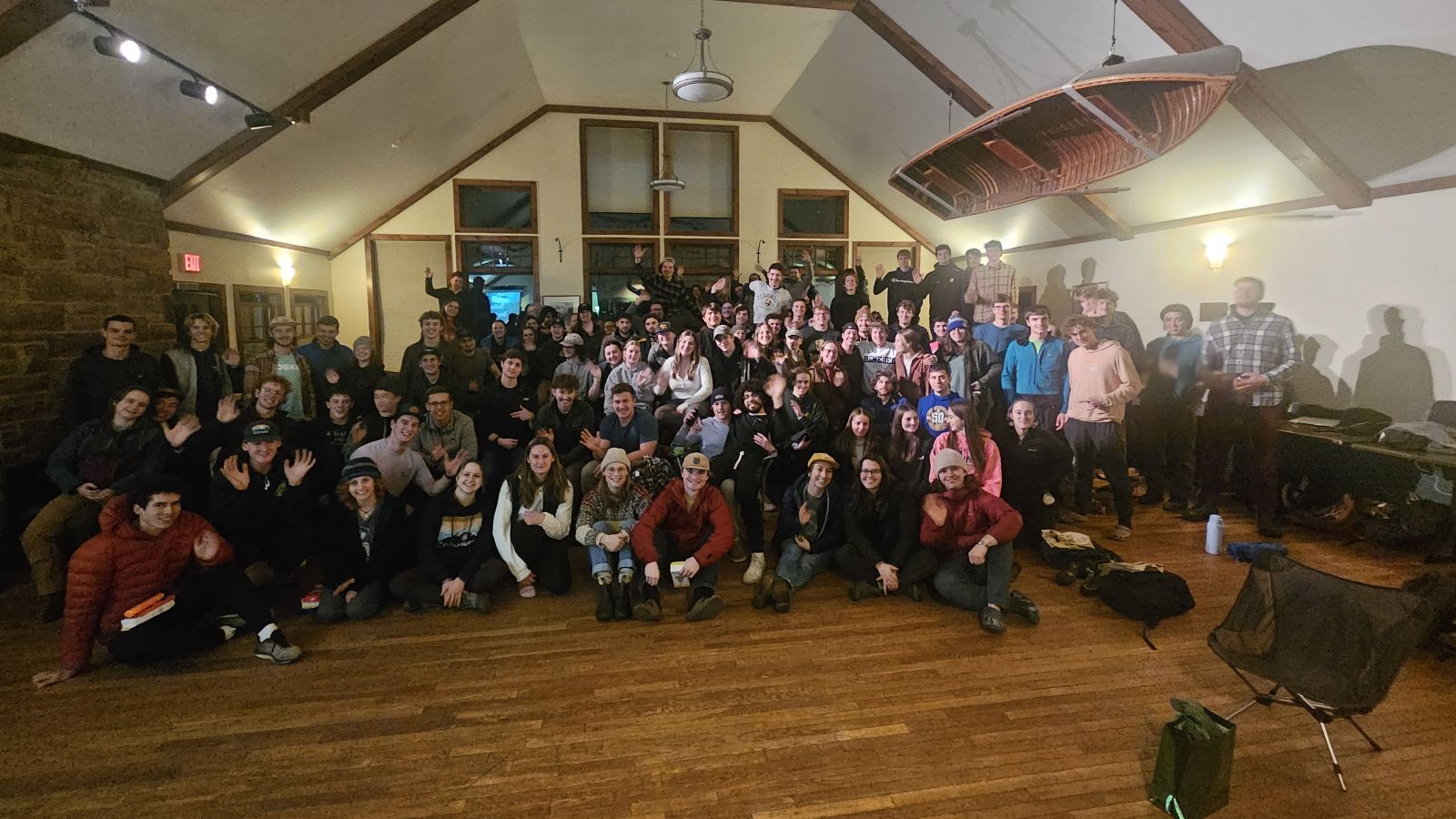
We love summiting mountains, scaling rock faces and soaring down river rapids. We foster a supportive community for all outdoor enthusiasts on campus — whether you prefer to lounge in a hammock or plan a weekend backpacking excursion. Our group schedules trips throughout the year, supplying you with the essentials to do what you love or try new things. See what we’re up to, or stop by one of our Wednesday 8 p.m. meetings in the ADK Lodge.
CUOC is working to make the outdoors accessible to everyone. CUOC provides gear and safety equipment needed to participate in outdoor activities, reimburses gas for travel, funds safety training and certifications and provides education from previous experiences. Introductory trips are organized and facilitated by students weekly to provide ample opportunities to get outside and learn. CUOC strives to create an outdoor community focused on promoting safe and responsible use of the outdoors. We are a student-run community that allows members the equipment and training for a broad range of outdoor activities.
What We Do
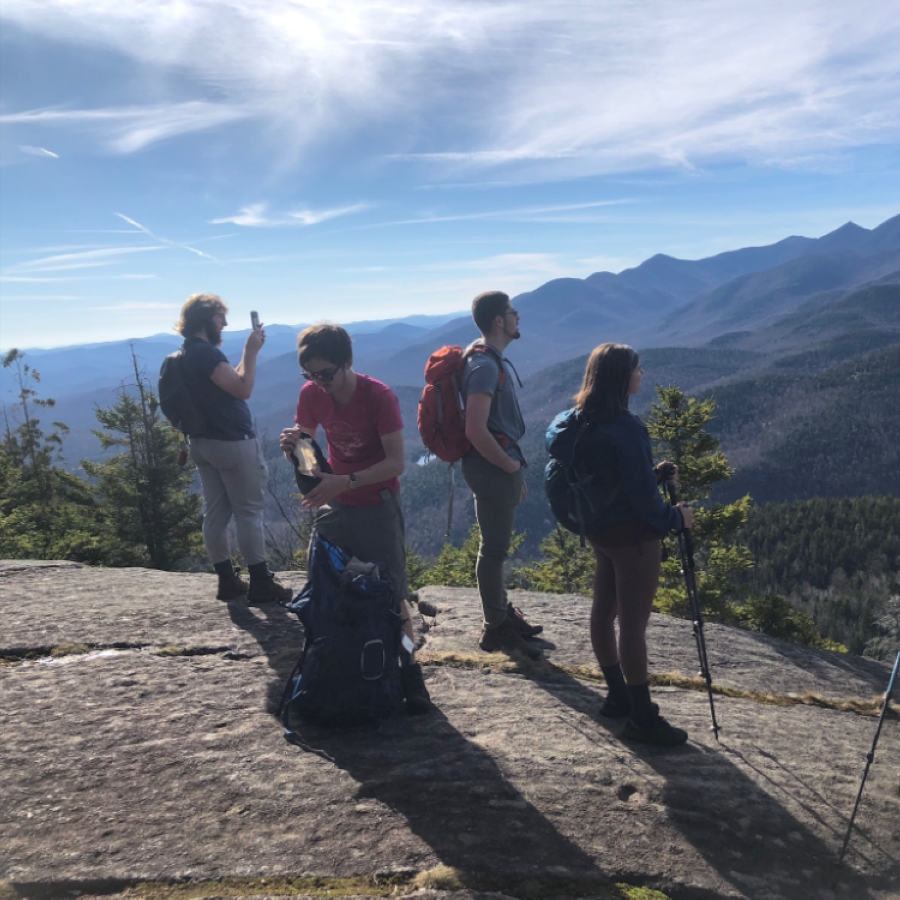
Whether you’re a casual hiker, an avid kayaker, a mountain biker, or an avid skier, the Clarkson University Outing Club (CUOC) welcomes you and serves as your all-encompassing introduction to our region’s outdoor activities.
Activities
- First Aid
- 46 Climbs
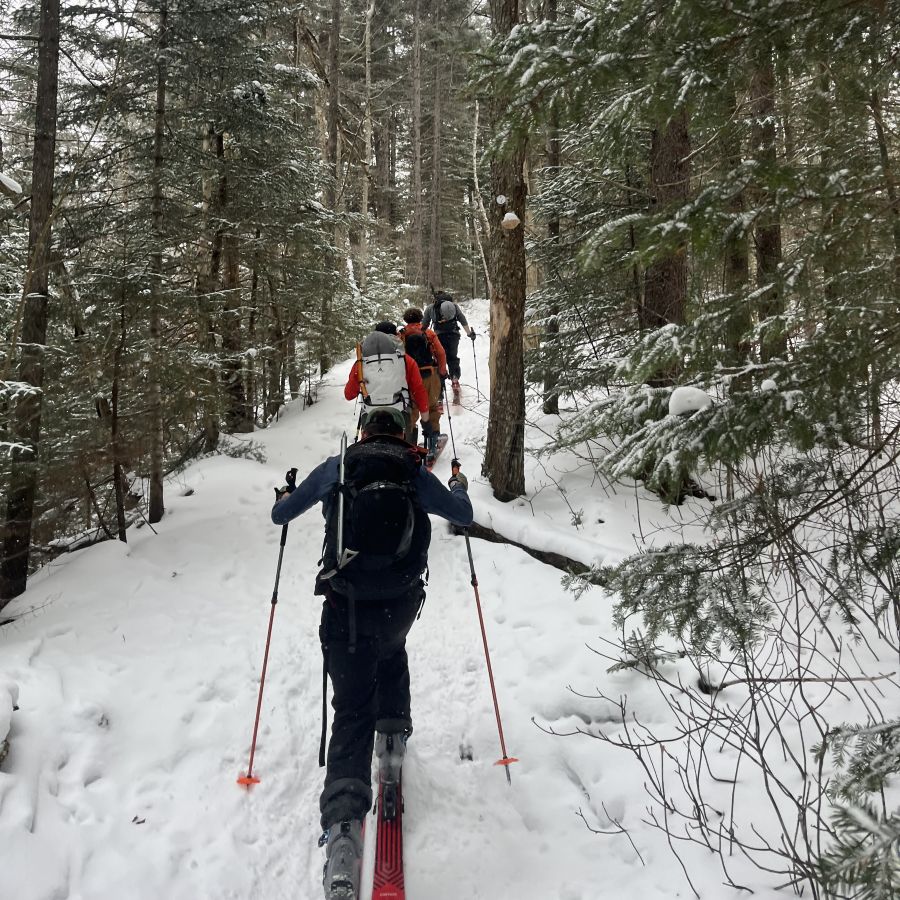
- Backcountry Skiing
- Canoeing
- Caving
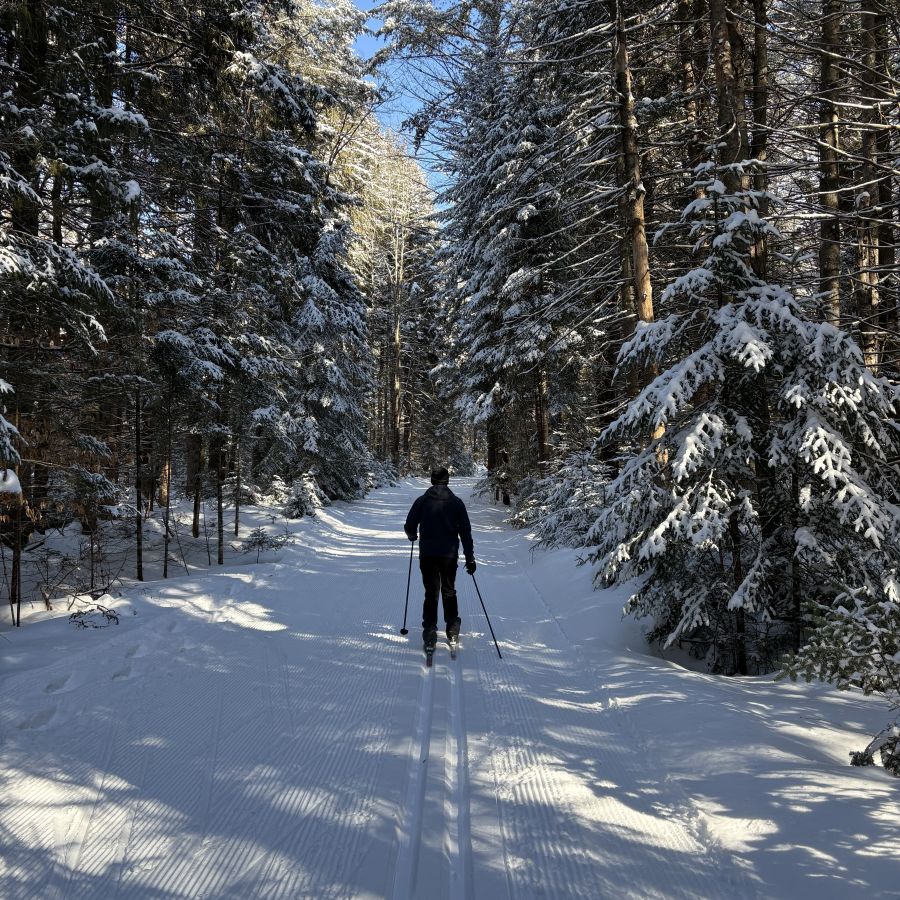
- Cross-Country Skiing
- Fishing
- Forest Management
- Hiking
- Mountain Biking
- Service
- Slacklining
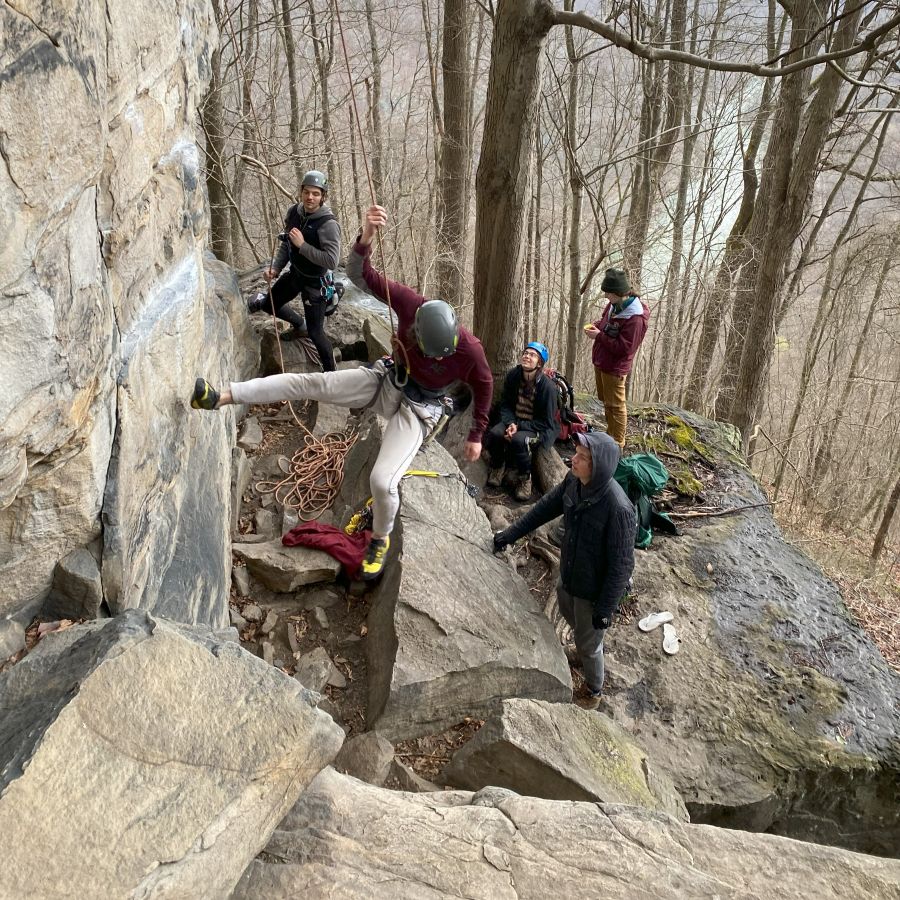
- Rock Climbing
- Whitewater Rafting
Spring Break Trips
We send members all over for spring break trips, including but not limited to:
- Climbing at the Red River Gorge, KY
- Mountain Biking at Pisgah National Forest, NC
- Backcountry Skiing in the Chic-Choc Mountains, Quebec
- Caving in Bloomington, IN
- Hiking in Shenandoah National Park, VA
Events
Pre-Orientation Trips
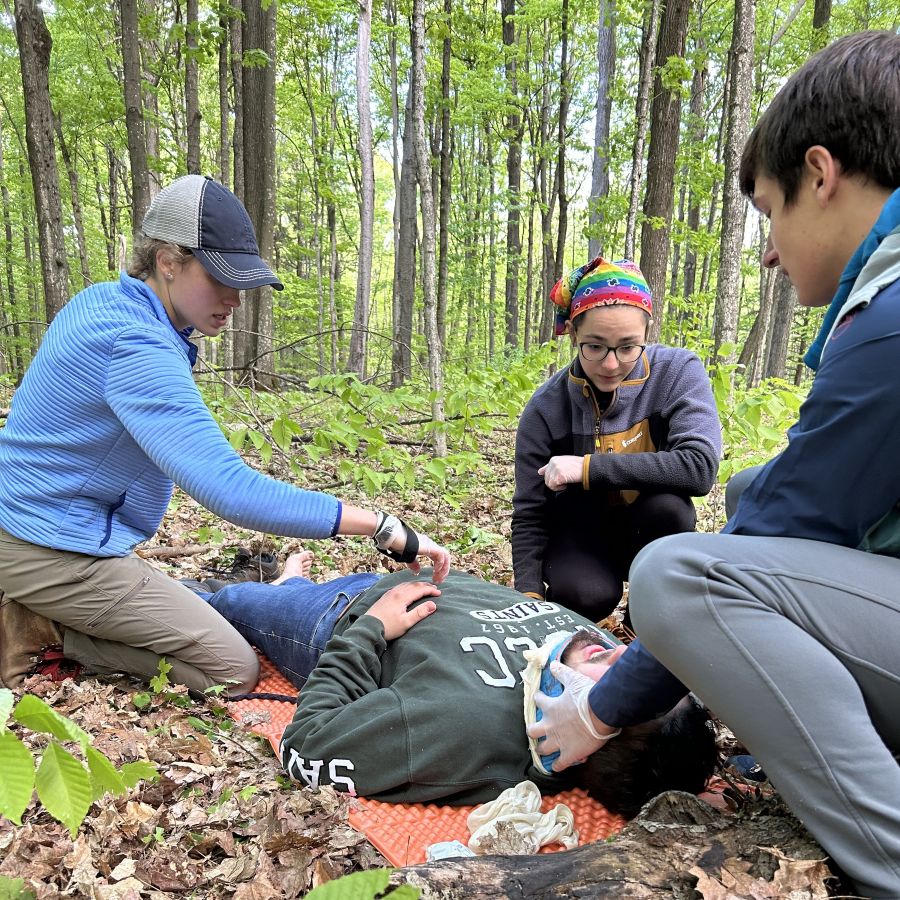
Venture into the Adirondack Wilderness for four days and three nights under the guidance of upperclass students who have received wilderness first aid, wilderness first responder and NOLS leadership training. Explore itineraries based on varying degrees of difficulty for incoming first-year and transfer students. This is a great way to meet upperclassmen, other classmates, and explore the Adirondacks.
46Climbs
The fundraising event started by a pair of Clarkson students in 2014 for the American Foundation for Suicide Prevention encourages you to climb at least one mountain from the Friday before Labor Day through National Suicide Prevention Week. Learn More about 46Climbs.
Canoefest
Join the Outing Club on the beautiful Raquette River, right on campus, and compete in canoe races and competitions for awesome prizes on a beautiful Fall weekend day!
Winterfest
Join the Outing Club at Seven Springs, a retired 200-vertical-foot retired ski resort 20 minutes from campus for skiing, snowboarding, snowman building, and other winter celebrations. With music, games, and prizes, this is one of the best winter events of the year!
Get Outdoors with CUOC!
First Aid
Hiking and Forest Management
Additionally, the forest management chair of CUOC serves as the student liaison, responsible for overseeing the Clarkson Woods, also known as the Back 40. This position involves coordinating with the Institute for a Sustainable Environment (ISE) to organize freshman service projects at the beginning of the year focused on improving commonly used trails and fire pits in the Back 40. Maintaining the Back 40 on campus is an important part of giving back to our community.
XC Skiing
Cross-country skiing is a fun, full-body winter workout that lets you glide through and explore the woods. There’s multiple styles: classic skiing, skate-like motion of skate skiing, or backcountry which can go anywhere in the woods (no trail needed!). It is a great way to explore the outdoors, build endurance, and enjoy winter to the fullest!
XC on campus
- Munter
- Back 40
XC near campus
Backcountry Skiing
Backcountry skiing is one of the best ways to enjoy the outdoors in the winter. When ski resorts get busy and crowded and you hate waiting in lift lines, backcountry is the way to go! We have a fleet of skis with touring-capable bindings and skins, both alpine and telemark, that you can take out to ski cooler lines than you ever have before! CUOC’s funds students to receive safety training like AIARE 1, an avalanche education course, to stay safe when enjoying backcountry skiing. After completing the course take out our avalanche rescue gear and ski slides in the Adirondacks or anywhere else in the East!
Climbing
Caving
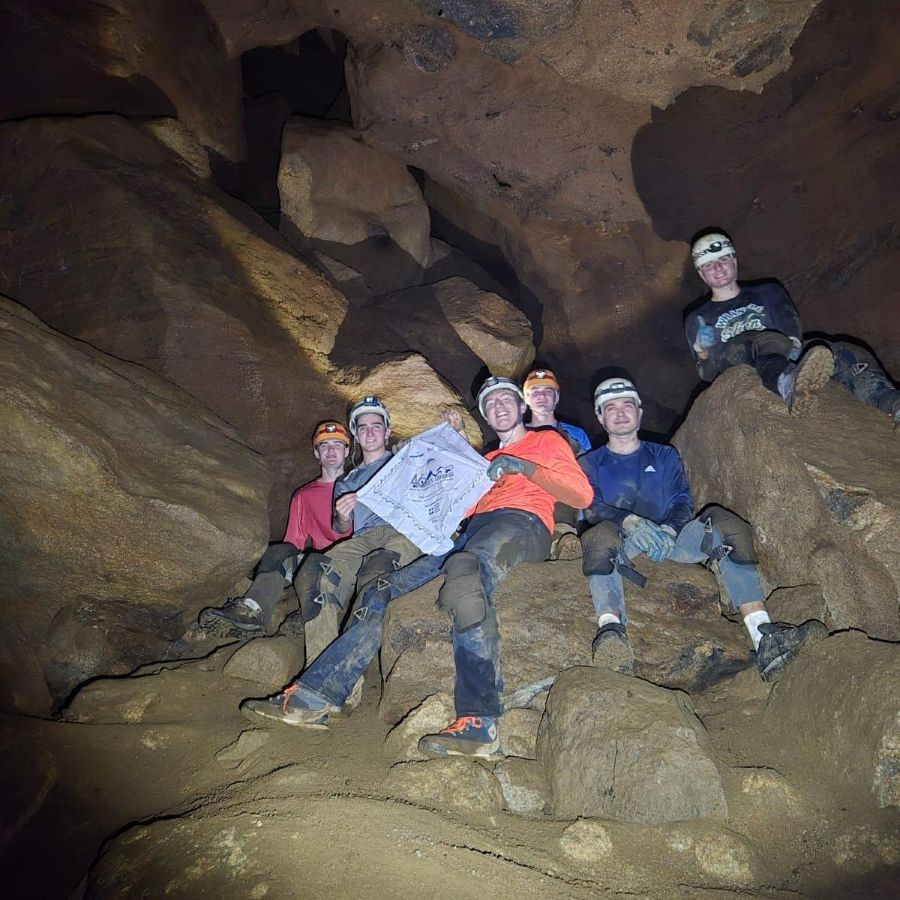
Caving is exploring the cool and awesome caves that we have near and around campus. Whether it’s going to the Adirondacks and exploring the various caves around the Hudson River gorge or bushwhacking to find new and exciting caves, there is always a good time. Caving is accessible to everyone, all you need is a headlamp and a helmet and you can start exploring. CUOC has all the gear you may need, and the knowledge to teach you how. So if you like getting muddy and exploring new places few people in the world have seen, caving is for you!
We have helmets, headlamps, gloves, and knee pads that can be checked out by club members. We also have some gear for vertical caving, including ascenders, descenders and harnesses.
Canoeing and Fishing
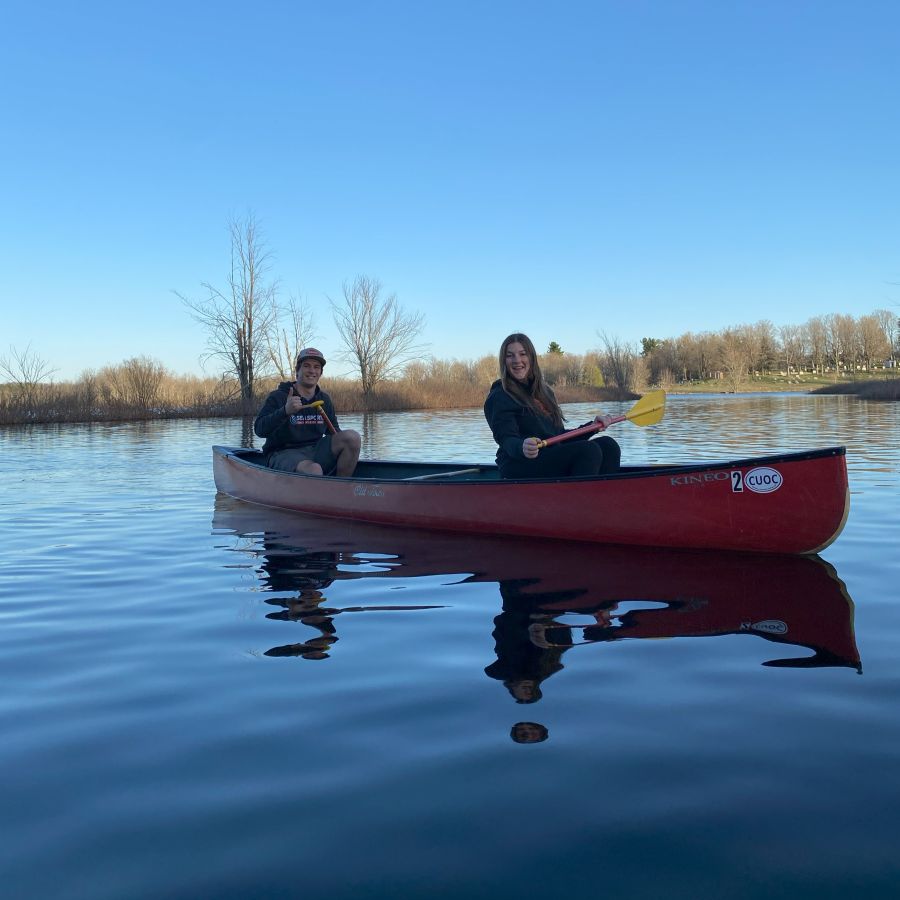
Canoeing is one of the best activities anyone can do. At Clarkson the canoe chairs utilize the boat house to lend out canoes most days during the week so people can paddle after classes. Canoeing is a great way to relax and explore the wonderful Raquette River that runs through Potsdam. We also run trips off campus to the lakes in the Adirondack Park. Canoeing opens up a whole new side of the Adirondacks and nature as a whole.
Additionally, fishing is a relaxing and rewarding way to escape into the great outdoors. Whether you’re casting your line into a tranquil river in the fall, or jigging through the ice in winter, you can experience the adventure and calm of fishing in all seasons of the North Country. Regardless of your skill level, fishing is fun for newbies and master anglers alike. It’s a great way to unwind from the stresses of the day, enjoy beautiful landscapes, and connect with nature. Just get out there and start casting!
A great place to start is the campus boathouse!
Slacklining
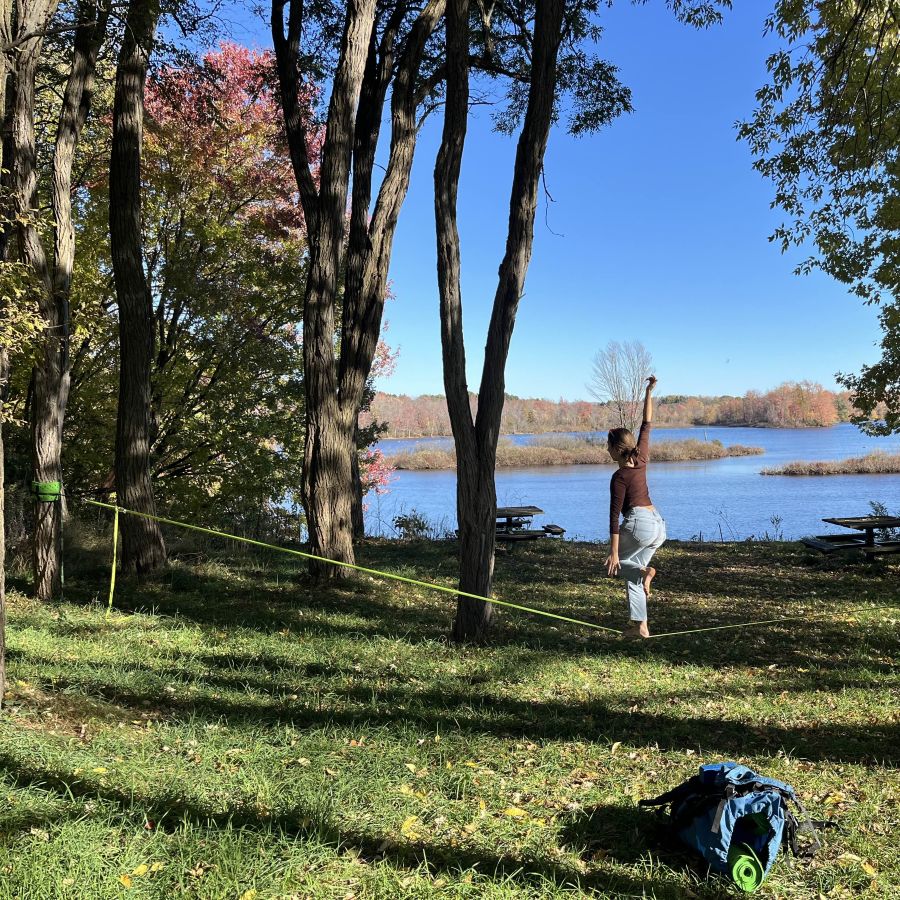
Slacklining is one of the easiest ways to get outside, because all you need is the line (which we have) and two trees! Slacklining is a sport that involves setting up a tensioned line between two hard points, typically trees, you have to stand on the line and balance as you try to walk across, it's relaxing and great fun and a great way to get some activity in while improving your skills. On any day with nice weather, we’ll have slacklines set up down by the Raquette River, right on campus, and you can almost always find friends sitting in hammocks, slacklining, and enjoying the day! We have a couple different difficulties of line so there is something for everyone. You can either try walking on a line for the first time with us or take one of our lines with you to enjoy the outdoors on campus or anywhere else!
Giving Back
46 Climbs is an organization that focuses on mental health awareness and suicide prevention. The organization was started in memoriam of a student who was attempting to become an Adirondack 46er, but sadly died of suicide before they could reach their goal. Using the outdoors to promote better mental health, the organization encourages people to spread the word about mental health in the Adirondack High Peaks and the outdoors in general. 46 Climbs has now transformed into an annual event that encourages everyone to get outside, and continue to support the American Foundation for Suicide Prevention (AFSP) with their proceeds. While promoting mental health, the organization also promotes backcountry safety and Leave No Trace initiatives with their packages they sell annually.
Additionally, CUOC strives to give back to the outdoor spaces, combining our involvement with the outdoors with a goal to give back to the community. Through outdoor service projects, we work on local trails and trails in the Adirondacks.
Why Join the Outing Club?
We don’t just plan group outings; we talk about conditions and tactics and ensure everyone has the gear they need to stay safe as they explore the vast natural world surrounding our campus. During our meetings and trips, first-year and transfer students get tips from upperclassmen about where to go and how to tackle the terrain ahead.
We know everyone takes to the outdoors at their own pace. Our club’s range of activities reflects this diversity. We further classify adventures based on difficulty and inform you of the appropriate gear to bring.
Here at Clarkson, brainstorming and strategizing bring students together. The Outing Club’s inviting and inclusive approach to adventure builds from here, setting the stage for lifelong connections over a shared interest in exploration.
Where We Go
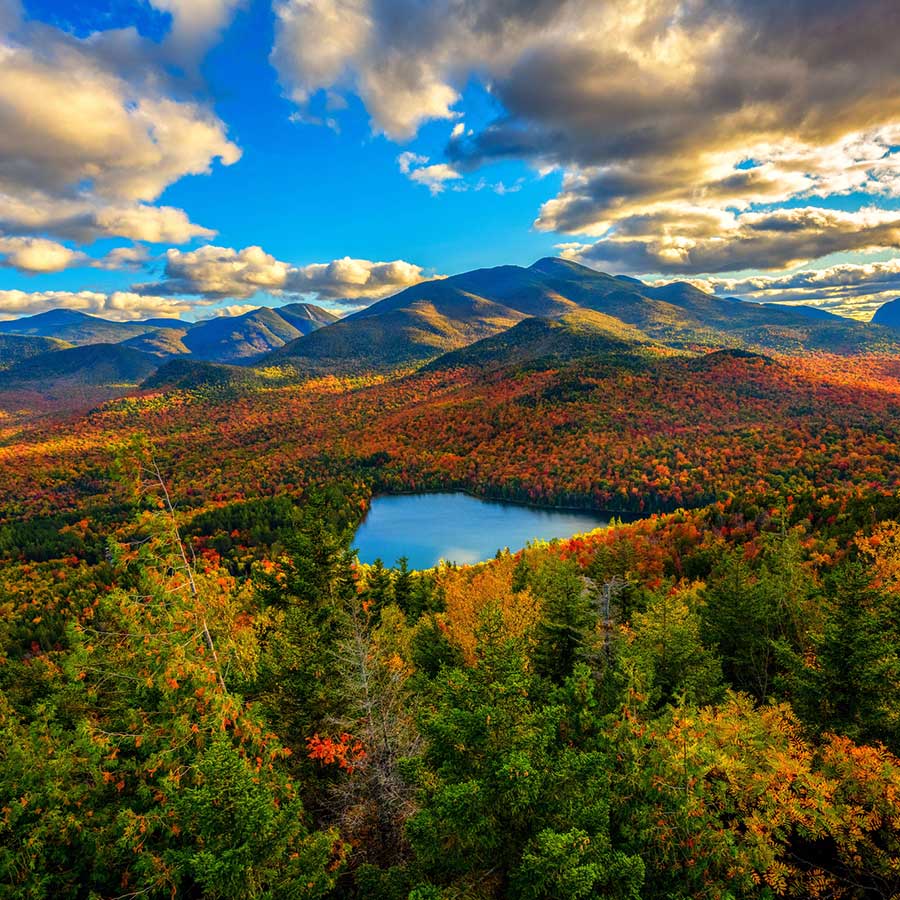
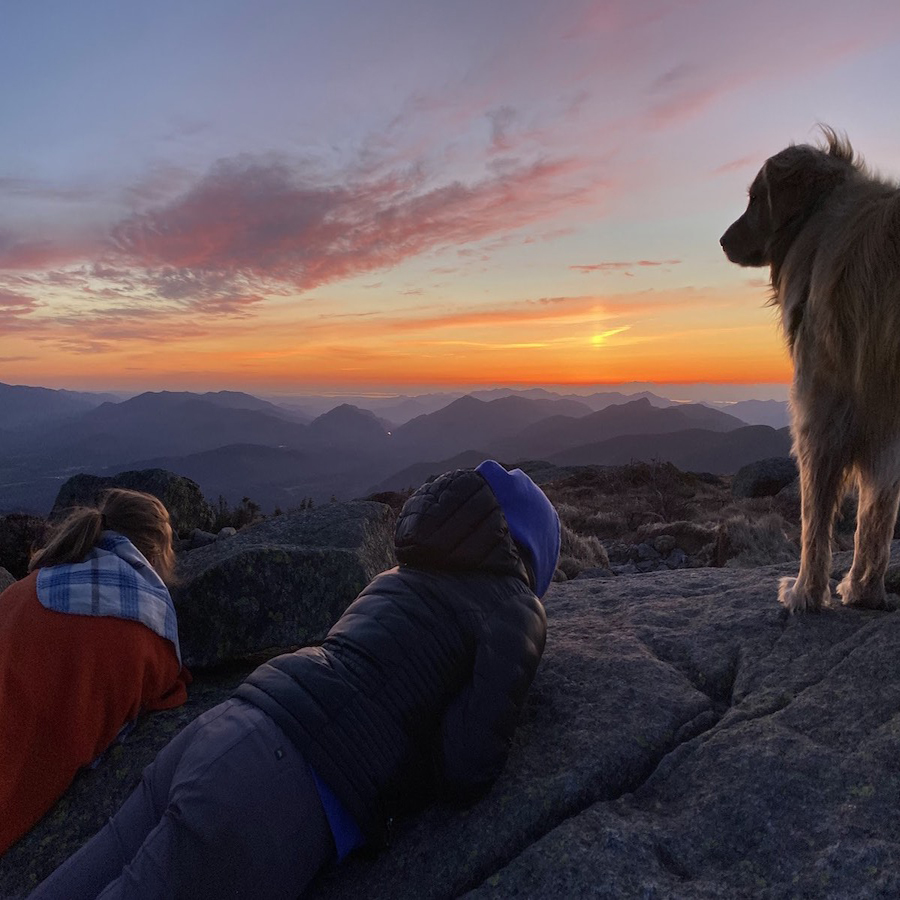
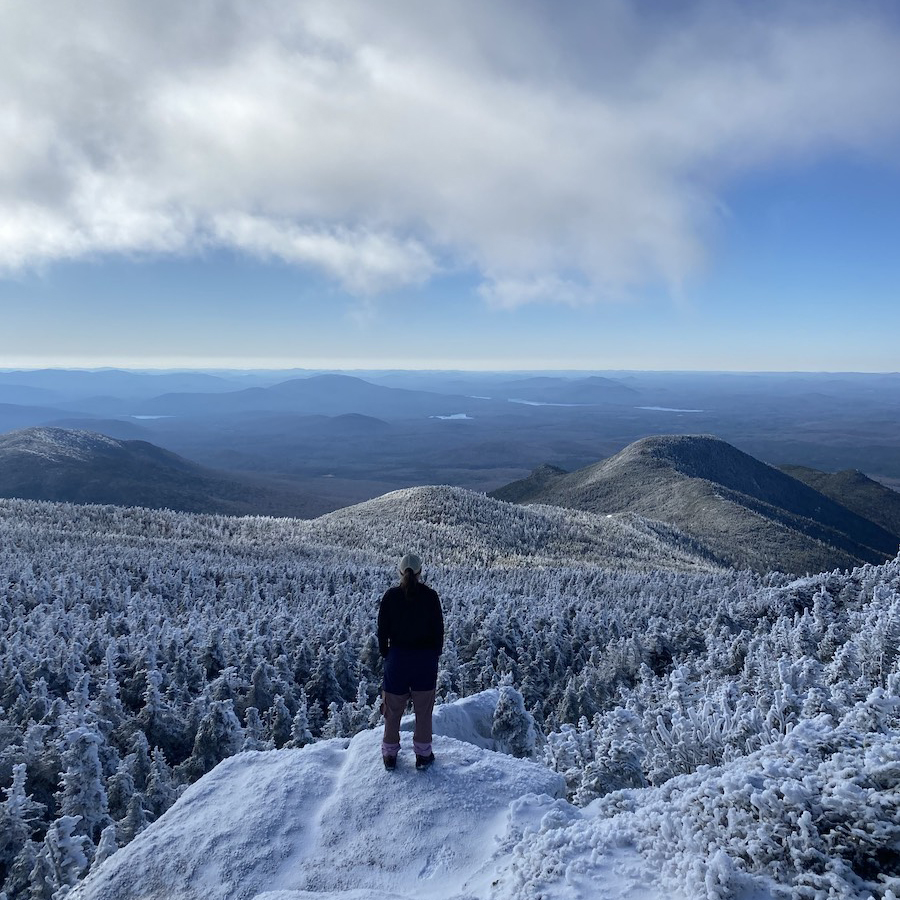
Our expansive backyard takes you along rivers, below tree lines and up 4,000-plus-foot peaks. Sometimes, we’re watching the leaves change; at others, we’re snowshoeing, skiing or snowboarding through fresh powder.
Student Spotlights
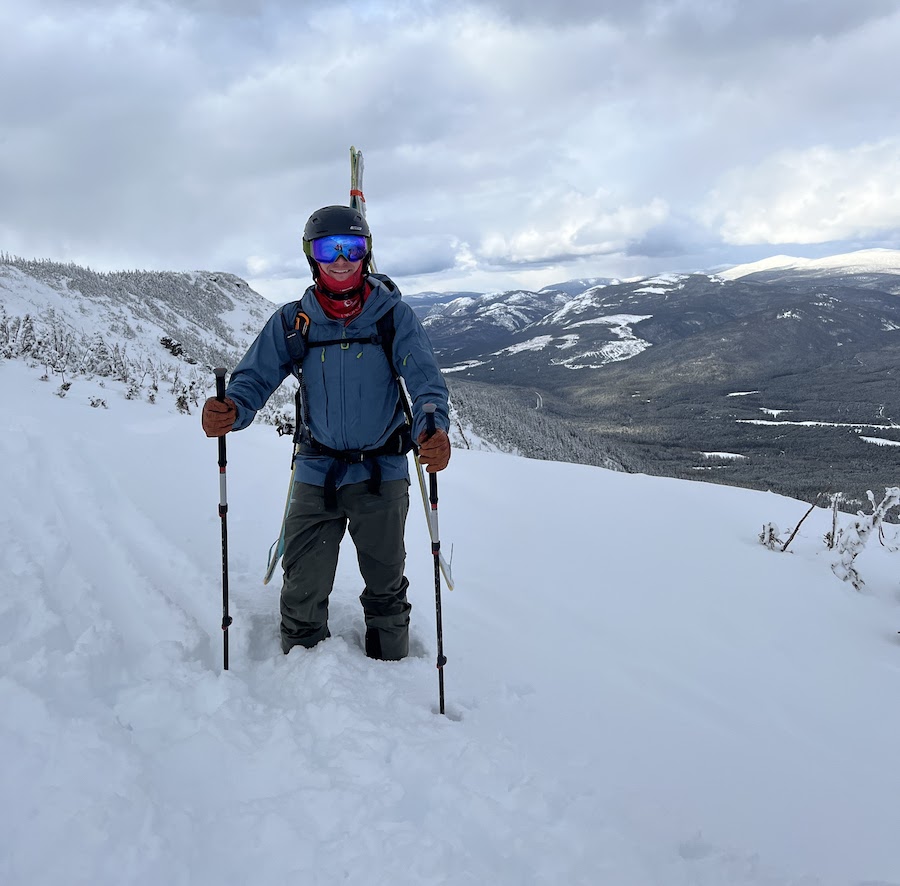
Jasper Wiech '27
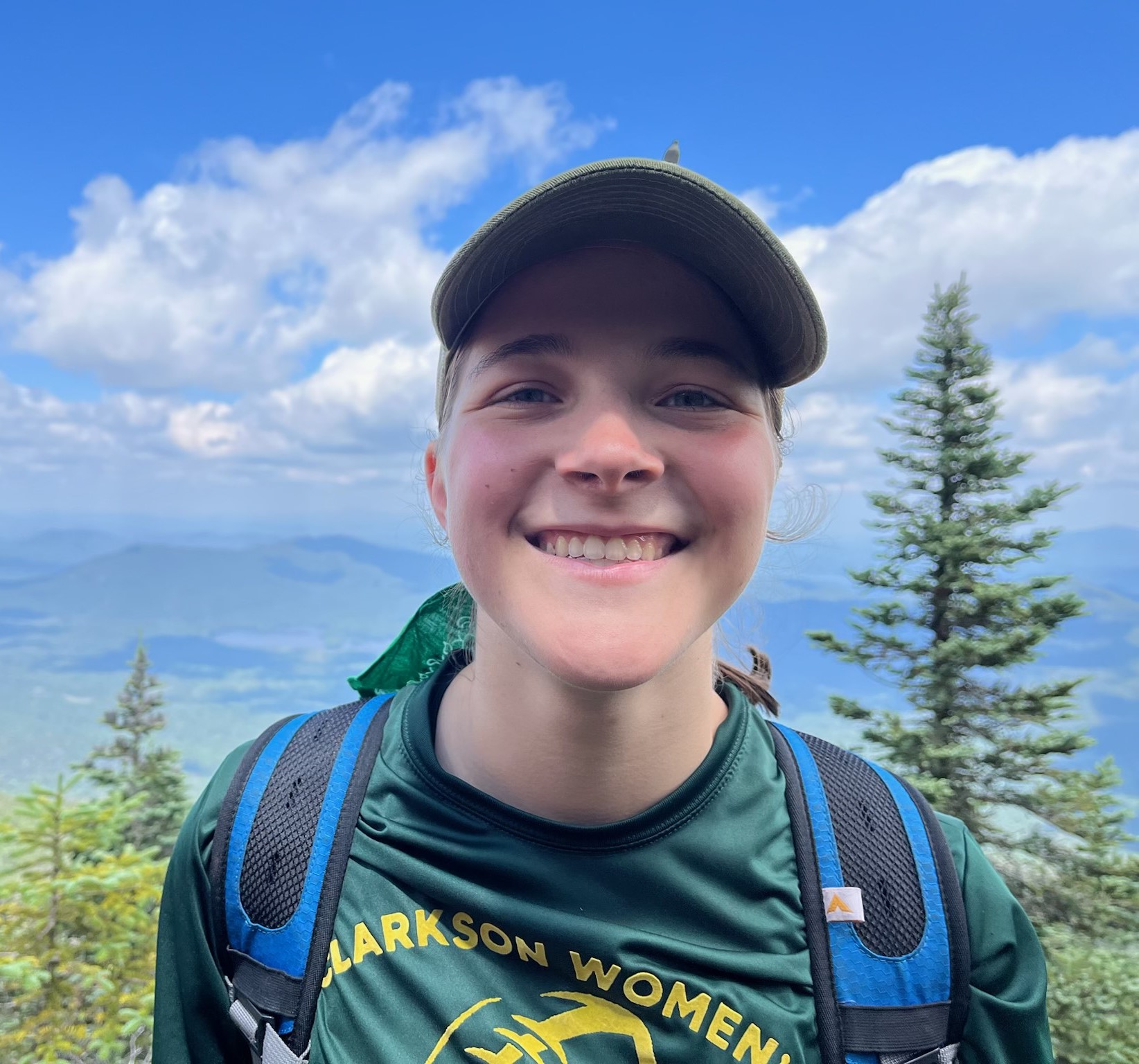
Mia Greco '26
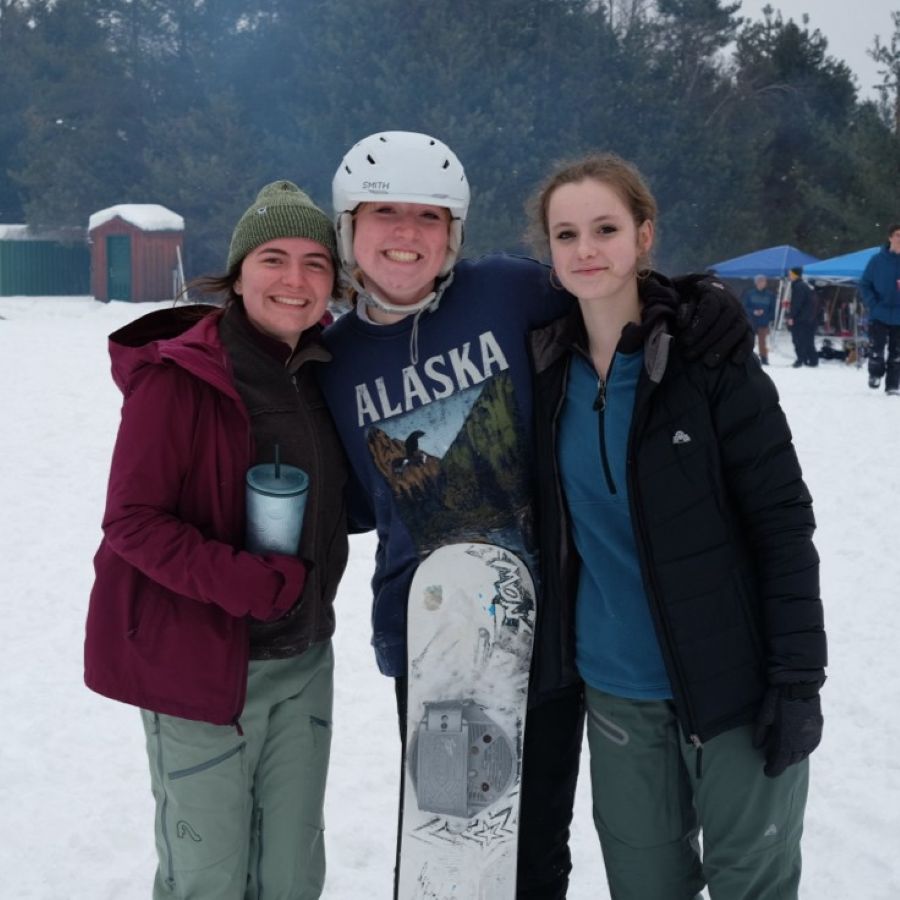
Allison Cogan '28
What our students have to say about CUOC
"The Outing Club has plenty to offer in the way of backcountry skiing, whether you are brand new to the sport or have some experience already. The club has all the equipment you need to try it for the first time and they lead intro trips to get you started. They also offer opportunities for more experienced skiers to improve their skills. I was able to expand my backcountry and avalanche education through the AIARE 1 course that the club offers, then on spring break, I got to ski the best snow of my life on the annual trip to the Chic Chocs. I love that the club is open to people of all skill levels and there is always someone willing to talk to you about skiing and help you learn."
"I love hiking and CUOC is what sparked that passion by providing me with the proper gear to safely go on sick adventures!"
"I got involved in the club when I signed up for a pre-orientation hike so I could enjoy the outdoors and come to campus before all the freshman chaos started. It really helped me adjust to everything and meet tons of new people that I could ask any questions I had, and took a lot of stress off a huge thing. CUOC has taught me a lot about an activity that I already loved and gives so many opportunities to do fun things inside or a little outside your comfort zone, whether you're experienced at your sport or just starting out."
Contact CUOC
Here’s where we are and how to get in touch:
Clarkson University Outing Club
8 Clarkson Ave
Potsdam, NY 13699
Email: cuoc@clarkson.edu
Clarkson Curiosity
Clarkson University: Where Curious Minds Build Bold Futures
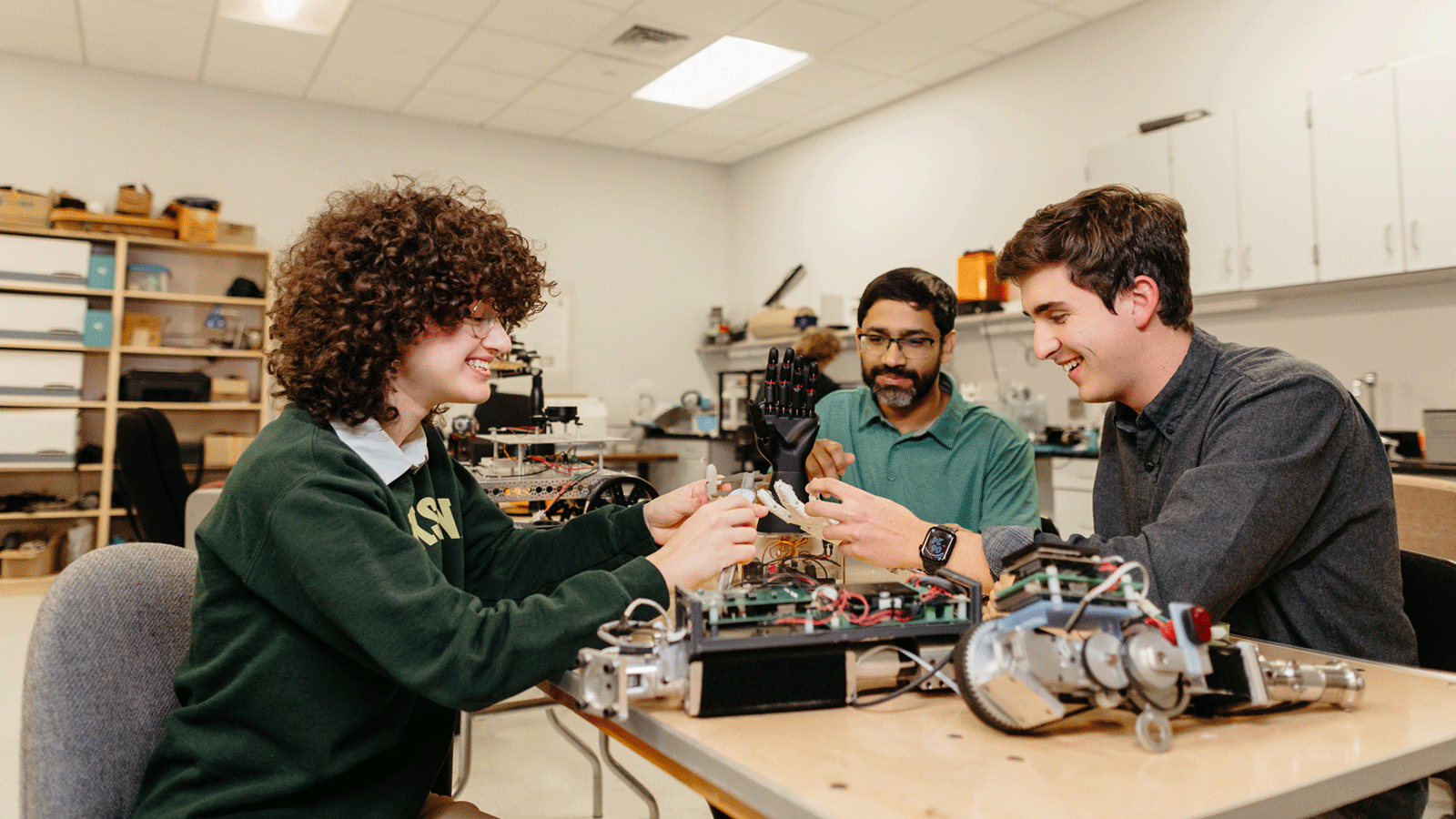
If you're exploring your next step or already part of the Clarkson community, one thing is clear — YOU belong here. Welcome to Clarkson!
Curious minds thrive here. If you love solving problems, asking ‘why?’ and pushing boundaries, Clarkson is your place.
At Clarkson, curiosity is more than encouraged — it’s the foundation of everything. Here, learning goes beyond textbooks. It’s about tackling real-world challenges with a hands-on approach. Design it. Build it. Break it. Every problem is an opportunity to discover, innovate and improve.
Powered by Curiosity, Proven by Success
STEM that Works
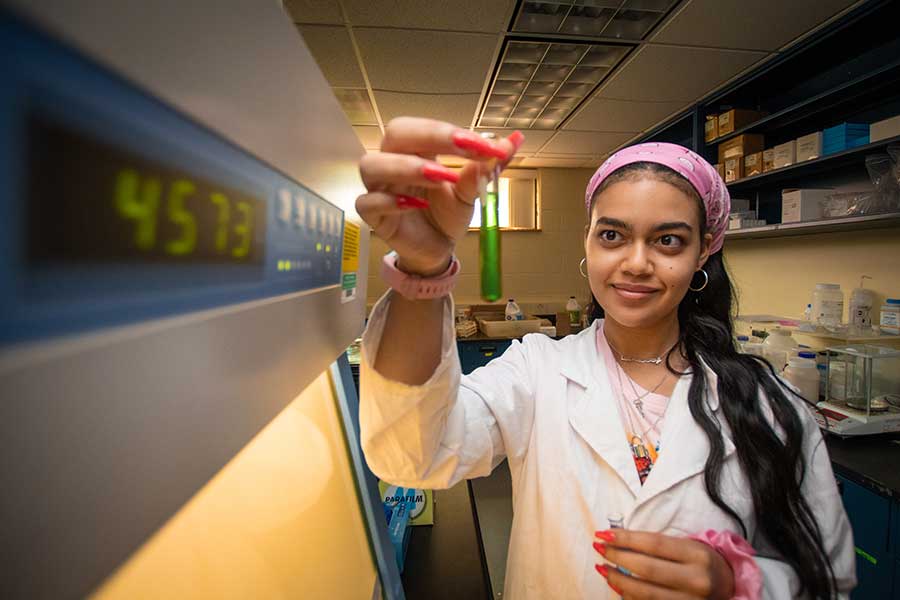
From engineering and environmental science to robotics and business analytics — at Clarkson, STEM slays. This is where ideas are tested, refined and transformed into groundbreaking solutions. At Clarkson, the focus goes beyond what works — we find the ‘why.’ Why? To drive innovation and deeper understanding, of course!
The Perfect Balance
With a small school, big connections approach, Clarkson offers a personalized education with access to global opportunities. Whether you’re starting your journey or already making connections, you’ll benefit from cutting-edge tech, a 48,000-strong alumni network, and top-tier faculty who know you by name.
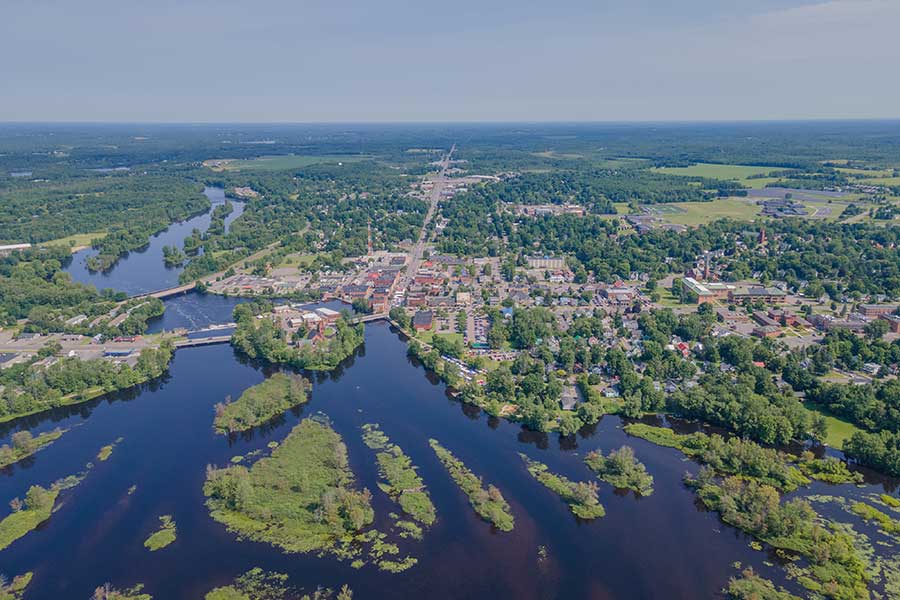
A Location That Inspires
High peaks, big perks — Clarkson gives you the best of both worlds. Nestled near the Adirondacks, our location fuels both adventure and innovation. Test sustainable energy solutions in the wilderness, launch your entrepreneurial venture or hit the slopes with friends. Clarkson students are always close to everything and far from ordinary.
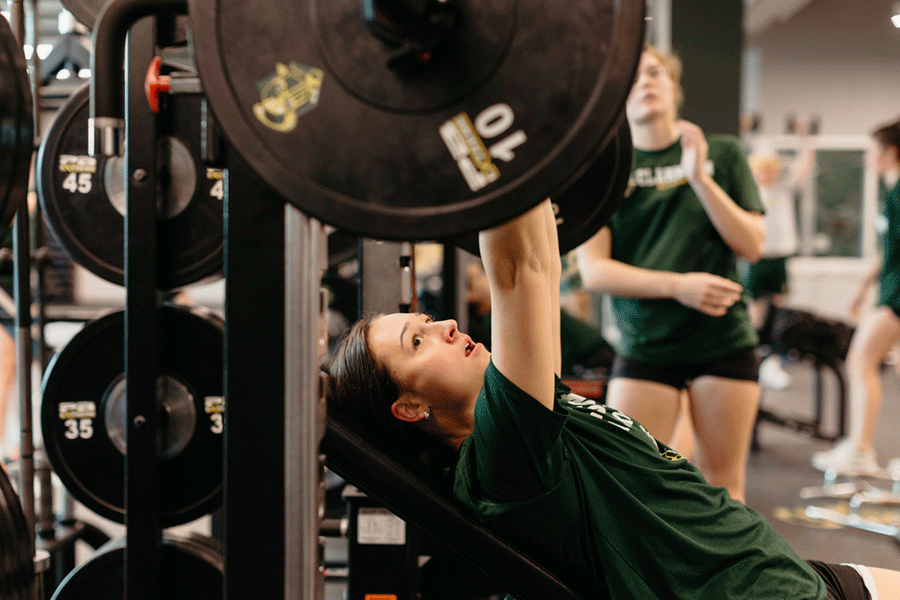
Built on Grit, Defined by Success
Clarkson is all grit, no quit. Hard work isn’t optional; it’s a mindset — and perseverance fuels progress. In the classroom, lab, or on the field (or ice, court or trail), success comes to those who push forward. The “grit, grind, finish line” mentality defines a Golden Knight.
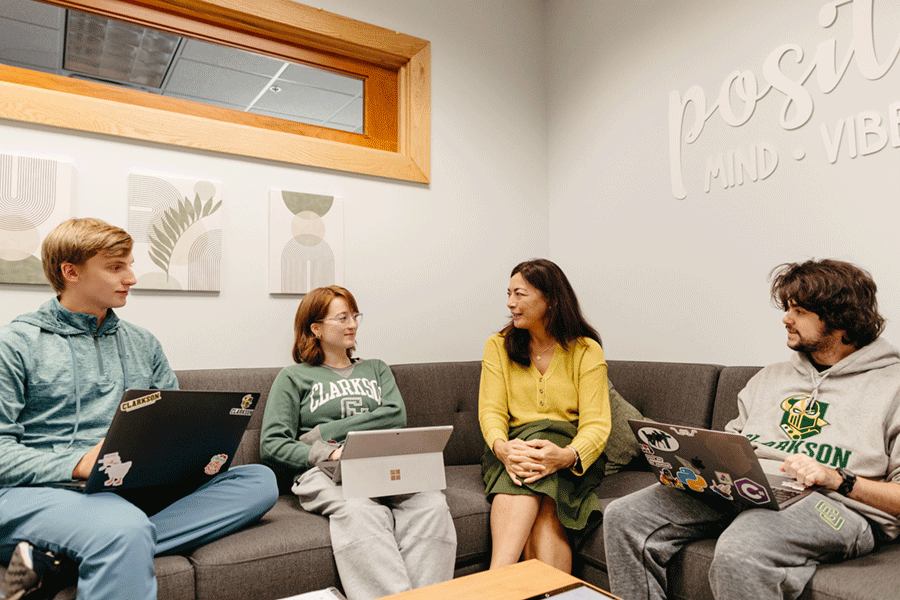
We CU Here
For those who never stop questioning, learning, and pushing boundaries, Clarkson is where it happens. The curious find us. And we CU here.
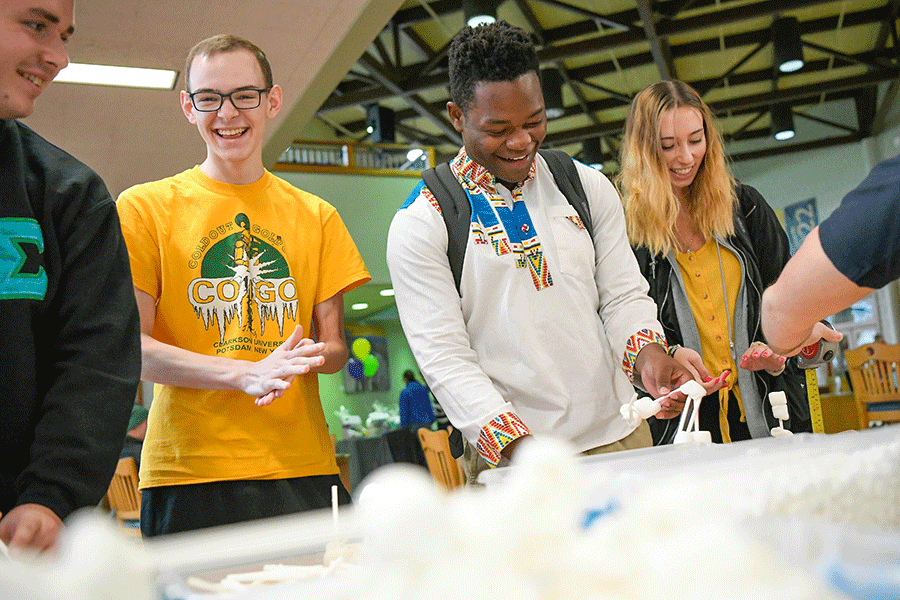
Invest in the Future, See the Return
A Clarkson education delivers more than a degree — it delivers results. With strong career placement (96% within six months of graduation) and high earning potential (starting salaries for 2025 grads were more than $82,000), Clarkson graduates see a return on investment that leads the nation. Simply put, we launch leaders.
Clarkson is defined by the experiences of its students — past, present and future. Share your favorite Clarkson moments and the unique experiences that make our community extraordinary.
What stories would you share with someone curious about joining the Clarkson family? Let us know at marketing-team@clarkson.edu.
Want to go a step further? Join us in creating compelling content — submit your stories, photos, or videos to showcase what makes Clarkson remarkable. Your insights will help highlight the vibrant life at Clarkson and inspire future Golden Knights.
Ignite - Who Are We?
Who Are We?
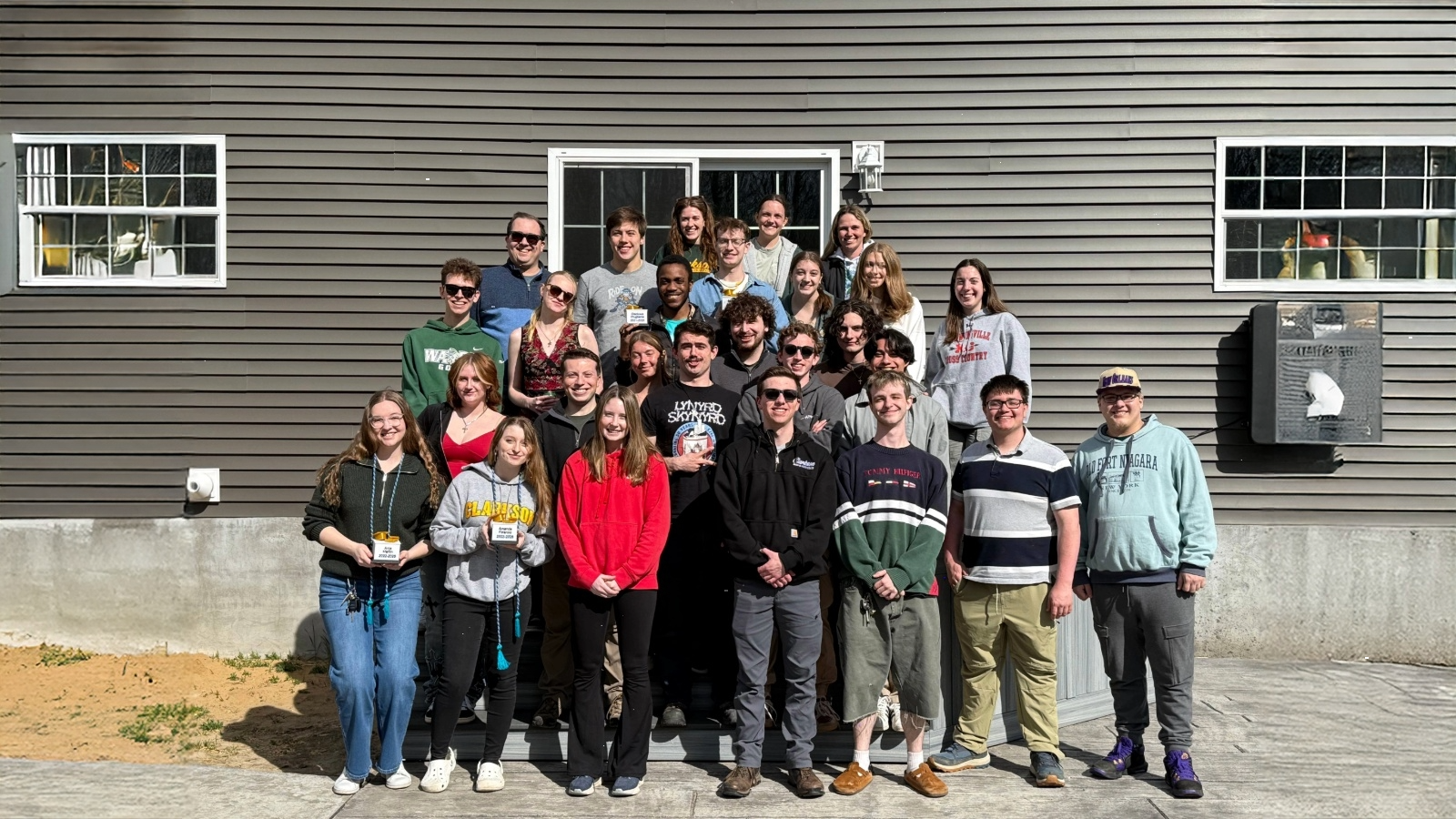
Our Leadership Team
At its core, Ignite is an amazing and storied community of talented, versatile, and innovative people. Without the hard work, collaboration, and creative thinking of our leadership team, none of what we do would be possible!
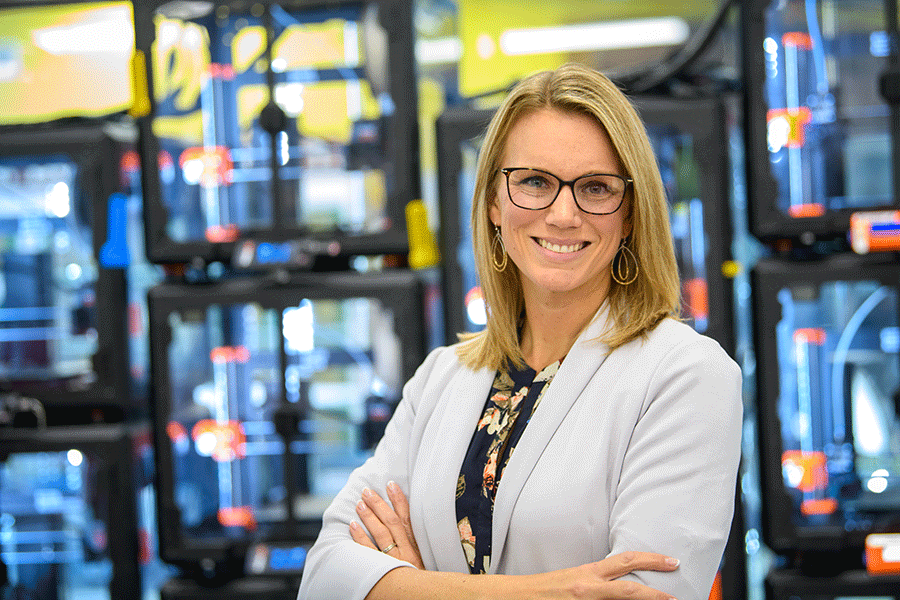
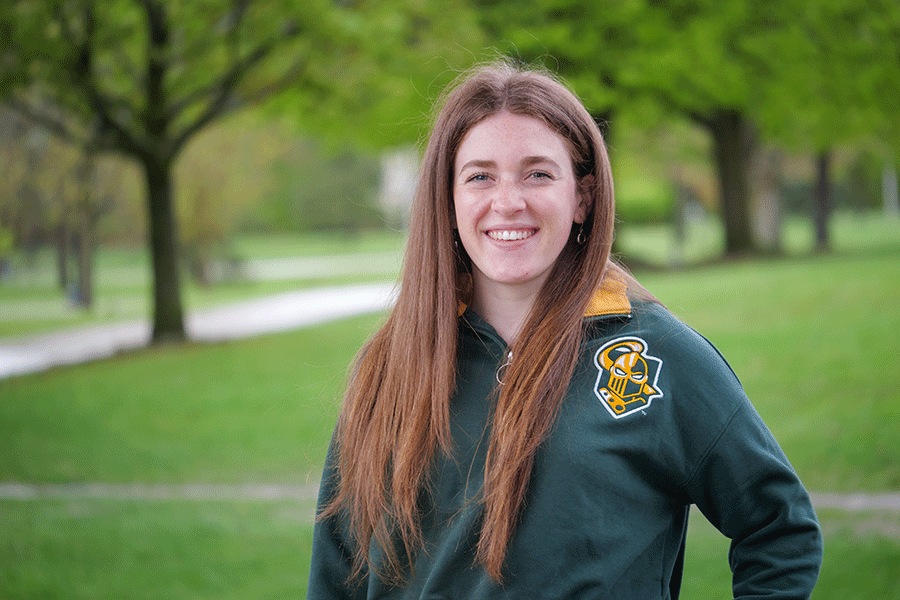
Kelsey Hamilton '24, M'26, Graduate Fellow
Kelsey Hamilton draws on her Presidential Fellow experience while enhancing critical opportunities for students across campus.
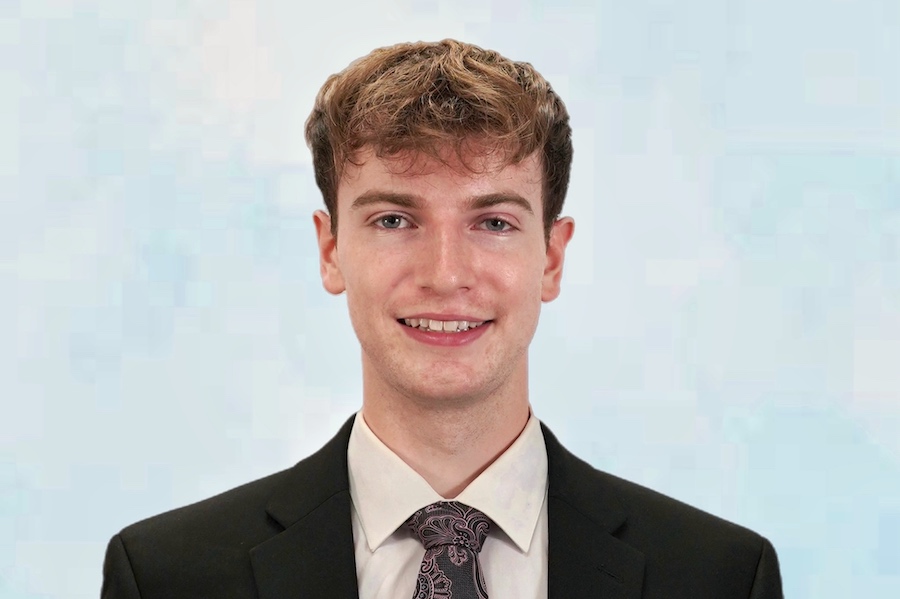
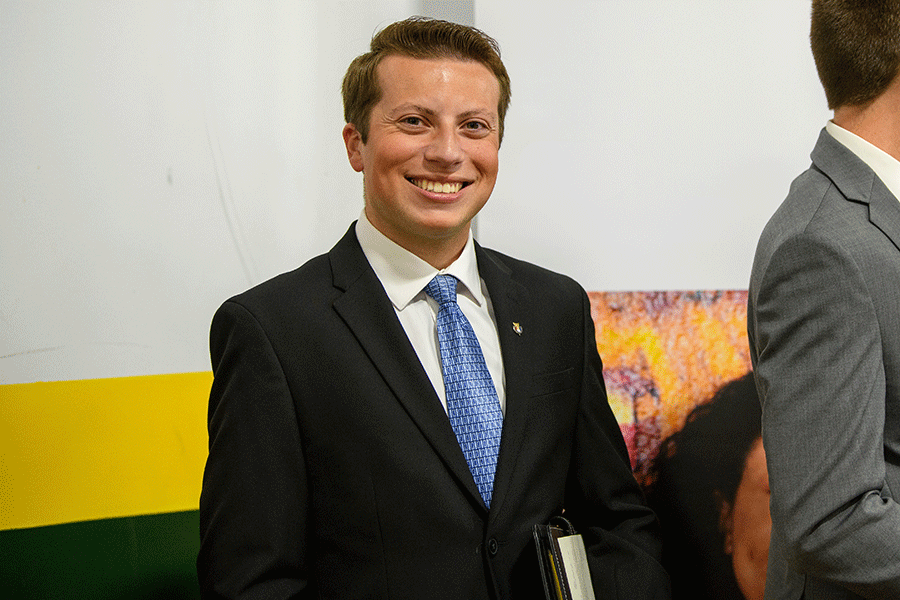
Santino Martinelli '25, M'26, Professional Assistant
As Ignite's go-to guy on all things digital content creation and drones, Santino leverages his extensive expertise to drive innovation and success everywhere he goes.

The Entire Ignite Family
At Ignite, leadership isn't about the role you hold, but rather your impact as an innovator and entrepreneur. That's why all members of the Ignite family play a key role in forging our path forward.
Outstanding Achievement
At Ignite, leadership isn’t just a action - it’s a natural outcome of the incredible talent within our family. That said, there’s nothing more rewarding than having our hard work recognized and celebrated in front of the entire Clarkson community, especially for our most dedicated members.
Each year, the Levinus Clarkson Award is presented to the top student of the graduating class. In 2024, this honor was earned by none other than Executive Fellow Miles Compani (E&M ‘23, MSEM ’25, EngSci P’26), who was recognized for his exceptional scholarship and outstanding potential for future success.
Hailing from the Capital Region, Miles is the go-to expert on all things Ignite. Whether overseeing Ignite Project Expo, RAPS, and Business Plan Competition events, guiding Presidential Fellows and Young Innovators & Entrepreneurs, or leading CUSTOM Lab, his influence is wide-ranging and transformative.
Now pursuing a PhD, Miles’ time at Clarkson has been defined by extraordinary leadership roles within a variety of organizations, including Ignite and the Honors Program. Beyond his impressive achievements, he’s known for unwavering reliability and genuine kindness at all times.
Miles’ advice for exceptional students interested in attending Clarkson? “Don’t be afraid to step outside the boundaries of your local community. By coming to campus, you’ll be joining a whole new world - a world where you can stand out like never before, and a world that will define the rest of your life.”
A Brief History
As students come and go, Clarkson evolves - and so does Ignite! Here’s your chance to learn a bit more about us over the years.
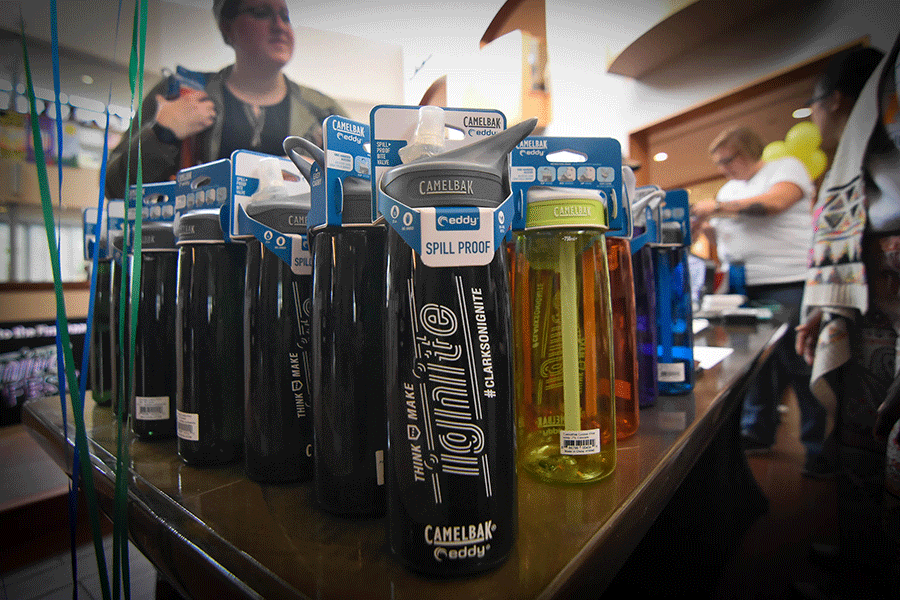
August 2017
Clarkson Ignite is launched as a forward-thinking integration of the innovation resources found across the Clarkson community.
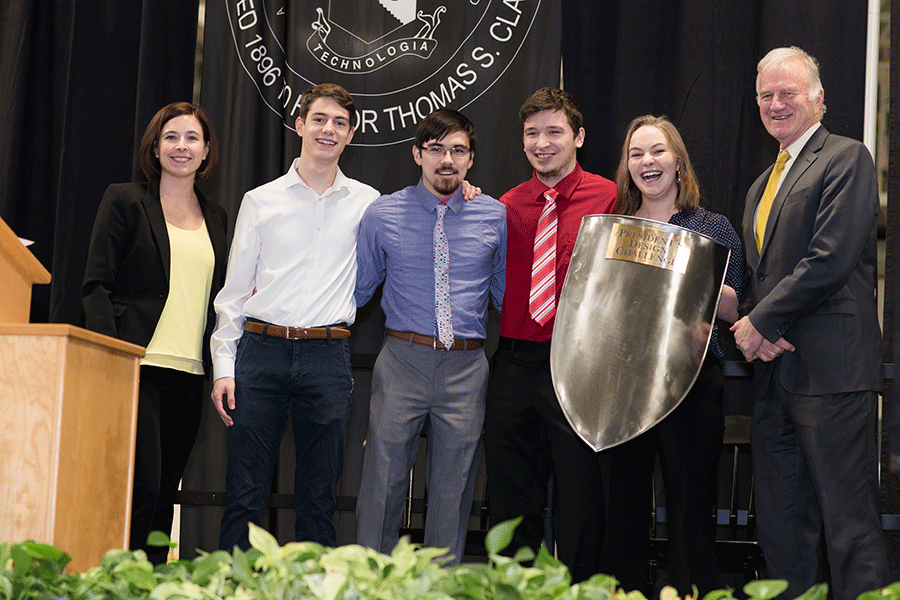
April 2018
Immaterial Industries, a team of E&M freshmen, becomes the champion of the inaugural President’s Challenge.
March 2019
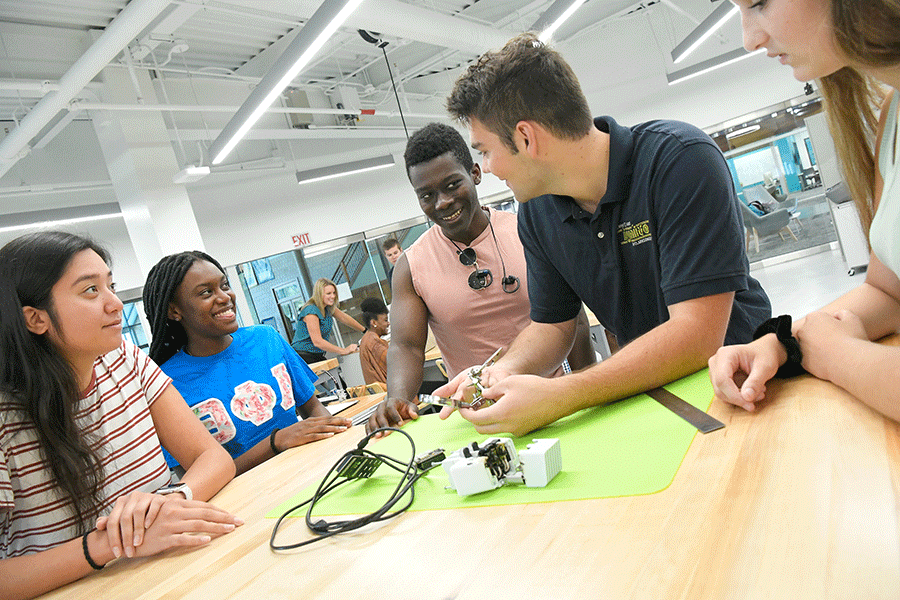
Containing only a few 3D printers, hand tools, and other creation equipment, the Dorf Makerspace opens its doors for public use.
August 2019
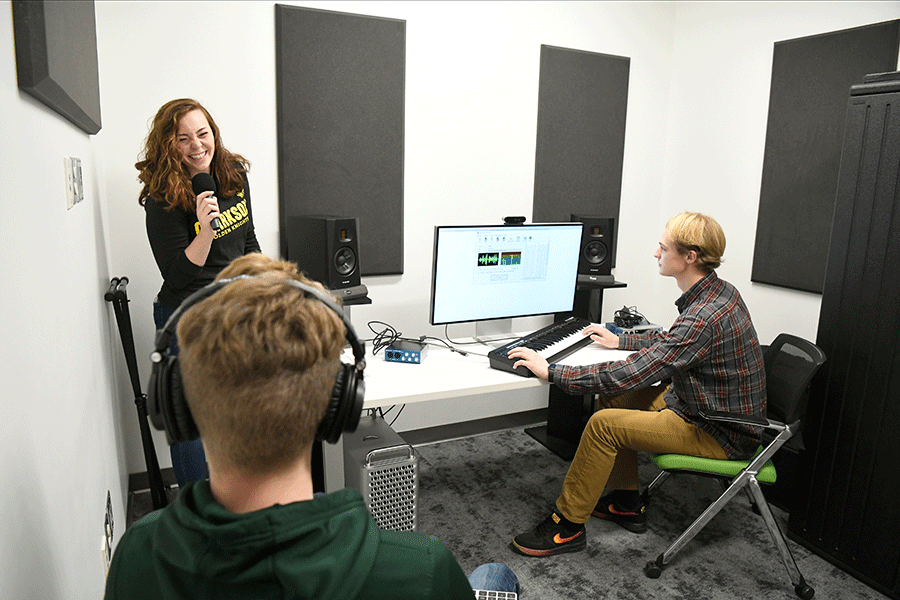
The Media Production Center, a state-of-the-art facility for all kinds of digital content creation, is launched in the ERC.
February 2020
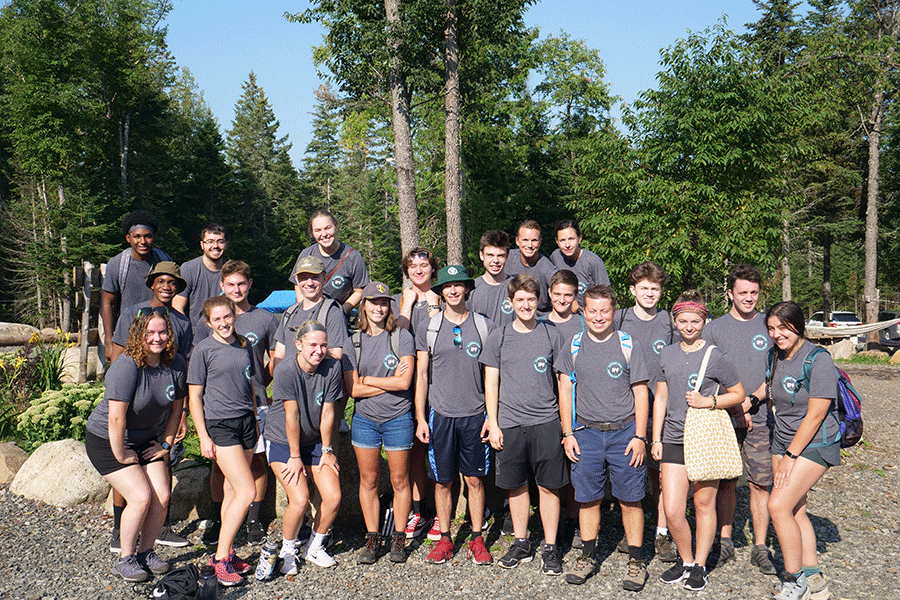
Fifteen students are deemed the first class of Presidential Fellows, giving the full-tuition scholarship a strong start.
October 2021
During Ignite Fest, the Clarkson community is invited to learn about everything Ignite has to offer, including microcredentials.
February 2022
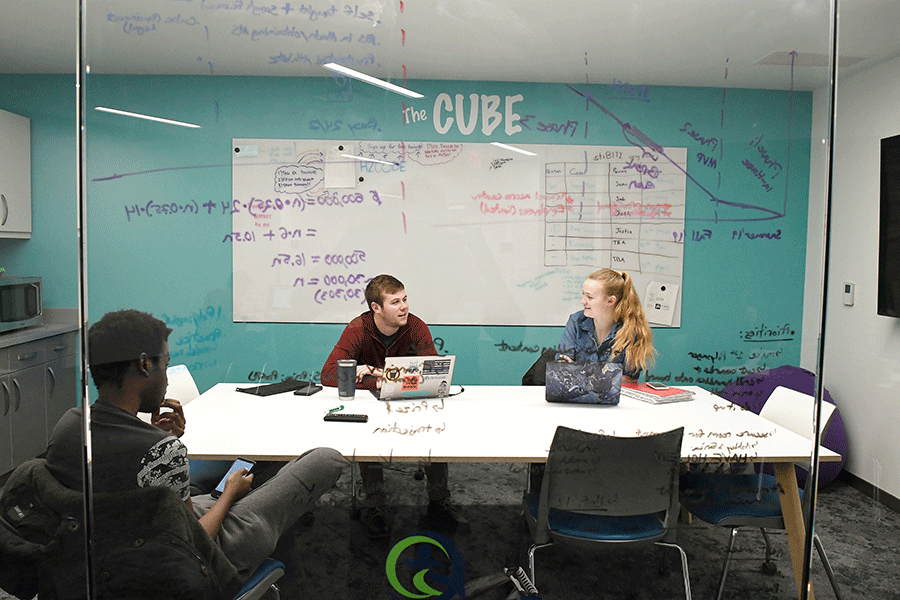
The Shipley Center spins off, with Ashley Sweeney joining Ignite as its newest Director. Ignite retains the Cube during this transition.
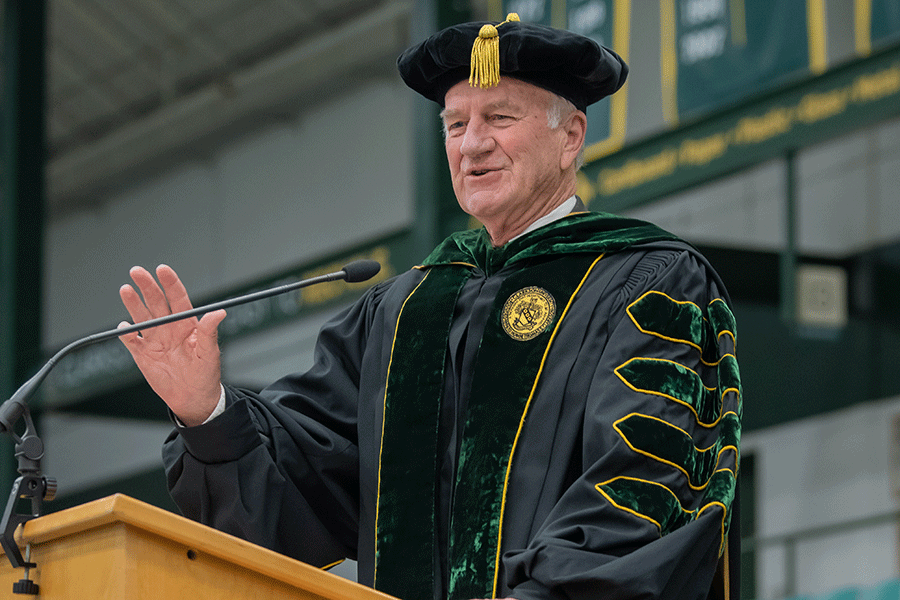
May 2022
Following 40 episodes across a four-year run, the Ignite Podcast concludes with a farewell address from outgoing President Tony Collins.
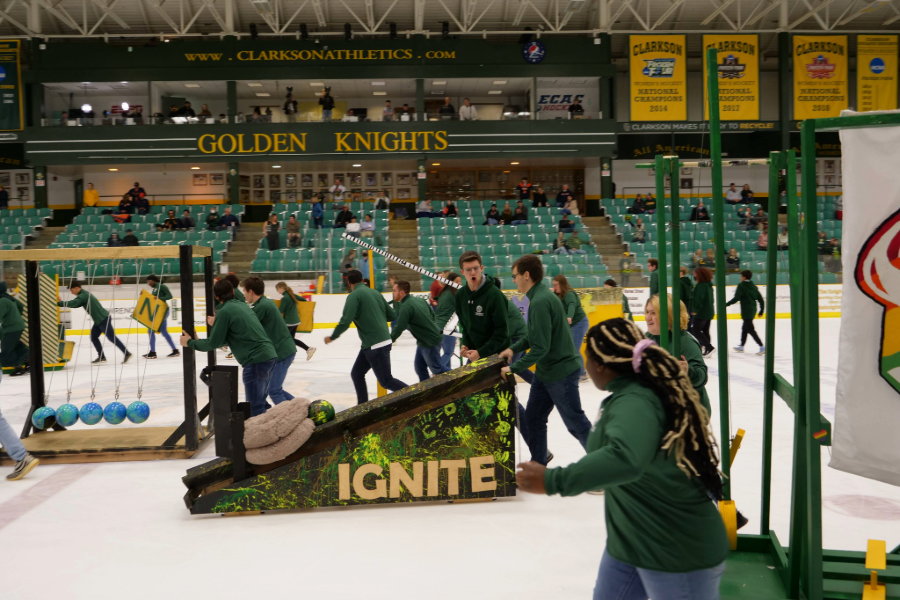
October 2022
To celebrate the inauguration of Clarkson’s 17th President, students across campus construct a gigantic Rube Goldberg machine.
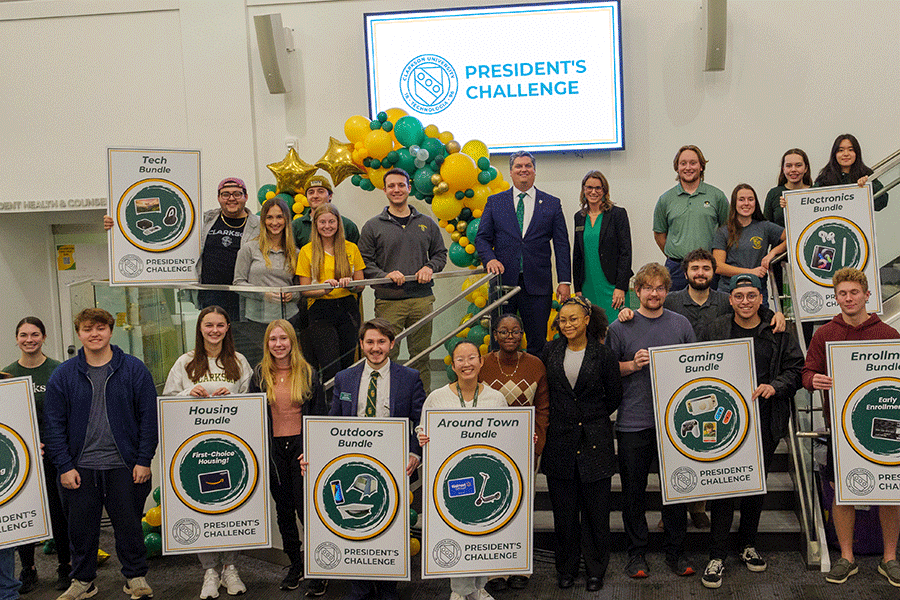
November 2023
An overhauled President’s Challenge encourages the entire student body to develop unique Clarkson collectibles.
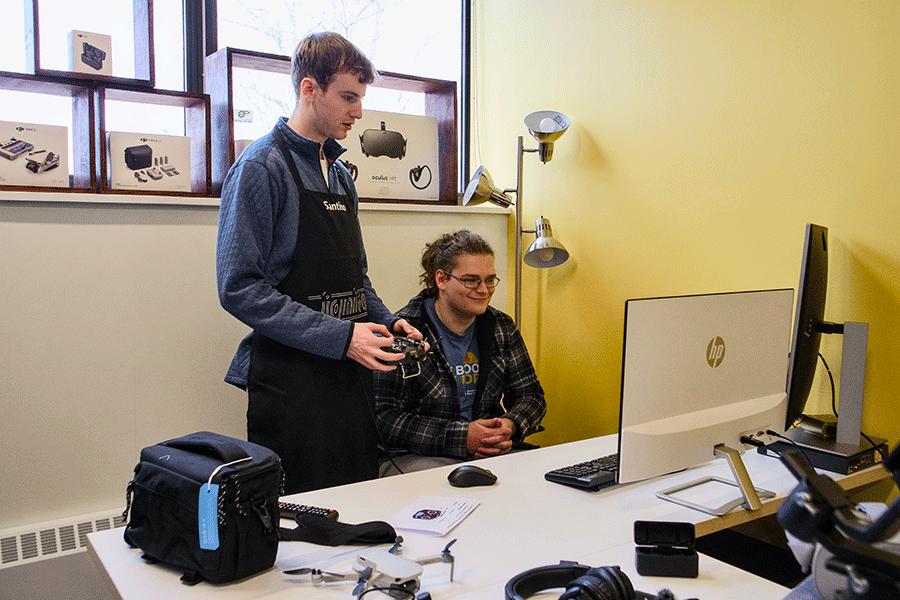
March 2024
Alongside the Dorf Makerspace receiving 18 new 3D printers, the Media Production Center is revamped into the Makers’ Loft.
September 2024
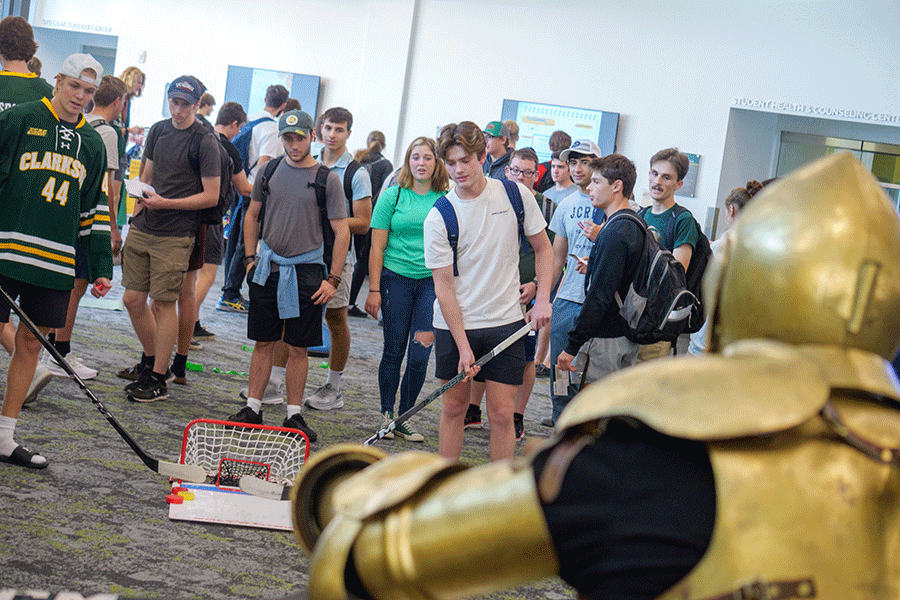
Ignite hosts New Knights Expo, a collaborative event introducing freshmen to the amazing resources found on campus.
November 2024
The inaugural Ignite Project Expo is held, seeing nearly 350 students present 93 distinct projects during an exciting day of events.
January 2025
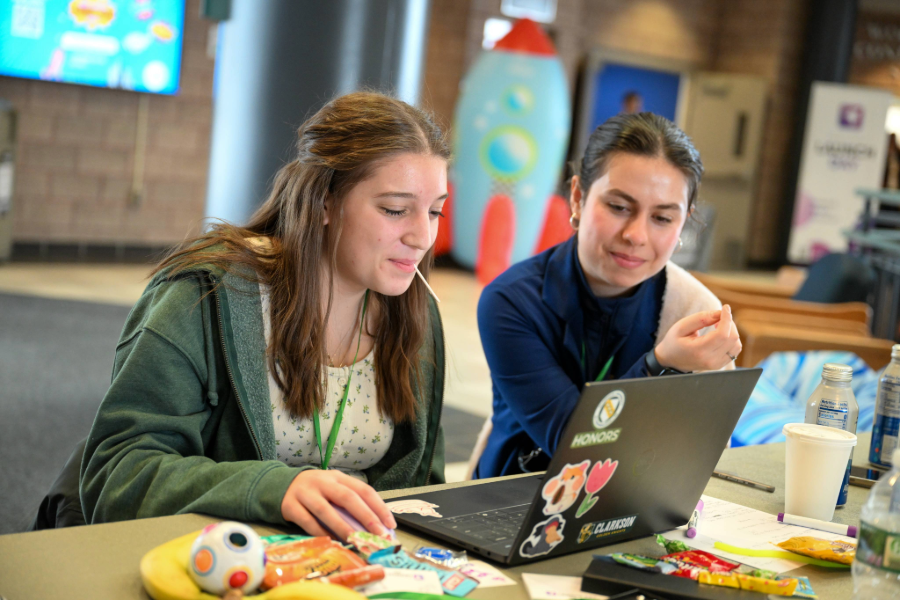
North Country Launch Day is introduced, with local student entrepreneurs teaming up for rapid venture development.
April 2025
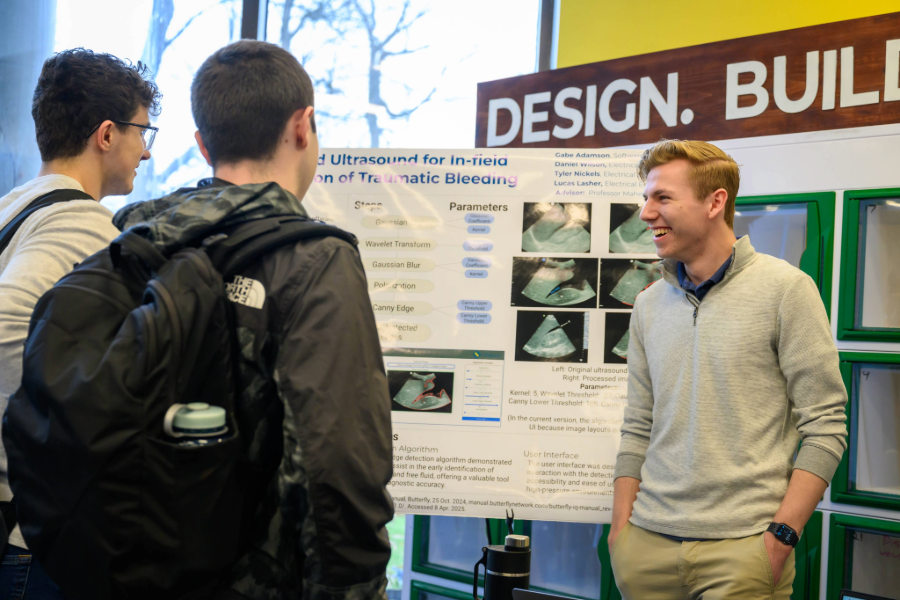
With Ignite now at RAPS’ helm, the Spring 2025 occasion is the largest yet, seeing over 550 students present innovative work.
Learn More About Ignite
What’s next for Ignite? A bright future filled with innovation, entrepreneurship, and all things creativity. Stay tuned!
Scholarships with Ignite
Scholarships with Ignite
Igniting College Affordability
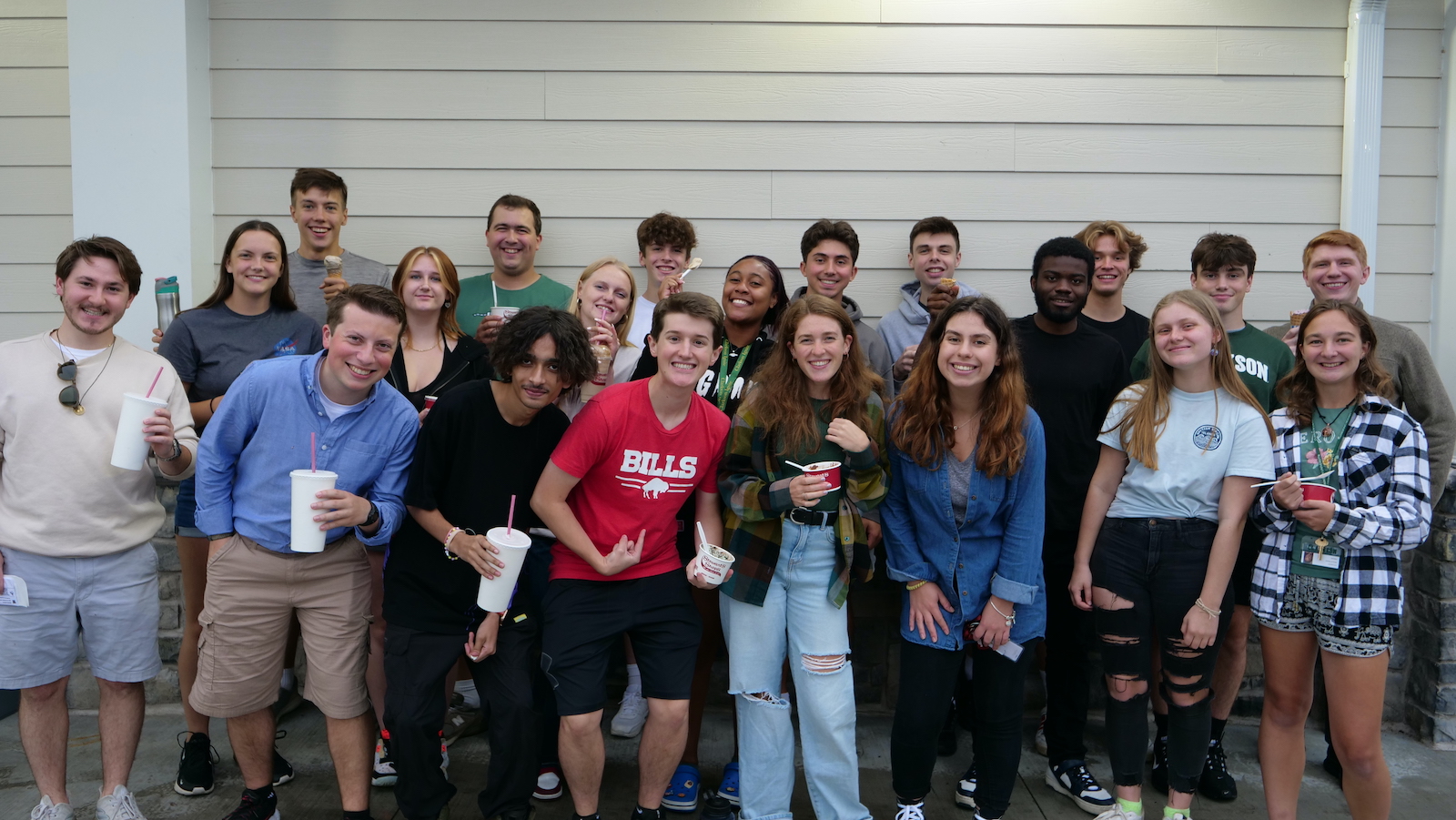
At Ignite, we believe that Clarkson’s collaborative, hands-on education should be accessible to all students, regardless of background or major. That’s why we offer two full-tuition scholarships to learners who demonstrate creativity, versatility, and a passion for innovation through all that they do.
Presidential Fellows
Presidential Fellows envision bold solutions, drive meaningful change, and champion experiential learning. Challenging the status quo is a defining characteristic of these students.
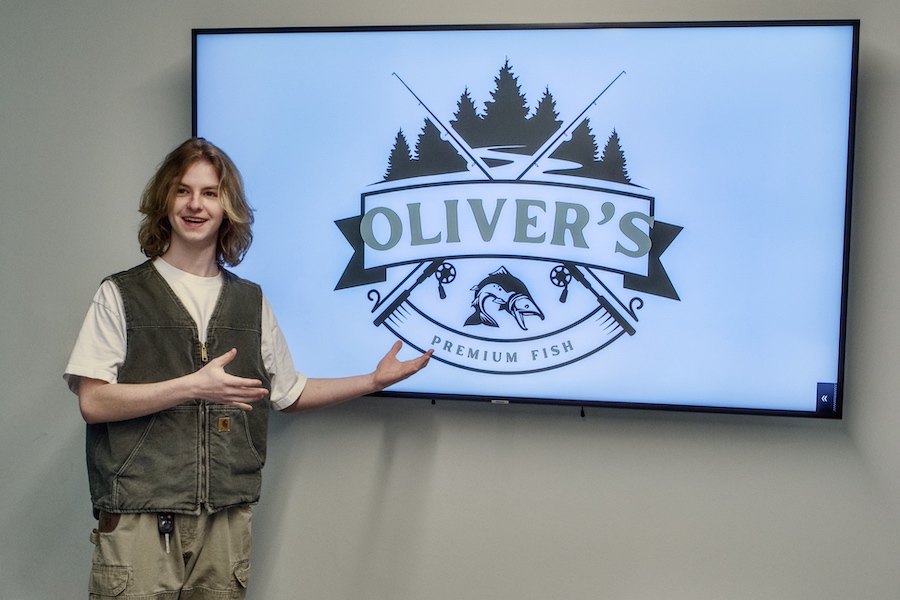
Young Innovators & Entrepreneurs
Only the brightest pioneers are deemed Young Innovators & Entrepreneurs (YIEs), students who develop and grow an impactful
business venture throughout their time at Clarkson.
A Community of Individuals
Having grown up in Vermont and attended high school in Canada, Justin Bouchard (DigArtSci, CompSci ‘27) was no stranger to the North Country climate. Attending Clarkson only required a brief road trip, a few hours from home.
For Jamona Blake (ChemE ‘27), who hails from Jamaica, travelling to Potsdam was a bit different - her first visit to campus was also her first time in the United States! Thanks to Clarkson’s International Center, she quickly found a community of peers with whom to create lasting memories.
Both Justin and Jamona are Presidential Fellows, allowing them to foster their individual passions and have a meaningful impact on the Clarkson community. Whether a Presidential Fellows applicant is finishing high school, transferring from another university, or interested in The Clarkson School, they’re more than welcome in the Ignite family.
“Working in a tight-knit community with a culture of making has made my time at Clarkson an unforgettable experience," Justin said. "Being in a smaller group means everyone has the opportunity to play a large role, even as a first-year student. We all have our own ‘thing’, and Ignite gives us the flexibility and means to pursue that.”
Essential Presidential Fellows Traits
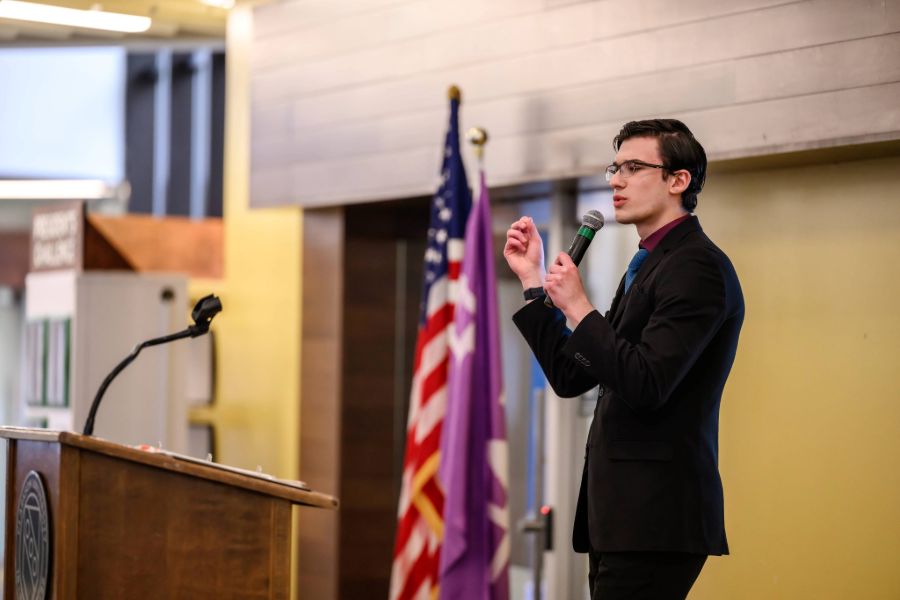
Extracurricular Excellence
Not only is Robert Davis (MechE ‘26) a member of the Lu Research Group, but he’s also an Olympic-caliber bobsledder!
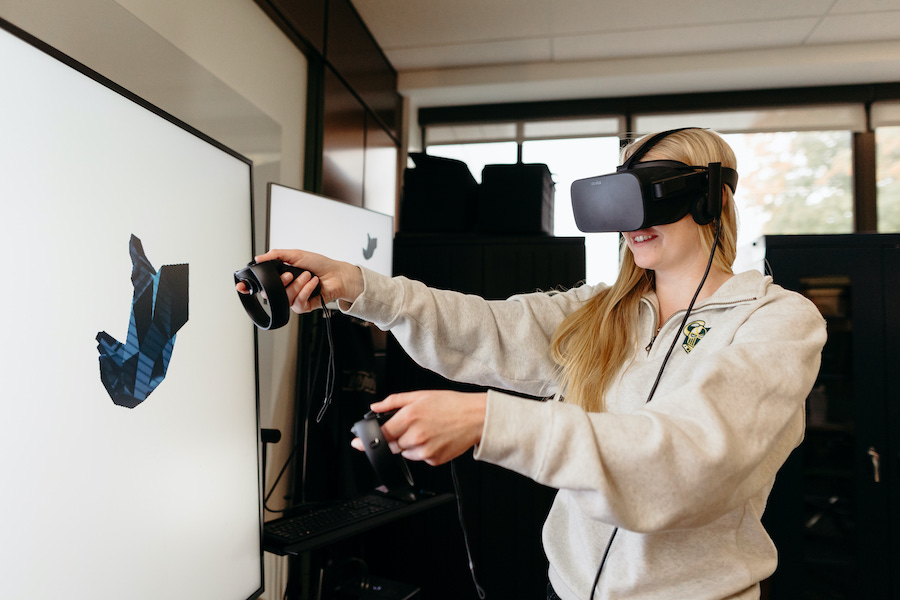
Personal Expression
For Vitesse Disney (E&M ‘27), digital content creation isn’t just a passion; it’s a way to express yourself holistically.
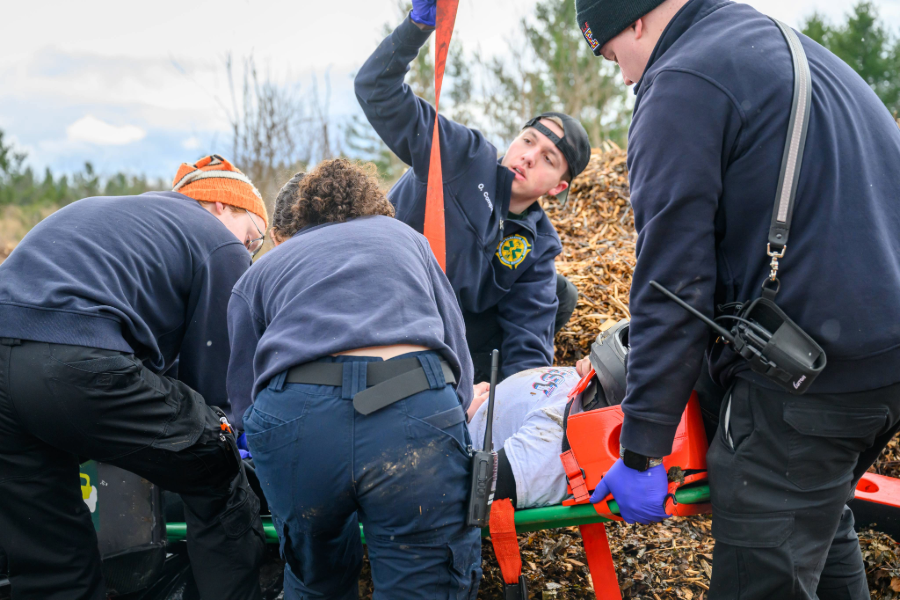
Meaningful Service
Beyond his coursework, Owen Compani (CivE ‘28, center in picture) serves as the Vice President of Clarkson’s student-run EMS squad.
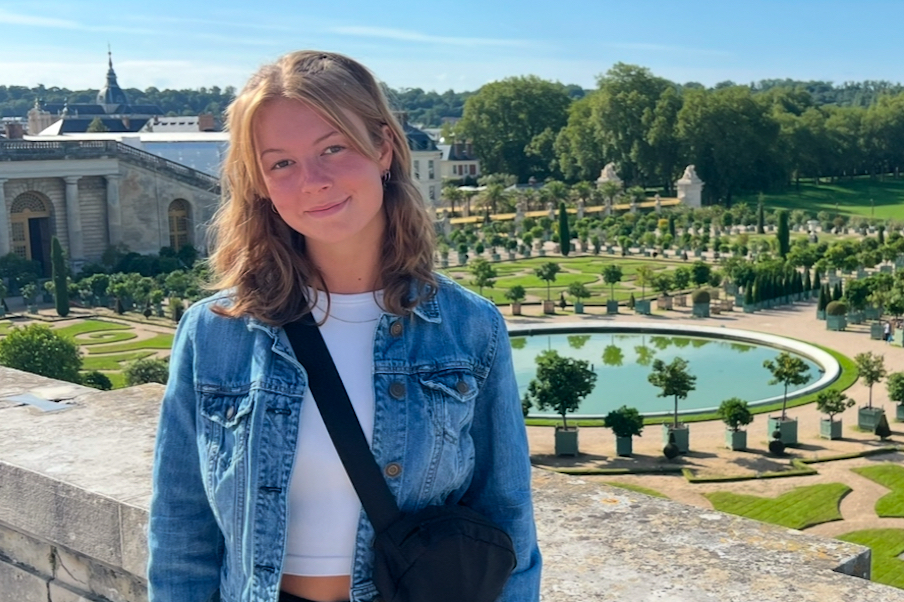
Limitless Curiosity
Expanding the boundaries of the Clarkson community, Bryn Myers (I&E ‘25, MBA ‘26) spent an exciting semester in Paris, France.
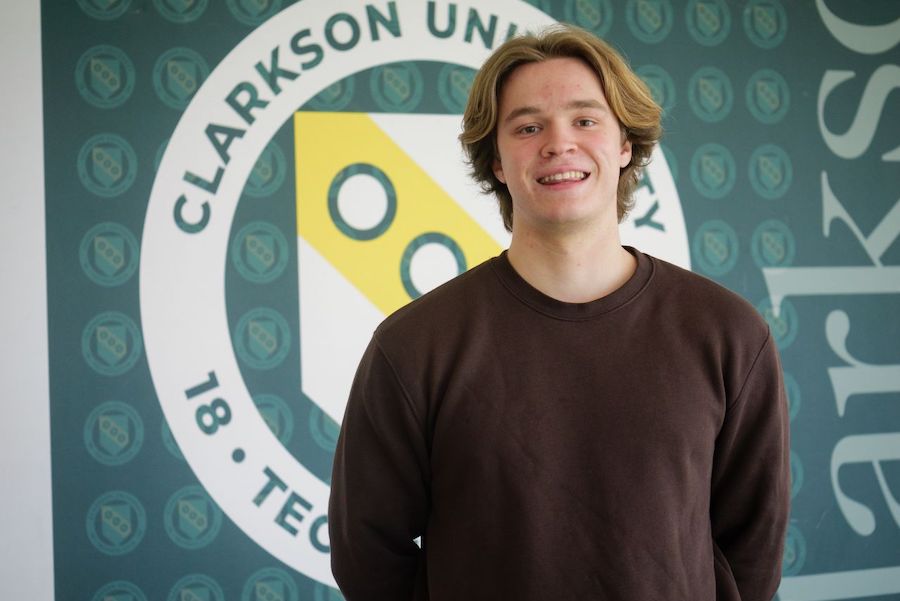
Constant Communication
What’s Mark Munro’s (Math & CompSci ‘27) advice for new students? “Talk to as many people as possible in your first month!”
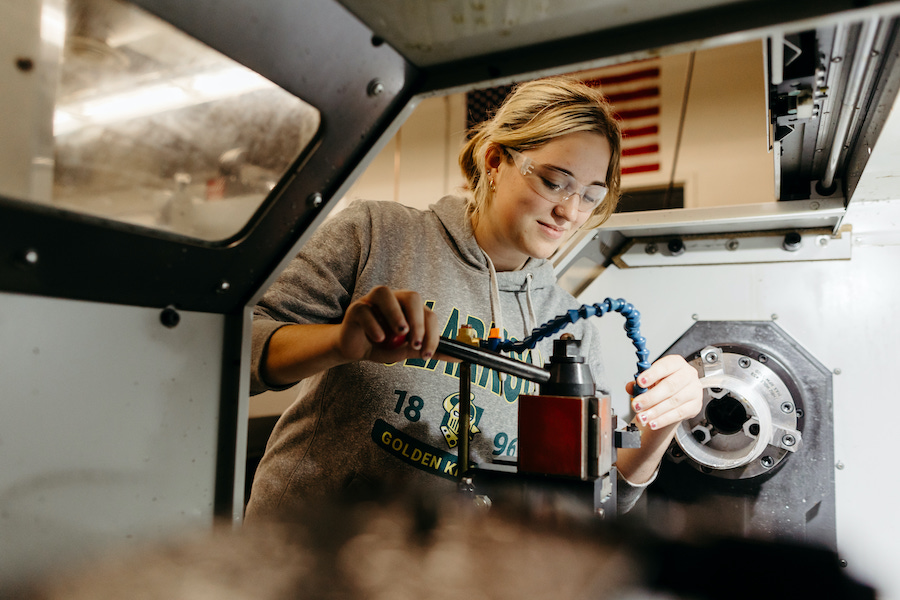
On-Campus Impact
In less than a year, Emma Cosgrove (MechE ‘28) has become a frequent visitor to Clarkson’s Machine Shop.
Dogs and Cats, Eating Together...
Does your dog dominate your cat’s eating space? Do hisses and growls over pet food cause strife for your whole family? Well now you’re in luck - because that’s the real-world problem Lily Clonan (Psych ‘25) aimed to solve when she received the Young Innovators & Entrepreneurs scholarship in 2022.
In the years since, she’s developed Fat Head Feeder, a carefully-crafted feeding station that is cost-effective, quick to assemble, and easily-usable by your pets! True to its name, the innovation prevents a dog’s “fat head” from accessing a cat’s private food stash, allowing owners to leave both pets unsupervised in harmony.
As a YIE, Lily’s business aspirations didn’t conclude with a completed product; they’ve only continued to grow while taking her idea to the next level. Thanks to a successful crowdfunding campaign and a grand-prize win at the 2023 North Country Regional Business Plan Competition, Fat Head Feeder is primed for success.
The range of entrepreneurial endeavors created by YIEs is expansive, with notable businesses including maple syrup producer Parker’s Real Maple, drone repair firm Eagle Eye Drones, skiing product influencer Sendy Paradise, and web design consultant North Shore Solutions. Maybe your idea will be on this list next!
Lily’s suggestion for young entrepreneurs? “Utilize the resources available to you at Clarkson! There are many valuable tools and support systems for growing your innovation, even if you’re starting with a small idea. Be sure to connect and collaborate with your peers, professors, and mentors - everyone is eager to help."
How Can You Apply?
Once you complete your undergraduate Clarkson application, the option to apply for the Presidential Fellowship and Young Innovators Entrepreneurs scholarships will appear in your portal. Feel free to contact your Admissions Counselor with any questions you have about these awards or Clarkson scholarships in general.
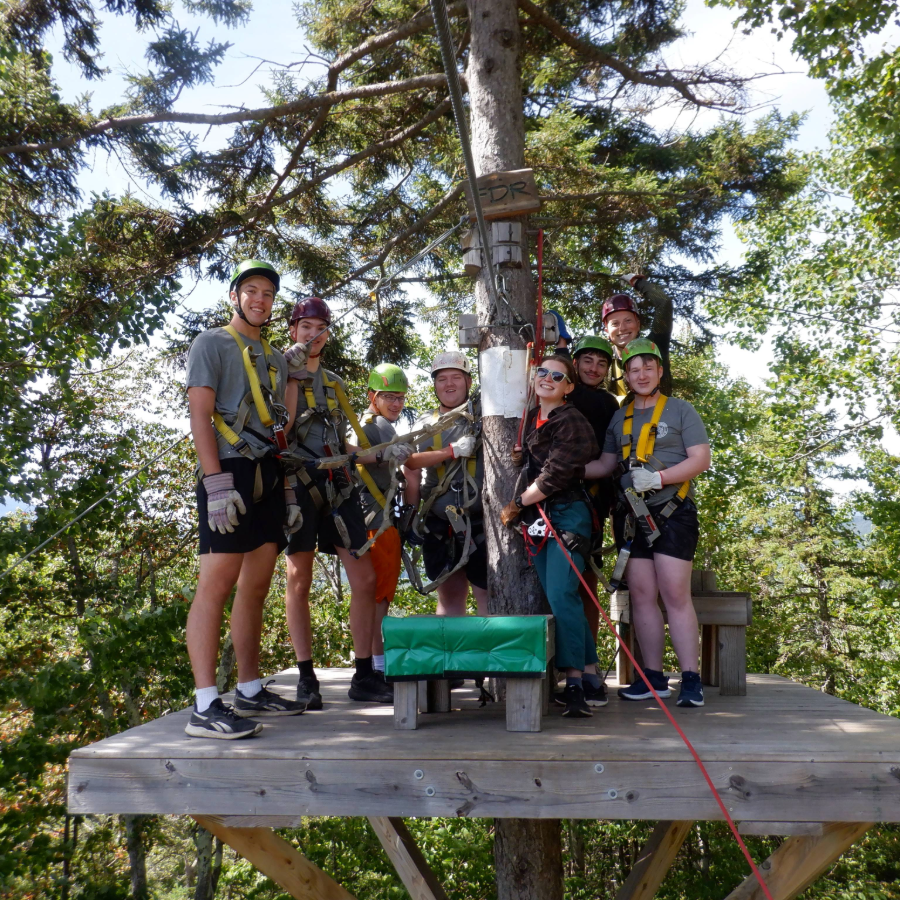
New Presidential Fellows and YIEs complete an exciting Pre-Orientation week of events, including a thrilling high ropes course.
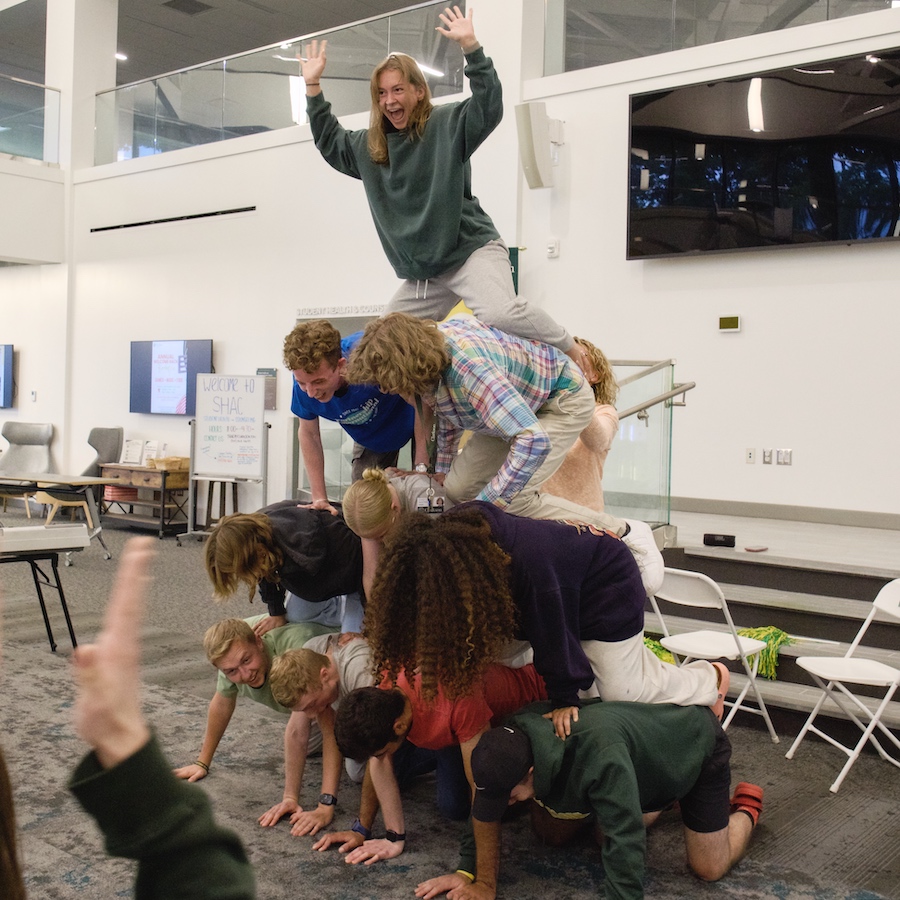
The most common Presidential Fellows and YIE activity? Having fun wherever possible.
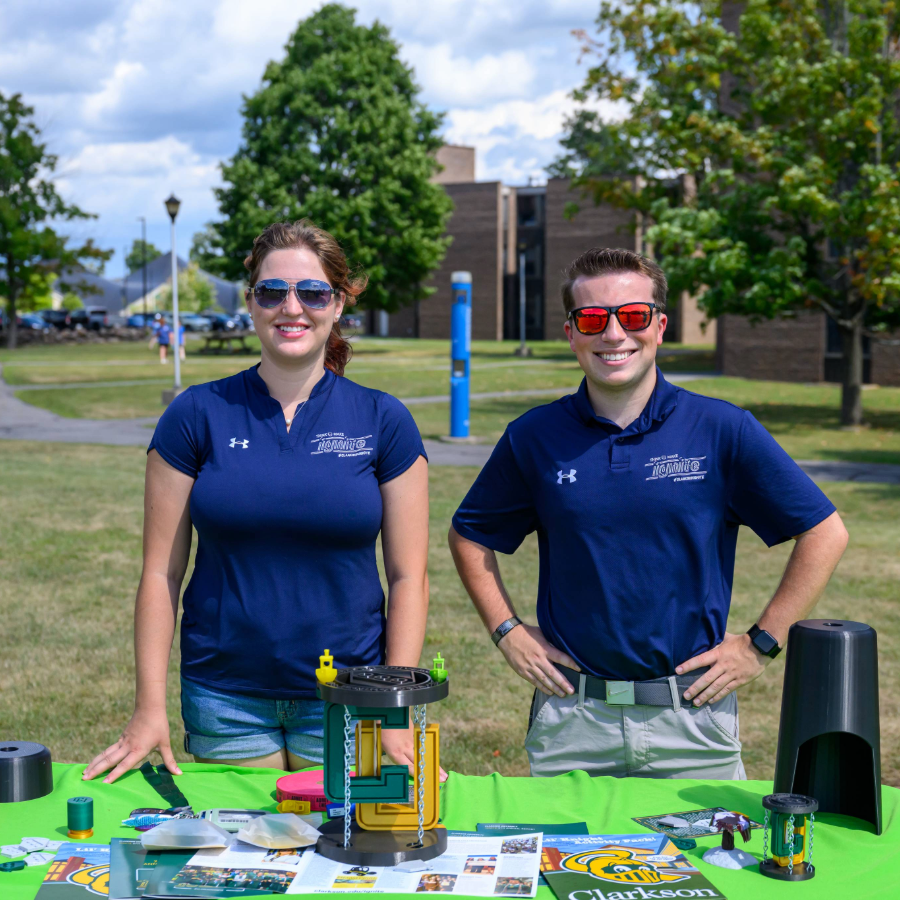
Have you seen these students during a campus event? They’re Presidential Fellows giving back to Ignite.
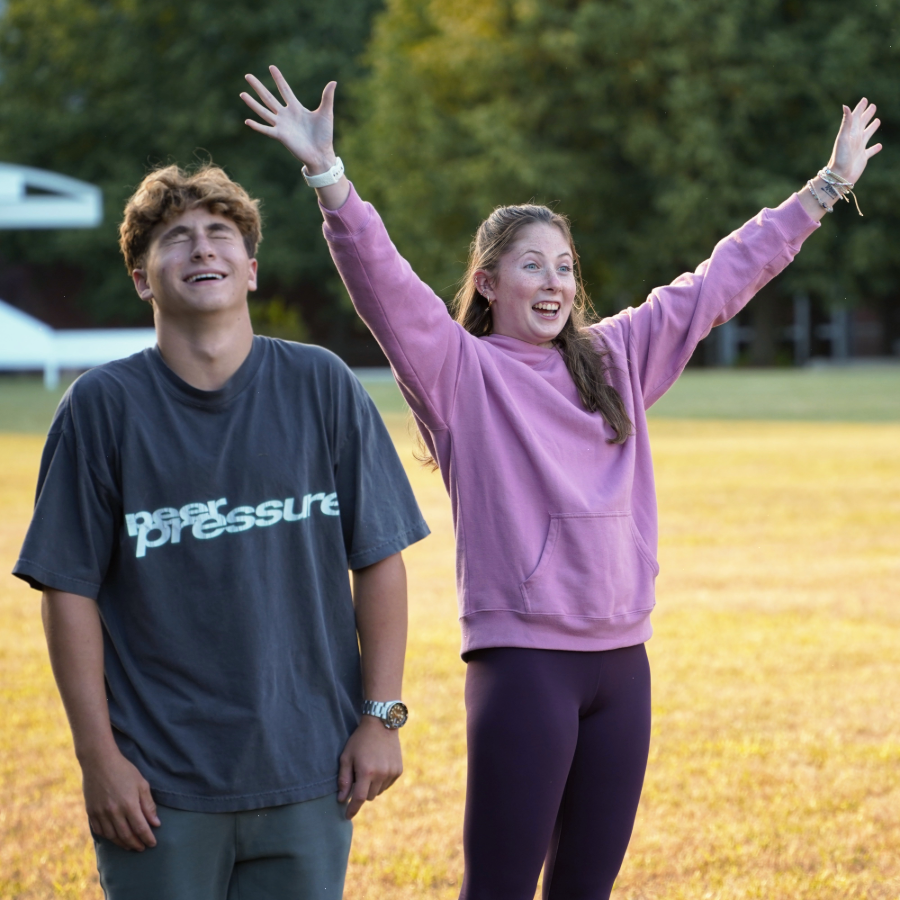
A little recreation never hurt anyone, did it? Have no fear - the average Presidential Fellows GPA is 3.6.
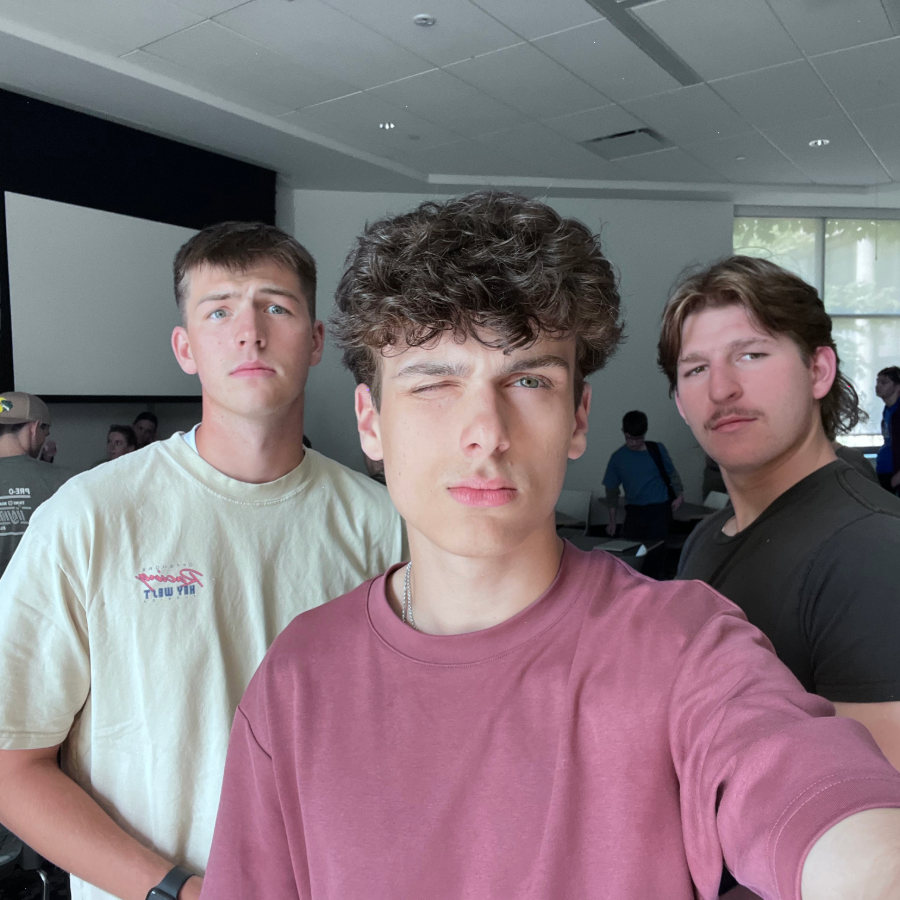
Presidential Fellows are never afraid of doing... whatever it is these guys are doing.
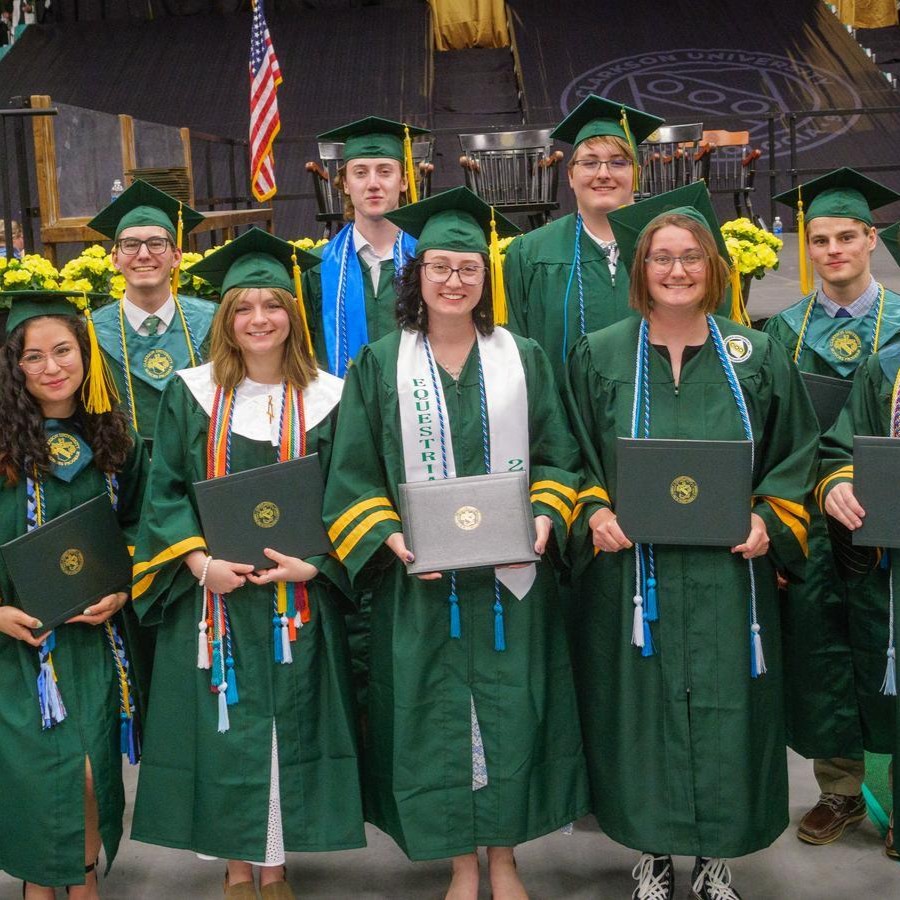
With each passing year comes the graduation of one class of Presidential Fellowss and YIEs, as well as the introduction of another!
Learn More About Ignite
What’s next for Ignite? A bright future filled with innovation, entrepreneurship, and all things creativity. Stay tuned!
Ignite Project Expo & RAPS
Ignite Project Expo & RAPS
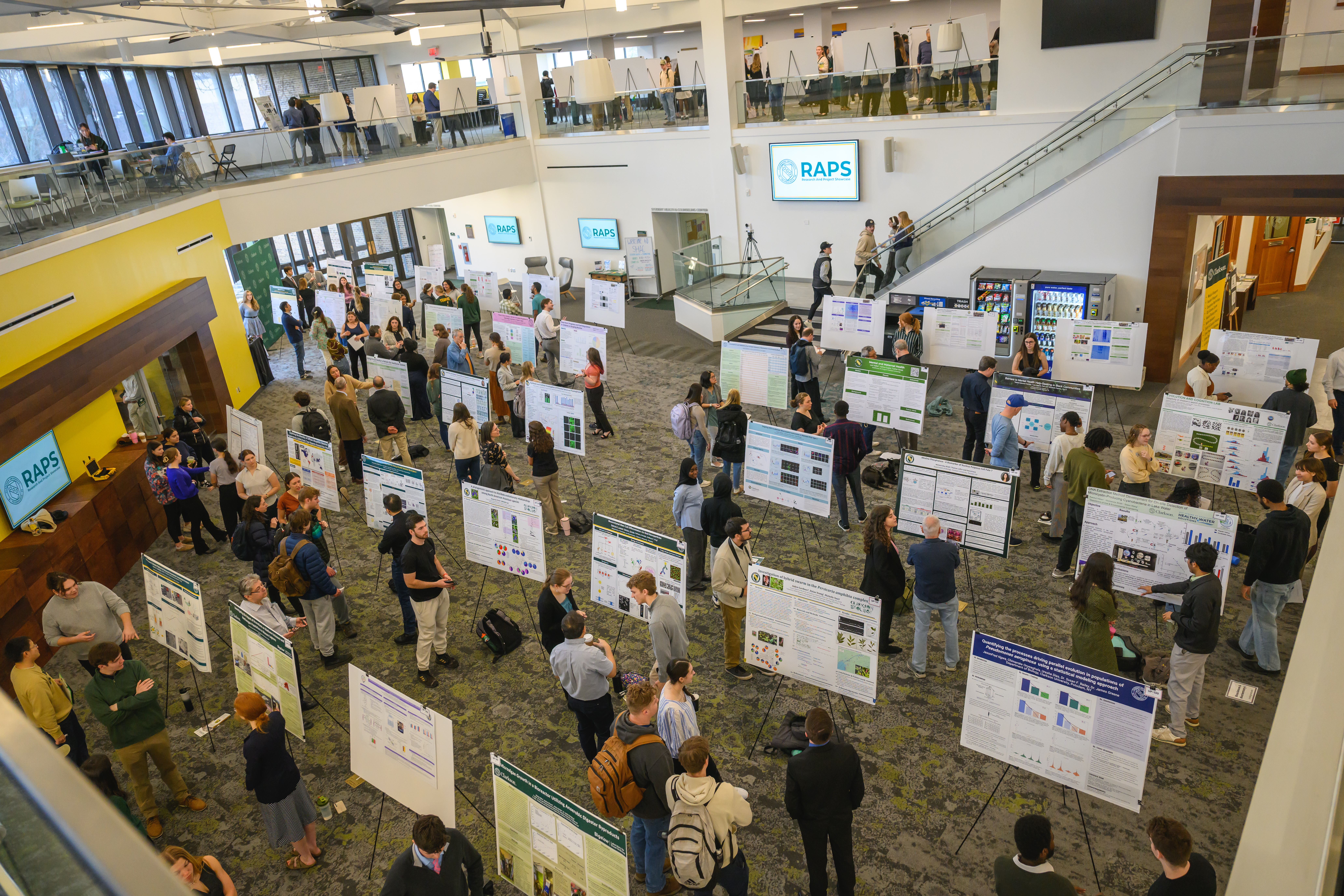
Exhibiting Outstanding Achievements
At Clarkson, celebrating groundbreaking projects is key to fostering creativity and innovation across campus. Annual Ignite Project Expo and Research and Project Showcase (RAPS) events highlight these remarkable accomplishments in a distinct Clarkson way.
Biomedical Science
Unique investigations into vital health and life sciences.
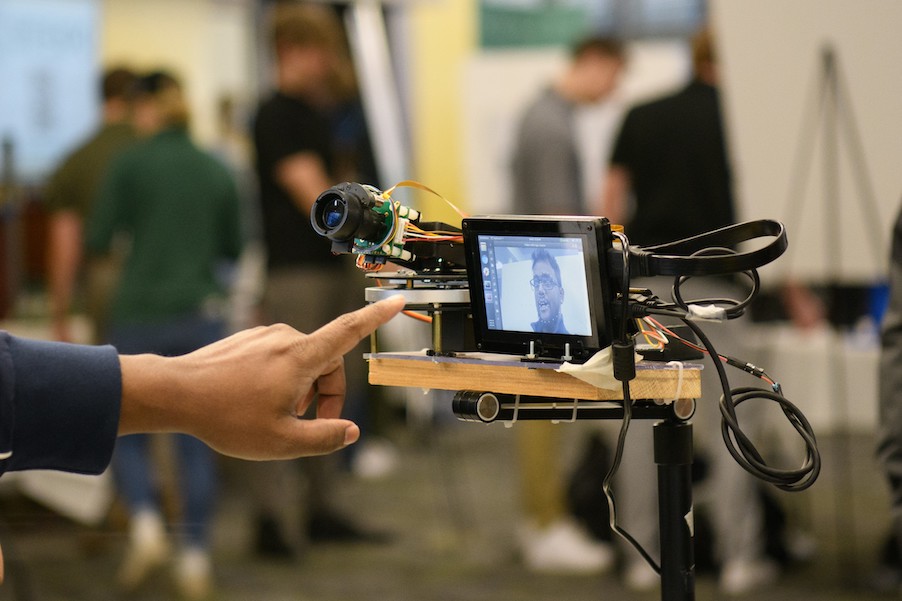
Digital Transformation
Digital tools leveraged for driving impactful change.
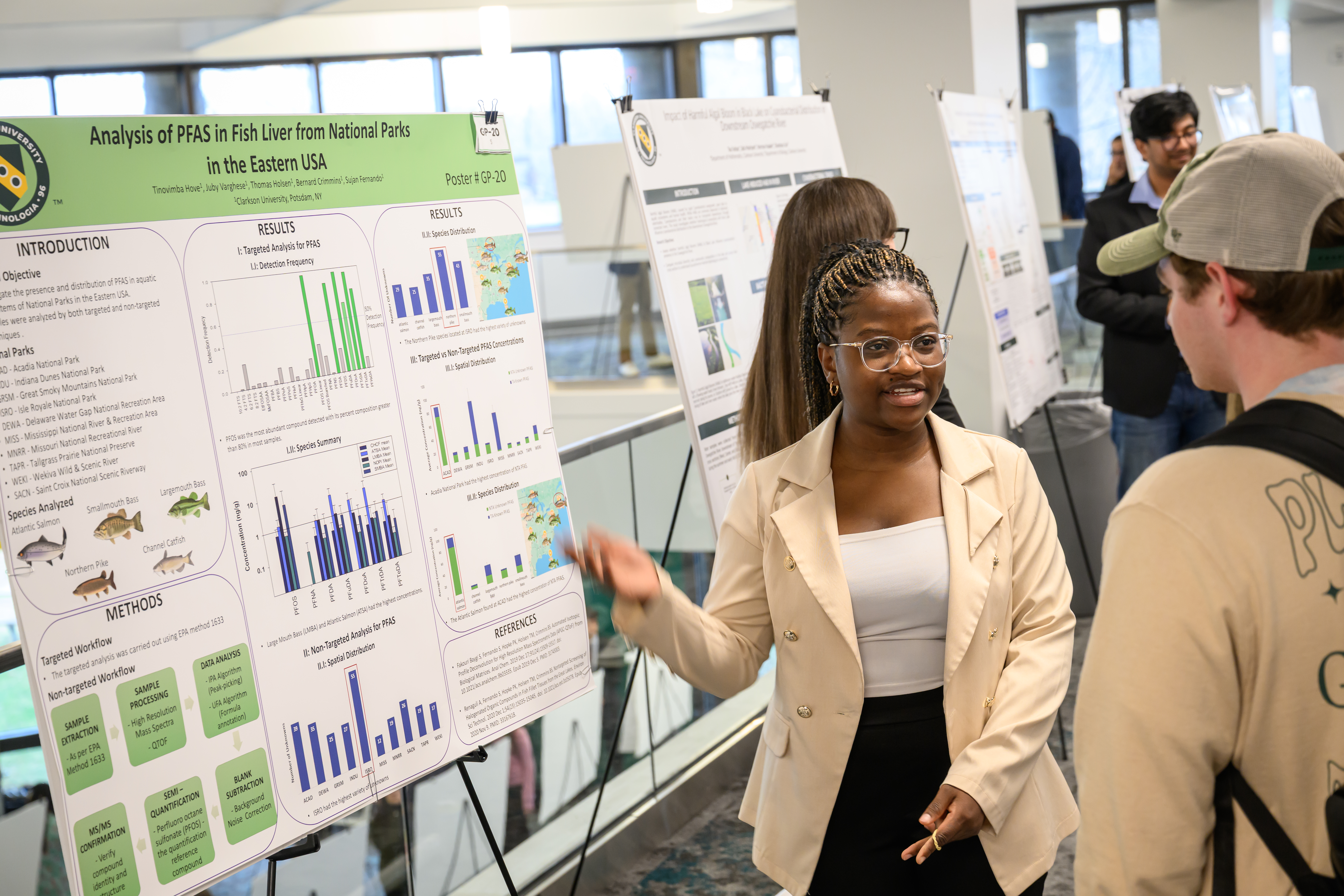
Environmental Analysis
Approaches for ecological balance and conservation.
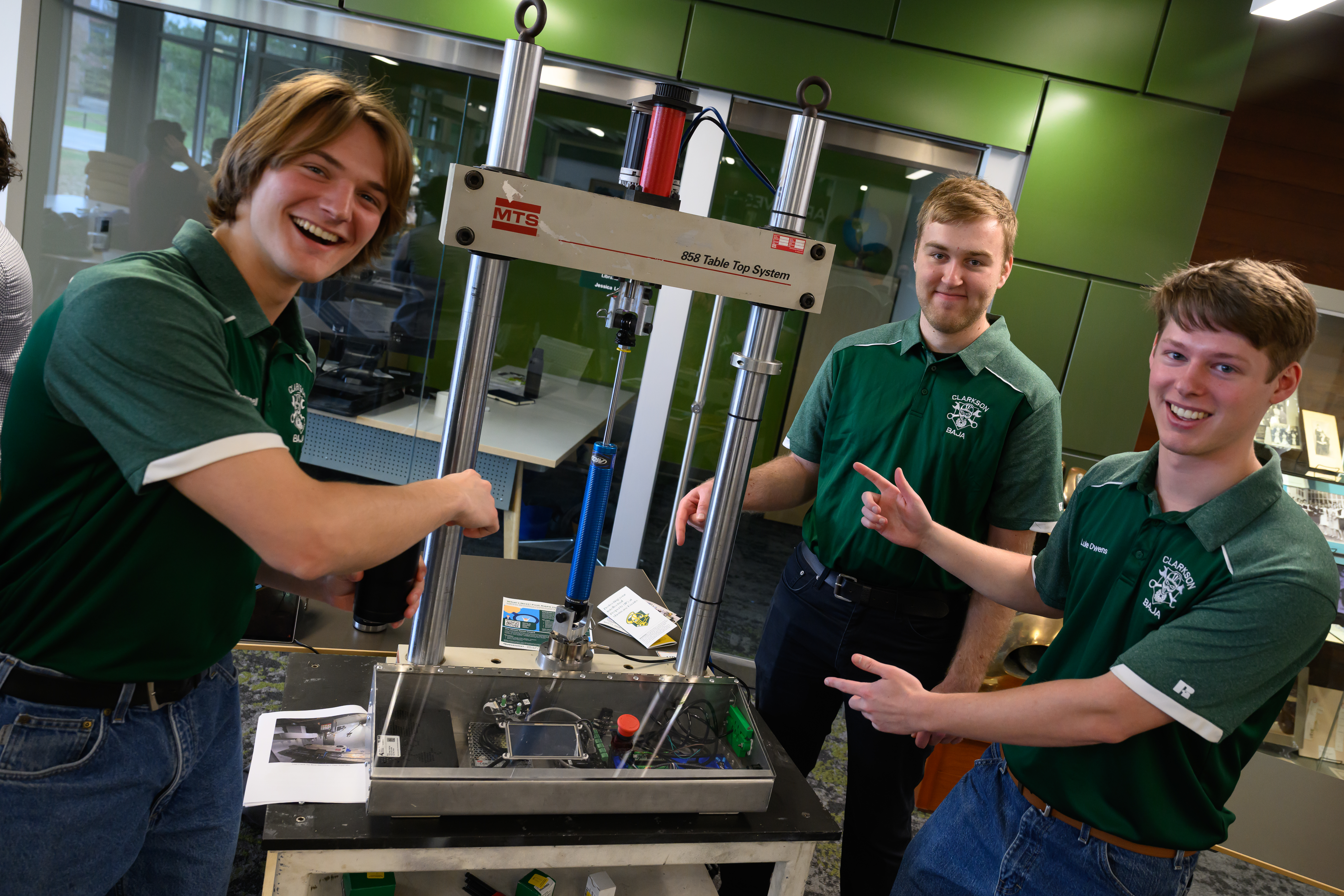
Integrated Design
Mechanical Engineering concepts taken to the next level.
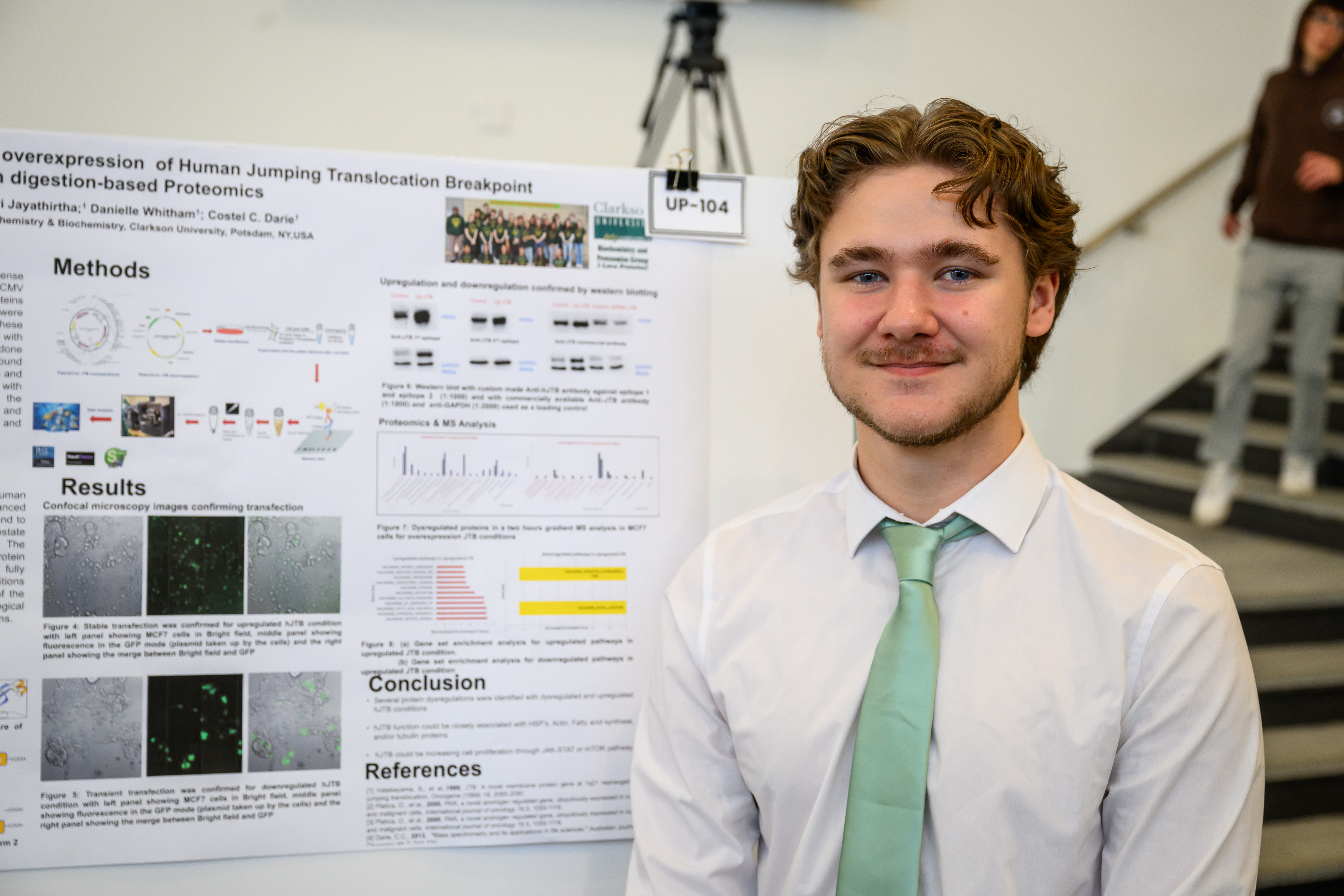
Proteomics
Critical examinations into proteins and their composition.
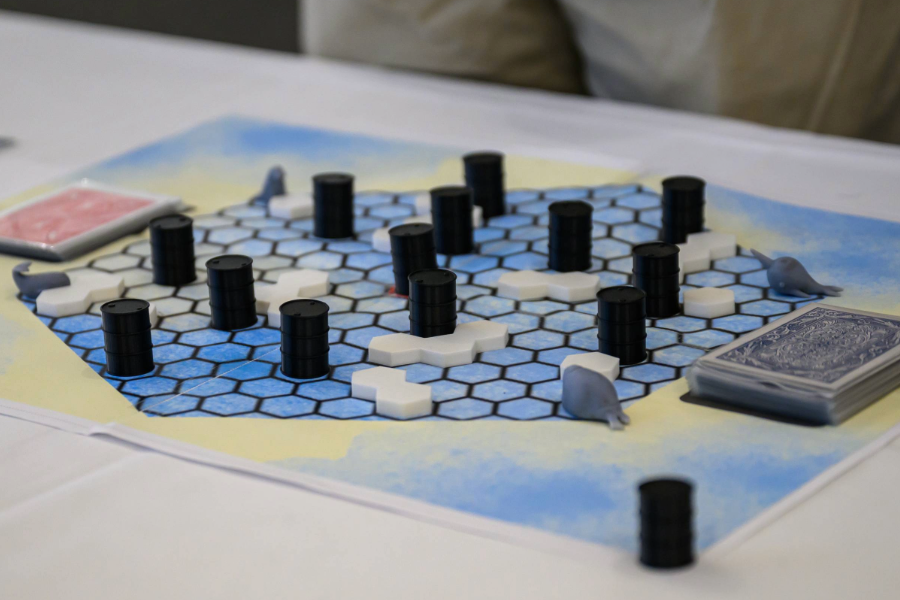
Wargaming
Strategic simulations that explore tactics and decision-making.
E&M Innovation For All To See
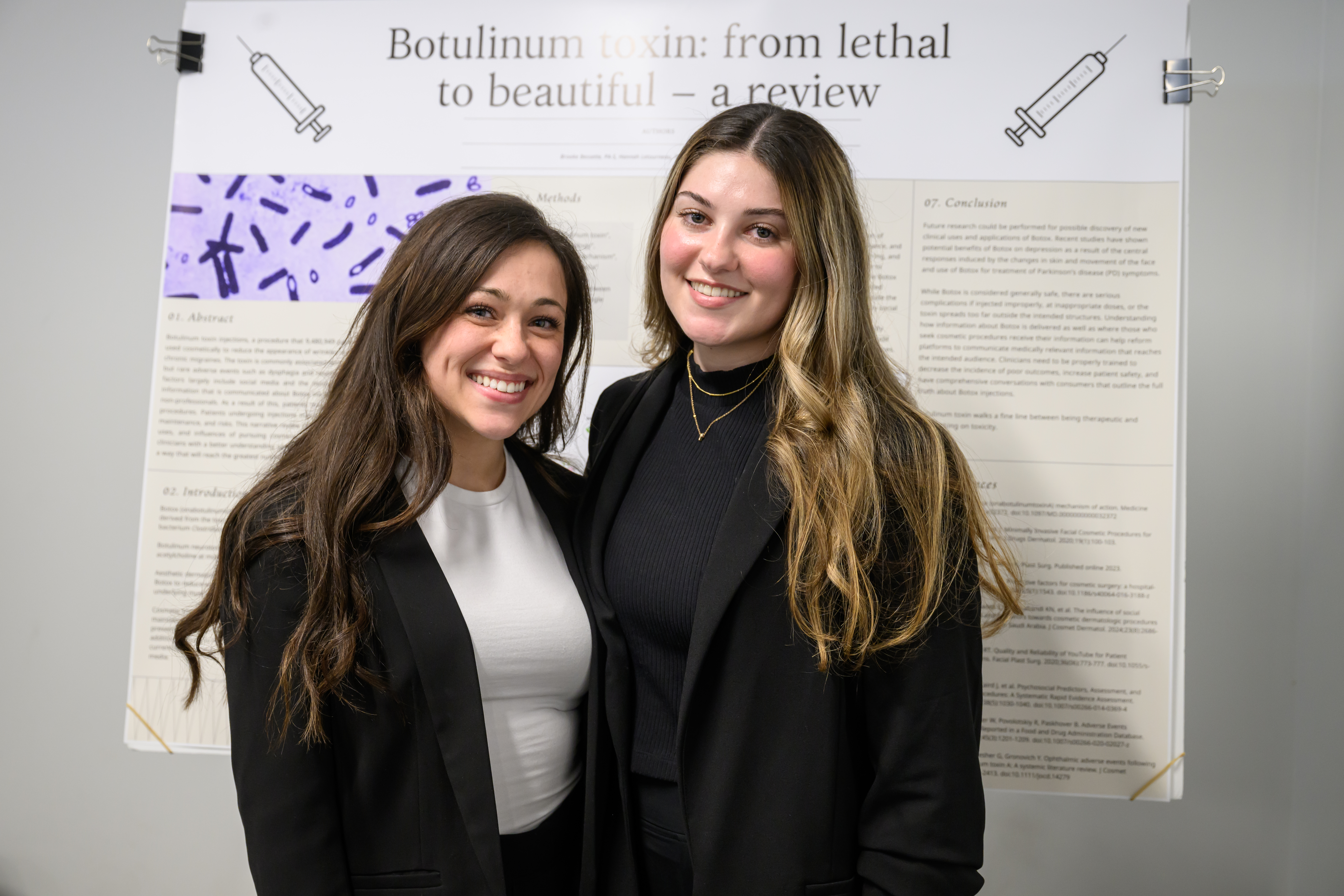
For Isabelle Vaccaro (E&M ‘25, left), Lauren Shanahan (E&M ‘26, right), and Riley Cullen (E&M ‘26, not pictured), presenting at the 2025 Ignite Project Expo wasn’t a decision made lightly; it was a matter of developing a unique project that would showcase their innovative E&M spirit through a critical real-world impact.
While completing Engineering & Management capstone course Invention Development & Protection under the guidance of Associate Professor John Milne, the trio’s distinct vision became clear: Personal Safety Wearable Device, a practical and dependable safety solution that protects women while on runs.
Envisioned as a multi-purpose emergency tool, the team’s device will serve as a proactive safeguard against stranger threats by continuously monitoring conditions, recognizing potential threats, and enabling rapid responses. With a mock prototype developed, next steps are implementation and patenting.
Following live discussions throughout the Expo’s presentation session and a spontaneous explanation during the Pitch-Off competition, Personal Safety Wearable Device was declared the second occasion’s grand prize-winning project. With public support and funding secured, Isabelle, Lauren, and Riley are primed for success while taking their unique E&M-based project to the next level.
Clarkson Ingenuity On Display
During each Ignite Project Expo and RAPS occasion, hundreds of Clarkson students compete with unique and innovative works.
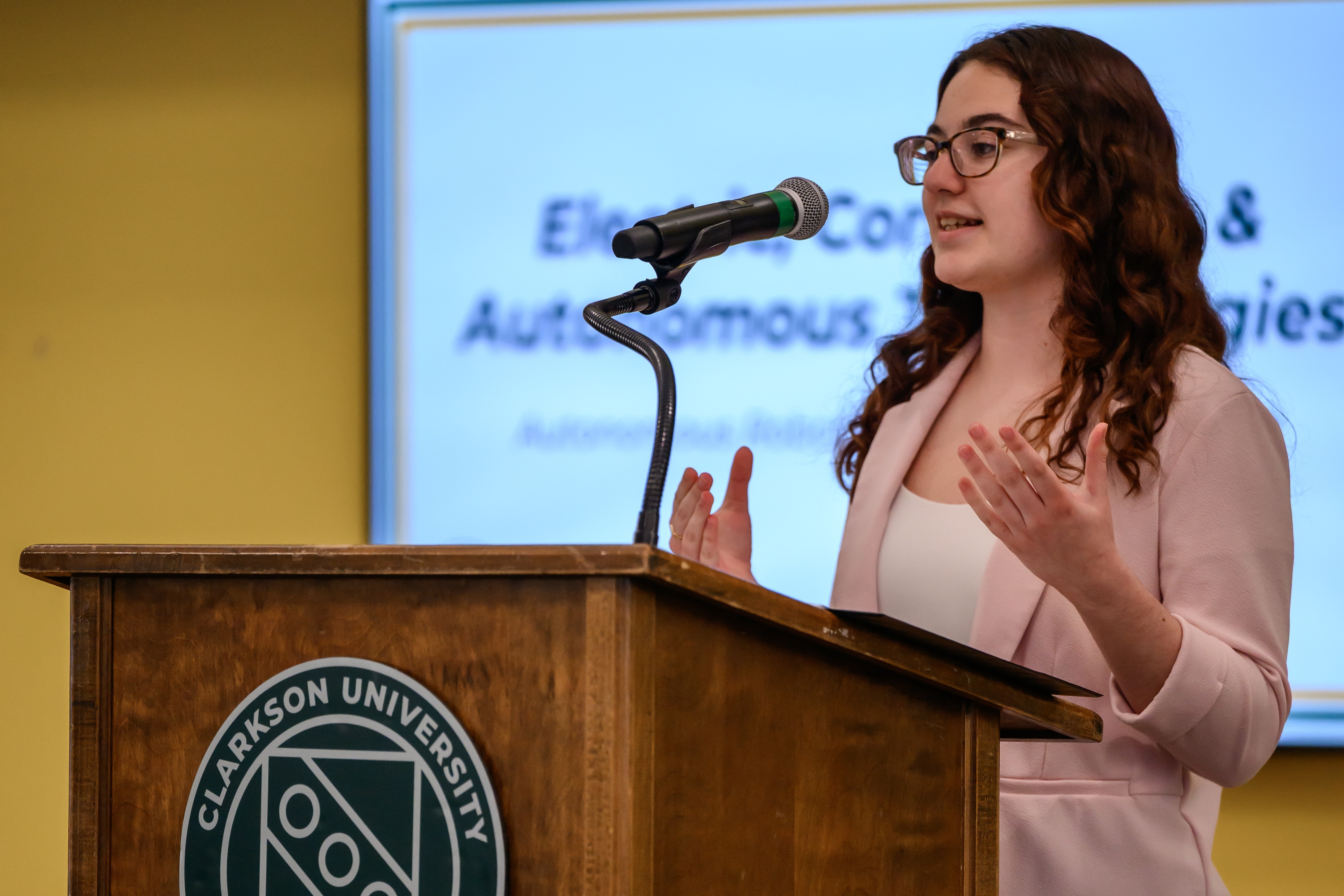
Public Presentations
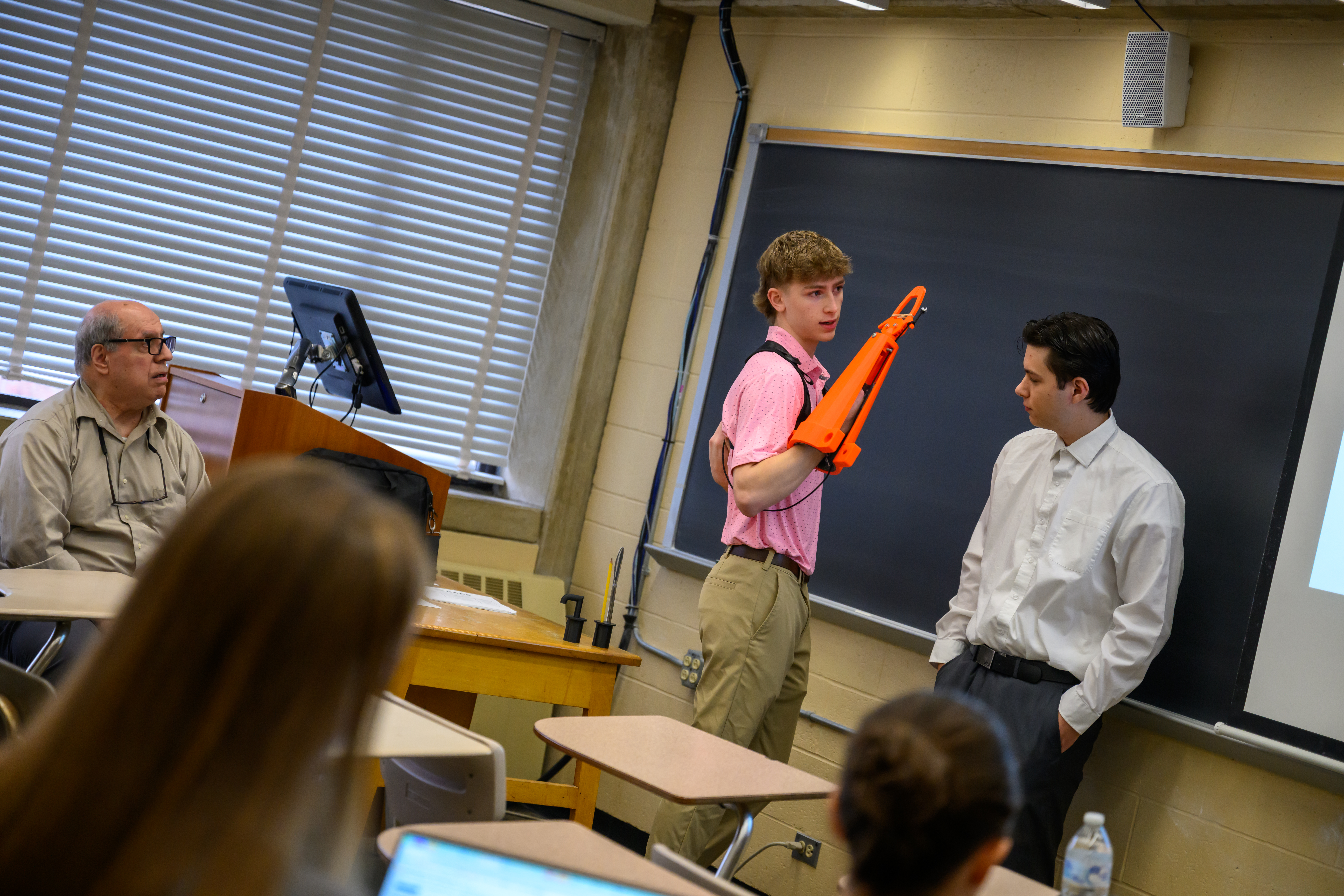
Freshmen Success
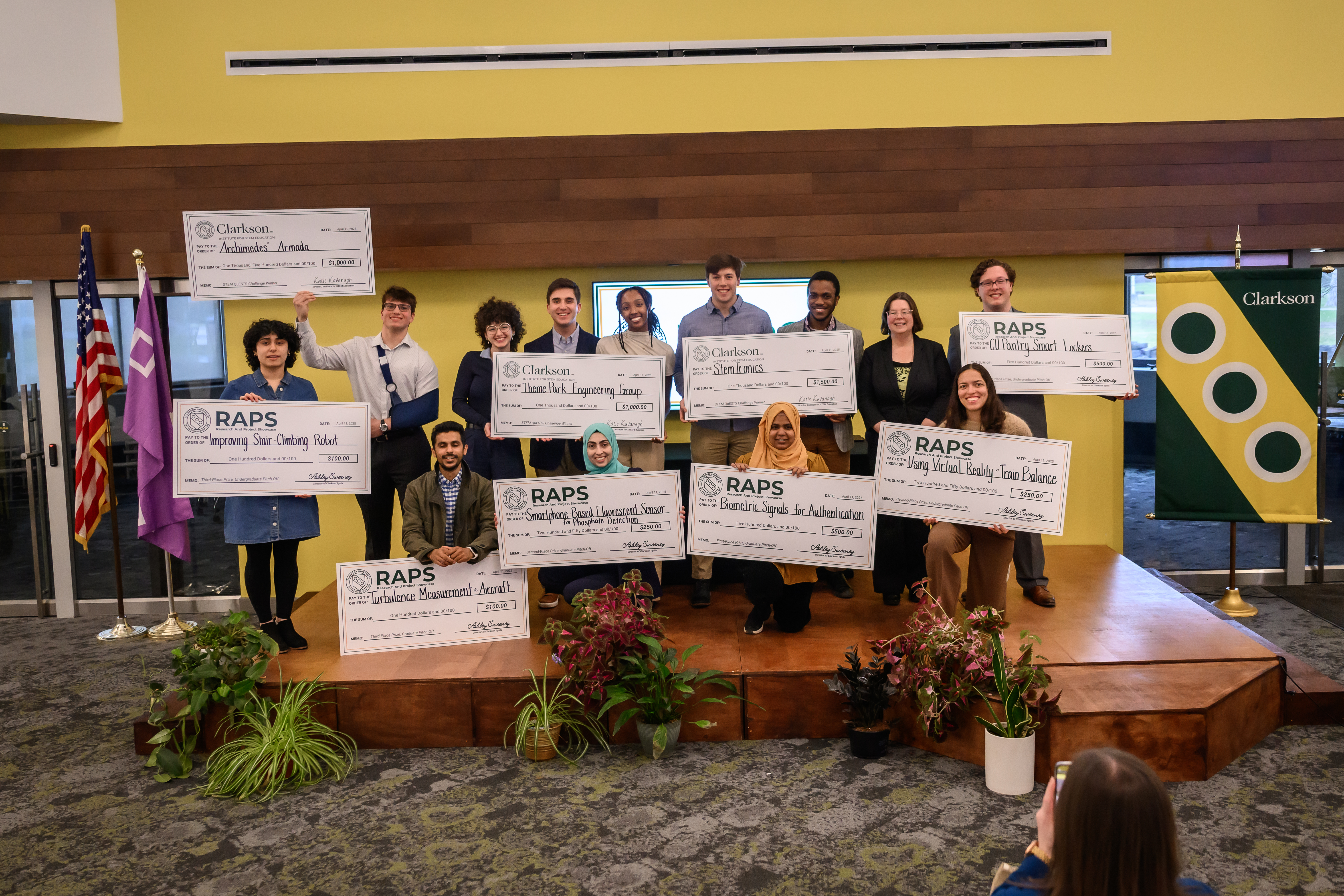
Recognition & Prizes
Ignite Project Expo & RAPS Award Recipients
STEM QuESTS
Grand-Prize Winner
Anemochary in Action (Abbie O’Brien & Timothy Read)
Winning Finalists
Markets in Motion (Michael Juriga II)
The Storm Proof Challenge (Palmer Steward)
RAPS Student Award Recipients
Graduate Pitch-Off
First Place - How Screen Time Affects Children (Emma Baxter)
Second Place - Biometric Authentication: Machine Learning Studies (Arfina Rahman & Manpreet Mahal)
Third Place - Quantifying Cancer Killing Drug Combinations (Kelsey Sheehe)
Undergraduate Pitch-Off
First Place - Analyzing Serum Peptidomes - Biomarker Discovery (Ethan Freedley)
Second Place - Fall Island Retaining Wall Project (Austin Reed, Maeve Bartell, Luc Viens, Luke LePage, Seamus McGovern-Lind, Hunter Berg, Daniel Corcoran, & Nathalia Mangat)
Third Place - Rejuvenation: A Star's Second Life (Alexander Rosmarino)
Community Engagement Award (Sponsored by Clarkson Ignite)
Clarkson AED Coverage Analysis (Jerry Orans)
Strategies for Coping with Perinatal Anxiety (Sukhi Sandhar)
Creative Expression Award (Sponsored by the University Libraries)
McCauley Comic Strip (Ethan Lyons)
Lewis School of Health & Life Sciences Award (Sponsored by St. Lawrence Health)
EMS and Chest Pain (Triston Riley)
How Screen Time Affects Children (Emma Baxter)
Environmental Health & Safety Award (Sponsored by Environmental Health & Safety)
Clarkson AED Coverage Analysis (Jerry Orans)
Graduate Sustainability Award (Sponsored by the Institute for a Sustainable Environment)
Electrons in Plasma Water Treatment (Chiagozie Mary Chukwukwute)
Undergraduate Sustainability Award (Sponsored by the Institute for a Sustainable Environment)
Fish Ladder Optimization Research (Samuel Carusone, Quintin Simjouw, & Ellis Snyder)
Adirondack Wildfire Preparedness and Resilience (Brodie Lanoue)
Graduate Commercialization Award (Sponsored by the Shipley Center for Innovation)
Skill Extraction and Market Trend Analysis from Job Postings (Eden Abdisa Gurmessa & Pavithra Shankar)
Undergraduate Commercialization Award (Sponsored by the Shipley Center for Innovation)
Lego Circuit Blocks (Gabriel Grace, Joshua Noteman, Andrew Kluse, Jake Hernigle, & Sam Drake)
Top Scorers - Undergraduate Poster Research
Biomedical & Health Sciences
Unknown Drug Toxicity Discovered (Creighton Williams, Norman Haaker, & Min Htwe)
Biosciences
Nucleus Pulposus Cell Fate (Michele Bou Khalil)
Chemistry & Biochemistry
Breast Cancer Protein Biomarkers (Zachary Ely)
Materials Science & Engineering
Impact of Compounds on Polyurethanes (Sienna Snyder, Cameron Chiappetta, & Dylan Keech)
Physics & Computational Modeling
Redesigning Ribs! But for Wings (Ziya Lu)
Psychology, Behavioral Sciences, & Social Sciences
Early Headstart Programs Influence on Parents and Children (Genevieve Mucitelli & Makayla Kepner)
Sustainability and Environmental Science & Engineering
Electrochemical Carbon Removal from Oceans (Evelyn Vieira & Garett Waltman)
Top Scorers - Undergraduate Poster Projects
Civil & Environmental Engineering
Fall Island Retaining Wall Project (Austin Reed, Maeve Bartell, Luc Viens, Luke LePage, Seamus McGovern-Lind, Hunter Berg, Daniel Corcoran, & Nathalia Mangat)
Foundations of Engineering Design
Structural Design Modular Toy (Parker Blanchard, Liam Murtaugh, Dylan Caratsole, Eamon Guilbault, & Chandler Neveu)
Community Engagement
Mapping the Art of St. Lawrence County (Halle Yildiz)
Wargaming
Potsdam Town Tactics and Treachery (Kabir Singh, Kevin McAvoy, Jack Reed, Jade Stevenson, & James Meredith)
Applied Work in the Adirondacks
Adirondack Wildfire Preparedness and Resilience (Brodie Lanoue)
Applied Work in Water & Energy Systems
Construction of Rotating Drum Composter (James Gillett, Maxwell Moore, Francis Stuart, Max Ferran & Cooper Sienko)
Mechatronics
R2-X2: The Astromech Hull-Crawler (Brayden Bush)
Human Health & Performance
Clarkson AED Coverage Analysis (Jerry Orans)
Society, Culture, & Innovation
McCauley Comic Strip (Ethan Lyons)
Innovative STEM Toy Design
Customizable RC Car (Alexander Sweeney, Jack Stanney, John Ahlfeld, Pierce Dalton & Andrew Pokorski)
Top Scorers - Undergraduate Oral Research
Biosciences, Biomedical, & Health Sciences
Analyzing Serum Peptidomes - Biomarker Discovery (Ethan Freedley)
Psychology, Behavioral Sciences, & Social Sciences
Constructive and Destructive Climate Anger: Emotion Regulation and the Pathways to Climate Engagement and Hope (Anna Van Amburgh & Naana Hitchful)
Materials, Sensors, & Physics
Rejuvenation: A Star's Second Life (Alexander Rosmarino)
Top Scorers - Undergraduate Oral Projects
Engineering & Society
STEM Toy Design (Paige Weckesser, Sophia Reitmeyer, Jane Goodwin, & Robert Piddock)
Integrated Studies in Science & Society
Microplastics from Direct Snowfall (Alivia Menser)
Top Scorers - Graduate Poster Research
Applied Math & Computational Modeling
Quantifying Cancer-Killing Drug Combinations (Kelsey Sheehe)
Biomedical & Health Sciences
Comprehensive Peptide Analysis of Serum (Pathea Bruno, Shaelee Torres, Sarah Abbott & Ethan Freedley)
Sensors, Signals, & AI
Generating Realistic Synthetic Bio-Signals (Fatemeh Ghasemi Balouei)
Sustainable Materials, Systems, & Ecosystems
Electrons in Plasma Water Treatment (Chiagozie Mary Chukwukwute)
Top Scorers - Graduate Poster Projects
Analytics & Informatics
Skill Extraction and Market Trend Analysis from Job Postings (Eden Abdisa Gurmessa & Pavithra Shankar)
Occupational Therapy
Strategies for Coping with Perinatal Anxiety (Sukhi Sandhar)
Clinical Treatments & Medical Interventions
Effects of Niacinamide on Skin Malignancies (Marilyn Keneston)
Public Health, Healthcare Systems, & Access
Emergency Care in Vermont’s Rural Hospitals (Margaret Kelly)
Behavioral Health, Lifestyle, & Emerging Perspectives
How Screen Time Affects Children (Emma Baxter)
Top Scorers - Graduate Oral Research
Applied Math - Biological & Environmental Applications
Bayesian Networks for RA Prediction (Sahba Safari)
Applied Math - Biometrics & Computational Modeling
Biometric Authentication: Machine Learning Studies (Arfina Rahman & Manpreet Mahal)
Biosciences
Chemotherapy Morphodynamic Cellular Response (Tanaka Blessing Mudzimbasekwa)
Chemistry & Electrochemistry
Portable Sensor for Safer Food (Nishi Gondhiya)
Environmental and Materials Sciences & Engineering
Quantifying Extrinsic Hydrogel Processing Effects (Rabia Fatima)
Top Scorers - Graduate Oral Projects
Life Sciences & Health Innovation
Health Literacy in Head and Neck Cancers (Mollie Fordham)
RAPS Faculty Award Recipients
The Clarkson Distinction in Faculty Mentoring in Research & Scholarship Award recognizes a faculty member who has demonstrated an outstanding commitment to faculty mentoring in research and scholarship by actively assisting pre-tenure and mid-career faculty in developing their careers. The 2026 recipient is Lisa Legault.
The Clarkson Excellence in Research & Scholarship Award is granted to a mid-career tenured faculty member that has had a significant impact on their chosen field of study. The 2026 recipient is Chunlei “Charles” Liang.
The winner of the second annual Faculty Research and Project Spotlight, a special Pitch-Off competition held between eight Clarkson faculty across all disciplines and schools, is Xiaocun Lu.
First-time grant recipients for fiscal year 2025 are:
Tyler Conlon
Ryan Deuel
Damien Samways
Oleh Smutok
Ying Zhang
Patent awardees for the 2025-2026 academic year are:
Bill Jemison, with Luke Rumbaugh and Austin Jantzi, for their patent, “Axicon Scatter Filter Assembly.”
Mahesh Banavar, with Stephanie Schuckers and Daqing Hou, for their patent, “System and method to authenticate users on a computing system using a free text behavioral biometric method.”
Yang Yang and Stefan Grimberg, with student co-inventors ShaSha Yang, Luz Estafany Quispe Cardenas, for their patent, “System and method for electrochemical oxidation mitigation of harmful algal bloom and cyanotoxins.”
Clarkson’s Million Dollar Club recognizes researchers who have been supported with $1 million or more in external sponsored research. The 2026 inductees are:
Erik Backus
Christino Tamon
Robert Thomas
The Multi-Million Dollar Club includes researchers who have received $5 million or more in external funding. The 2026 inductee is Silvana Andreescu.
Ignite Project Expo Winners
First Place Prize
Personal Safety Wearable Device (Lauren Shanahan, Riley Cullen, & Isabelle Vaccaro)
Second Place Prize
Lightweight Portable Bridge (Owen Cyrus, Justin Levy, Thilo Steinhoff, Joseph Malgioglio, & Daniel Schilling)
Third Place Prize
Flush and Fresh (William Dunphey, Aleck Richards, Samuel Wesson, & Tucker Ives)
Special Award Recipients
Sustainability Award (Sponsored by the Institute For a Sustainable Environment)
Dar-Aid Corp. (Sadia Abakar Khatir Adam, Chidiogor Ofodum, & Nabitou Cisse)
Snail-Line Miami (James Weber III, Rayhan Davis, Zachary Boeck, & Miles Scanlan)
Commercialization Award (Sponsored by the Shipley Center for Innovation)
Real-Time Age Verification for Children (Munongedzi Mabhoko)
Halo (Ethan Haahr, Brennan Aldous, Brayden Kenny, & Caleb Turner)
Community Outreach Award (Sponsored by the Office of Student Life)
Personal Safety Wearable Device (Lauren Shanahan, Riley Cullen, & Isabelle Vaccaro)
Stacking Up Sustainably Ecobricking (Hailyn Buker)
CU HEAT Team (Liam Waterman, Abbey Rode, Daniel Svoboda, & Liam Quick)
Faculty Spotlight Award
General Chemistry I (Jim Peploski)
Category Top Scorers
Applied Engineering
Overhead Spinner Combat Robot (Lucas Lacerda)
Community Engagement
CU HEAT Team (Liam Waterman, Abbey Rode, Daniel Svoboda, & Liam Quick)
SLC Arts Capital Project Campaign (Natalie Glass)
Creature Camouflage (Madeline Bresnan & Grace Stifflemire)
Massena Historical Signs (Colin Kelliher, Vi Pham, & Johnathan Klick)
Education & Human Services
HomeOwner InterventionsProject (Lauryn Wilson)
Engineering & Society
Riverlink Bridge (Keagan Cousineau, Evan Murray, Abigail Palmer, Maggie Pierce, & Paige Wallace)
Portable Pedestrian Bridge Prototype (Michael Spina Jr., Allison Kennedy, Alexandra Little, & Nicholas Williams)
Lightweight Portable Bridge (Owen Cyrus, Justin Levy, Thilo Steinhoff, Joseph Malgioglio, & Daniel Schilling)
Truss' Us We're Engineers (Austin Wultsch-Fuller, Hannah Nolett, Tommy Mahar, Evan Turcotte, & Alyssa North)
Health, Safety, & Security
Personal Safety Wearable Device (Lauren Shanahan, Riley Cullen, & Isabelle Vaccaro)
New Product Idea
Universal Power-Tool Battery Adapter (Donald Duffus, Daniel Killian, Aidan Richardson, Jesse Poor)
Flush and Fresh (William Dunphey, Aleck Richards, Samuel Wesson, & Tucker Ives)
Sustainability
Stacking Up Sustainably Ecobricking (Hailyn Buker)
Wargaming
RevoluQin (Nathan Draper, Connor Tasselmyer, Noah Diskin, & Aleksander Elkins)
Conquest Over Al-Andalus (Alexander Testani, Collin Wickizer, Gabrielle O'Connell, & Caleb Treadwell)
Special Award Recipients
Undergraduate Pitch-Off
First Place - Testing Mercury in Fish (Maya Kao)
Second Place - Smart Home for Alzheimer’s (Lucas Lacerda)
Third Place - App Development for Bio-Simulations (Olaolu Olugbenle)
Sustainability Award
Sustainable Seaweed Processing (Aslhy Torres)
Recycling Nutrients from Wastewater (Nora Conzemius)
Commercialization Award
Phosphate Detection in the Field (Jehad Abdelnabi & Batuhan Uzunoglu)
Smart Appliance Safety for Dementia (Adkit Modhera)
Top Scorers - Undergraduate Poster Presentations
Applied Electrochemistry
Wearable Electrochemical Sensor System (Sigmond Kukla)
Biomedical & Health Sciences
Change of FGFR Over Metamorphosis (Sadia Abakar Khatir Adam & Kayla Ellis)
Disc Injection of Particles (Austin Boie)
Biosciences
Testing Mercury in Fish (Maya Kuo)
Computer Science, Artificial Intelligence, Computational Modeling, and Data Analytics
Recognizing Faces Through Age (Jesse Dykes)
Thermal Effects on Nanodevices (Mihail Kazankovski & Martin Veresko)
eCAT
Indoor Autonomous Navigation (Cameron Watson & Rowan Wysocki)
Education, Psychology, and Social Sciences
Testing Human Attention (Zainab Fatmi)
Environmental Science & Engineering
Nutritional Algae from Digestate (Emilia Sabataso)
Physics, Mechatronics, and Inclusive Design
Smart Home for Alzheimer's (Lucas Lacerda)
Materials and Sensors
Bone Cement Drug Release (Saadhika Dhaniyala & Georgia Thurmond)
Reconstructing Knife-Edge Technique (Tessa Masi)
Sustainable Energy
Benefit Cost Analysis of Batteries (Adrian Torres Maginot)
Optimizing the Power Grid (Maverick Savage)
Top Scorers - Undergraduate Oral Presentations
Bio-, Environmental, and Social Sciences
App Development for Bio-Simulations (Olaolu Olugbenle)
Biomedical & Health Sciences
Possible Treatment For Neurodegenerative Diseases (Ella Martel)
Computer Science, Artificial Intelligence, Computational Modeling, and Data Analytics
Masking For PIV (Hailey Meagher)
Physics, Mechatronics, and Inclusive Design
Talking Robot For Dementia (Abdullah Moin)
Top Scorers - Graduate Poster Presentations
Bioscience, Environmental Science, and Sustainability
Phosphate Detection In The Field (Jehad Abdelnabi & Batuhan Uzunoglu)
Computer Science, Artificial Intelligence, Computational Modeling, and Data Analytics
Biomarkers for Cancer Detection - Pragyan Kadel
Materials and Sensors
Solving Real-World Data Challenges in EdTech (Nomagugu T. Ndlovu)
Top Scorers - Graduate Oral Presentations
Biomedical & Health Sciences
AI-Powered 3D-Printed Uric Acid Patch (Aqsa Khan)
Bioscience, Environmental Science, and Sustainability
Environmental Non-Profit Public Communication (Evelyn Laferriere)
Computer Science, Artificial Intelligence, Computational Modeling, and Data Analytics
Transformer-Based Biometric Authentication (Arfina Rahman)
STEM QuESTS
Grand-Prize Winner
StemTronics (Justin Bouchard & Olaolu Olugbenle)
Winning Finalists
Archimedes' Armada (Michael Juriga II)
Theme Park Engineering Group (Salwa Omar, Jayda Lundy, & Juan Pablo Sola-Thomas)
RAPS Student Award Recipients
Graduate Pitch-Off
First Place - Biometric Signals for Authentication (Arfina Rahman)
Second Place - Smartphone-Based Fluorescent Sensor for Phosphate Detection (Jehad Abdelnabi)
Third Place - Turbulence Measurement in Aircraft Aerosol Inlets (Nagarajan Radhakrishnan)
Undergraduate Pitch-Off
First Place - CU Pantry Smart Lockers (Johannes Richter)
Second Place - Using Virtual Reality to Train Balance (Alexa Madrid)
Third Place - Improving Stair-Climbing Robot Stability for Assistive Applications (Edina Jan)
Graduate Sustainability Award
Phosphates Recovery from Tiled Drained Water Using Biochar Adsorbent (Trynos Mukwarami, Kelechi Okere, Ulfet Erdogan, & Jehad Abdelnabi)
Hands-On Sustainable Waste Management Training (Nomagugu T. Ndlovu)
Undergraduate Sustainability Award
Reducing Methane Emissions with Seaweed (Ella Weldy, Seamus McGovern-Lind, & Jason Hofmann)
Aquatic Nutrient Loading Study Proposal (Grace Mundinger)
Graduate Commercialization Award
Smarter HVAC Clean & Fresh Air (Shorab Hossain)
Undergraduate Commercialization Award
Students Designed Prosthetic for Kids (Samuel Hilderbran, Matt Whispell, Benjamin LeBlanc, Ryder Leckie, Sean Gray, & Ryan Sepe)
Improving Stair-Climbing Robot Stability for Assistive Applications (Edina Jan)
Graduate People’s Choice Award
How EMS Delays Affect Life-Saving Treatments for Cardiac Arrest Patients (Manpreet Kaur & Chaitanya Pammi)
Undergraduate People’s Choice Award
Ultrasound Detection to Identify Internal Bleeding (Gabe Adamson, Daniel Wilson, Lucas Lasher, & Tyler Nickels)
Top Scorers - Undergraduate Poster Research
Biomedical & Health Sciences
Using Virtual Reality to Train Balance (Alexa Madrid)
Biosciences & Biochemistry
Targeting Myeloperoxidase to Improve Mitochondrial Health in NPC (Sadia Abakar Khatir Adam)
Water Knotweed, Hybrid Plants, Hybrid Swarm, Genetic Markers (Aiden Gardiner & Dylan Yeung)
Electric, Connected, and Autonomous Technologies (eCAT)
Autonomous Robotics Navigation via LiDAR (Lindsey Hassett & Elizabeth Swartz)
Energy, Electricity, & Environmental Science and Engineering
Reducing Methane Emissions with Seaweed (Ella Weldy, Seamus McGovern-Lind, & Jason Hofmann)
Materials Science
Zinc-Doped Hydroxyapatite for Bone Regeneration (Hope Garramone)
Proteomics
Proteomics Study for Breast Cancer Biomarkers (Peter Biggers, Taniya Jayaweera, Madhuri Jayathita, & Danielle Whitham)
Psychology & Behavioral Sciences
Climate Failure Outrage (Naana Eyikuma Hutchful & Anna Van Amburgh)
Robots, Space, Science, & Data
Improving Stair-Climbing Robot Stability for Assistive Applications (Edina Jan)
Sensors & Signals
Fluorescent Probes for Chloride Detection (Matthias Schmidt)
Top Scorers - Undergraduate Poster Projects
Aircraft Design
Accessible Regional Aircraft Taxi (Megan Michaud, Kasey Billert, Joe Gromlowicz, Ryan King, Aidan Sullivan, & Kaura Chahal)
Architectonics & Mechatronics
CU Pantry Smart Lockers (Johannes Richter)
Engineering & Society
Prosthetic Arm for Child (Will Douglass, Nicholas Smith, Kori Thomas, & Kevin Lovett)
Environmental Science
Using eDNA to monitor fishes (Elizabeth Chase, Johanna Tupper, Sam Carusone, David Selner, & Frederick Minda)
Mechanical Engineering
Shock Dynamometer (Damon Allen Brownell, R. J. Jacobson, James Patrick Keach, Linus Kemper, Luke Matthew Owens, Clay Dalton Reagon, & Aspyn Tripp)
Lacrosse Shaft Improvements (Riley Kuczma, Molly DiCaprio, Rachel Williams, Kristen Bill, & Grace Smith)
Wargaming
Wargame Through Centuries (Kaura Chahal, Stephen Konopko, Dylan White, Olivia Michalski, Chase Koopman, & Sean Butler)
Top Scorers - Undergraduate Oral Research
Mathematical Modeling & Materials Science
Force to See New Reactions (Robert Davis)
Proteomics
Proteomics for Breast Milk Biomarkers (Hailey Morrissiey)
Psychology, Behavioral Sciences, & Health Sciences
Motivation to be Non-Prejudiced (Jordan Summerfield)
Top Scorers - Undergraduate Oral Projects
Civil Engineering & Environmental Science
Recreational Access Improvements to Lake Placid (Michael Moriarty, Sean Butler, Michael Giovino, Ethan Bailey, Anthony DeRosa, Aaron Dunn, Angelina Zeoli, Matthew Ducharme, & Tyler Combes)
Trigger monitoring with VOC emissions (Mairead Coyne)
Solinsky and Science Center Capital Project (Aria Garceau, Allison Diver, Allison Charles, Paige Cutler, Maria Suffredini, Christopher Griggs, Christian Hilton, Anthony Borelli, & Ethan Desko)
Engineering & Society
Designing a Prosthetic Arm (Tim Wilson, Luis Molinar Sanchez, Nicholas DiMichele, Ryan Johnson, & Nathaniel Button)
Modular Pediatric Transradial Prosthetic Arm (Amanda Corrice, David Van Ginhoven, Szymon Koc, Jacob Crawford, & Samuel Garcia)
TE Labs (Brian Nordman, Marjani August, Zachary Henderson, Martha Kitui, & Marcello Vona)
Software Design
Ice Rink Scheduler (Emma Fish, Satya Sai Deepak Velagapudi, Natalie Wesseldine, Claudia LaPlant, & Bhawana Khatri)
ID Scanner (Nicholas Sheldon, Soliat Adeboye, Hunter Smith, Samantha Sikora, & Delara Panahi)
Top Scorers - Graduate Poster Research
Biomedical & Health Sciences
Respiratory Disease, Chi Squared Test, Lifestyle Factor, Demographic Factor, Logistic Models (Ching-Wen Shih, Kuan-Cheng Ko, Thevasha Sathiyakumar, & Naveen Reddy)
Biosciences, Chemistry, & Biochemistry
Quantitative Cellular Chloride Reporter (Prasanna Ganesh, Carolyn Colosi, & KaHo Leung)
Electric, Connected, and Autonomous Technologies (eCAT)
Regenerative Braking Control System (Sean Willis & Thomas Bondaruk)
Manufacturing & Materials
Electrodeposition of Zn-Mn (Nishat Tasnim Nimmu)
Sensors, Signals, & AI
Biometric Signals for Authentication (Arfina Rahman)
Sustainability, Energy, & Environmental Science and Engineering
Mechanochemical PFAS destruction (Jinyuan Zhu)
Pollution in National Park Fish (Tinovimba Hove, Bernard Crimmins, & Sujan Fernando)
Top Scorers - Graduate Poster Projects
Applied Optimization
Optimizing Appointment Delay in Healthcare System (Uresha Dias, Harsha Iduruwage, & Shaira Torsa)
Occupational Therapy
Occupational Therapy in Cancer Care (Hailee Farrand)
Physician Assistant Studies
Obesity in St. Lawrence County (Liam Cummings & Rachel Bradley)
Top Scorers - Graduate Oral Research
Biomedical & Health Sciences
Drug Uptake in Cervical Cancer (Norman Haaker)
Biometrics
Synthetic Fingerprint Generation Using Artificial Intelligence (Syed Konain Abbas)
Biosciences, Chemistry, & Biochemistry
Recovering Mitochondrial Health in NPC cells (Gabriella Ballestas)
Secondary dsDNA Structure Inhibits cGAS (Colby Hladun)
Materials Science, Sensors, & Signals
Smartphone-Based Fluorescent Sensor for Phosphate Detection (Jehad Abdelnabi)
Math, Modeling, & Mathematical Modeling
Theoretical existence of Dirichlet MLEs (Sucharitha Dodamgodage)
Turbulence Measurement in Aircraft Aerosol Inlets (Nagarajan Radhakrishnan)
Sustainability & Environmental Science and Engineering
Iridium Supported Catalyst for Hydrogen Production (Maira Amjad)
A Wash-Treat-Reuse Process for PFAS Investigation Derived Waste (Nicholas Multari)
Population Ecology of Mooneye (David Selner)
RAPS Faculty Award Recipients
The Clarkson Distinction in Faculty Mentoring in Research & Scholarship Award recognizes a faculty member who has demonstrated an outstanding commitment to faculty mentoring in research and scholarship by actively assisting pre-tenure and mid-career faculty in developing their careers. The 2025 recipient is Farzad Mahmoodi.
The Clarkson Excellence in Research & Scholarship Award is granted to a mid-career tenured faculty member that has had a significant impact on their chosen field of study. The 2025 awardee is Andrea Ferro.
The winner of the inaugural RAPS Faculty Research and Project Spotlight, a special Pitch-Off competition held between nine Clarkson faculty across all disciplines and schools, is Damien Samways.
First-time grant recipients for fiscal year 2024 are:
Kwadwo Appiah-Kubi
Emmanual Asante-Asamani
Leigha Gagner
Petra Kraus
Stephanie Kring
Benjamin Roulston
Siwen Wang
Suguang Xiao
Clarkson’s Million Dollar Club recognizes researchers who have been supported with $1 million or more in external sponsored research. The 2025 inductees are:
Michael Bazzocchi
Jan DeWaters
Leo Jiang
Jihoon Seo
The Multi-Million Dollar Club includes researchers who have received $5 million or more in external funding. The two 2025 inductees are Erik Bollt and Suresh Dhaniyala.
Ignite Project Expo Winners
First Place Prize
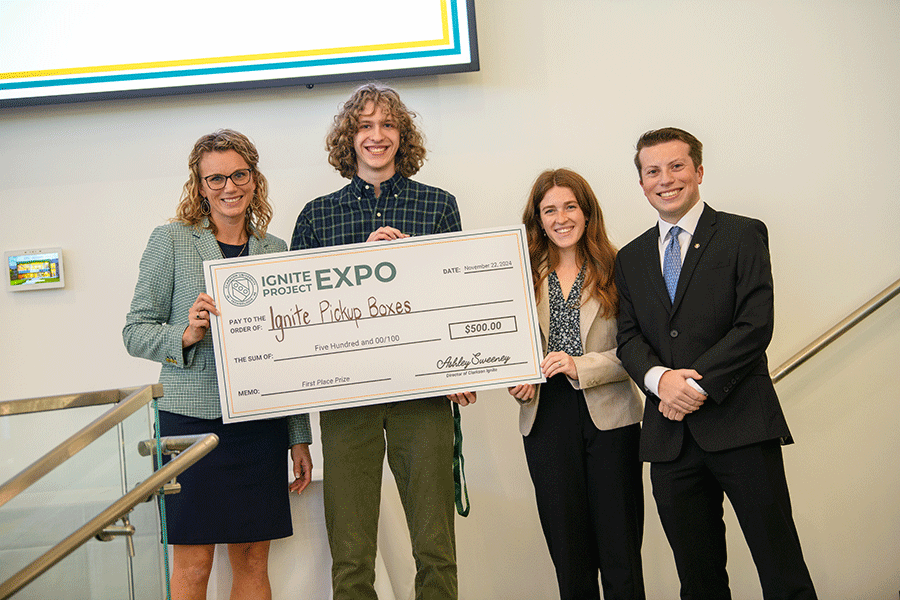
Ignite Pickup Boxes (Sigmond Kukla)
Second Place Prize
Community Partnership with TAUNY (Lauren Kneer, Michele Bou Khalil, & Kelly Lahiff)
Third Place Prize
Nuovo Brands LLC (Ethan Flamand, Rocco Albanese)
Fourth Place Prize
Holden McSqueezy III (Trevor Tamburino, Amanda Polarolo)
Tree-Talk for Tots (Abigail Jeffers, Nicolena Fazio)
Special Award Recipients
Undergraduate Sustainability Award (Sponsored by the Institute For a Sustainable Environment)
Clarkson Arboretum (Lauren Pawlika, Carley McGrath, Lexi Keller, Alexcis Rydelek, Trey Naselli, & Evan Corey)
Graduate Sustainability Award (Sponsored by the Institute For a Sustainable Environment)
LCA of Catered Meal Events (Aslhy Torres, Nick Multari, Gloria Popoola, & Razieh Analouei)
Commercialization Award (Sponsored by the Shipley Center for Innovation)
Forward Bound (Bailey Sweeney, Sean Boyle, Mason Gault, Riya Mistry)
Self Dispensing Hair Brush (Liam Quick, Jackson Waters, Maddie Alfieri, Riley Cullen, & Kirsten Iles)
Community Outreach Award
Community Partnership with TAUNY (Lauren Kneer, Michele Bou Khalil, & Kelly Lahiff)
Food Insecurity in Potsdam (Clare Tucker, Zachary Boeck, Oberon Dickinson, & Becca Lomas)
People’s Choice Award
Apple iSole (Sydney Sandroni, Alexandra Brenton, Brady Hall, Brady Zych, & Markus Kuhnel)
Category Top Scorers
American History
Music History (Jade Stevenson, Lillianna King, Ethan Rak, Graham Zarriello, Hope Hill, Eniya Eudell, Ngaio Hawkins, Ginikachukwu Okoli, & Aaron Reck)
Architecture
Native American Multicultural Learning Center (João Victor França Nunes)
Community Engagement
Tree-Talk for Tots (Abigail Jeffers, Nicolena Fazio)
Community Partnership with TAUNY (Lauren Kneer, Michele Bou Khalil, & Kelly Lahiff)
Digital & Physical Arts
Stained Glass (Lindsay McCarthy)
Digital Transformation
PTZ Camera for Child Face-Capture (Md Abdul Baset Sarker)
Engineering & Society
Sequestration Nation (Anthony Phaneuf, Cazian Comeau-Elman, Chase Fisher, & Elijah McIlrath)
Entrepreneurship
Nuovo Brands LLC (Ethan Flamand, Rocco Albanese)
Industrial Ecology
Ice Rink Industrial Ecology (Avery Hilderbran, Will Dumont, Elizabeth Greco, & Evan Bokelberg)
Heating Riverside Apartments (Carson Bruening, Mark Ramsperger, Justin Pettica, & Robert Greenberg)
Innovation Development
Apple iSole (Sydney Sandroni, Alexandra Brenton, Brady Hall, Brady Zych, & Markus Kuhnel)
Mechatronics
Holden McSqueezy III (Trevor Tamburino, Amanda Polarolo)
Ignite Pickup Boxes (Sigmond Kukla)
New Product Idea
Forward Bound (Bailey Sweeney, Sean Boyle, Mason Gault, & Riya Mistry)
EV Battery Temperature Regulation (Peter Siracuse, Benjamin Lambert, & Sean Finnerty)
Sustainability
Waterfowl Environmental DNA Biomonitoring (Elizabeth Chase, Catherine Benson)
Wargaming
Supply Chain of Russo-Ukrainian Conflict Wargame (Hannah Reed, Owen Danke, & Ethan Spinner)
Route 11 Rivalries (Harry Rodriguez, Daniel Wilson, Joe Gromlowicz, Matthew Colpitts, Morgan Mitskovski)
Battlesburgh (James Molinski, Devin Fitzpatrick, John Purdy, Zachary & Lutzke)
Educating Youths in Style
A signature element of each Spring RAPS event is STEM QuESTS, a challenge sponsored by the Institute for STEM Education where Clarkson students design and deliver hands-on educational experiences for regional K-12 classrooms.
When Michael Juriga II (AeroE '28) entered the challenge, his vision was clear: engage local middle and high school students with Archimedes' Principle and buoyancy through the creation of aluminum foil boats optimized for maximum weight capacity within specific constraints, a key engineering design task.
By promoting inquiry-based learning and connecting applied engineering techniques to core classroom concepts, Michael’s Archimedes’ Armada project was a standout presentation during RAPS. It’s no surprise that he was deemed a STEM QuESTS finalist, receiving recognition and a $1,000 cash prize.
As an Eagle Scout, Presidential Fellows Scholar, and member of the Formula SAE SPEED Team, Michael’s exciting adventures at Clarkson have only just begun. Looking back, he says, “I’m honored to have presented at RAPS & STEM QuESTS. I appreciate that Clarkson offers opportunities that let students turn classroom ideas into tangible experiences, and I’m excited to continue building on them.”
Have An Innovative Idea You’d Like To Show Off?
Then the Ignite Project Expo and RAPS are for you! We can’t wait to see you take part.
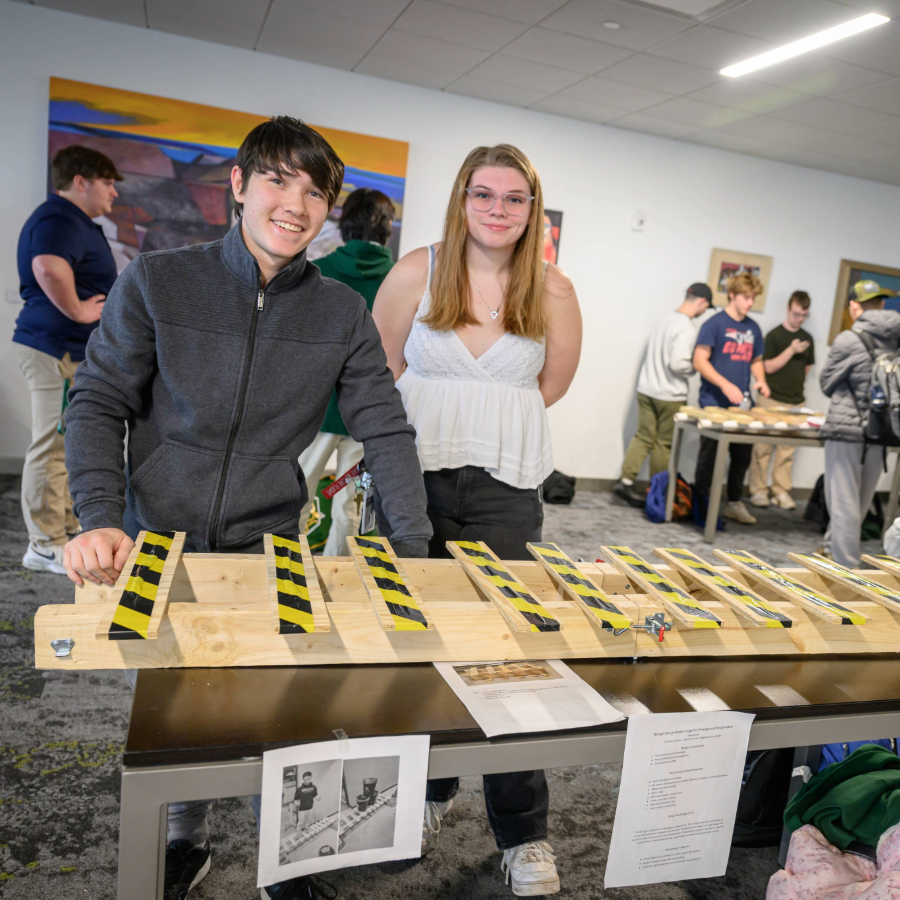
Get your cameras ready! The Expo is a prime occasion for pictures with friends and family.
Before winners are declared, top-scoring projects from each category compete in an exciting Pitch-Off exhibition.

Do you want the chance to showcase your hard work with the world? If so, the Expo is for you.
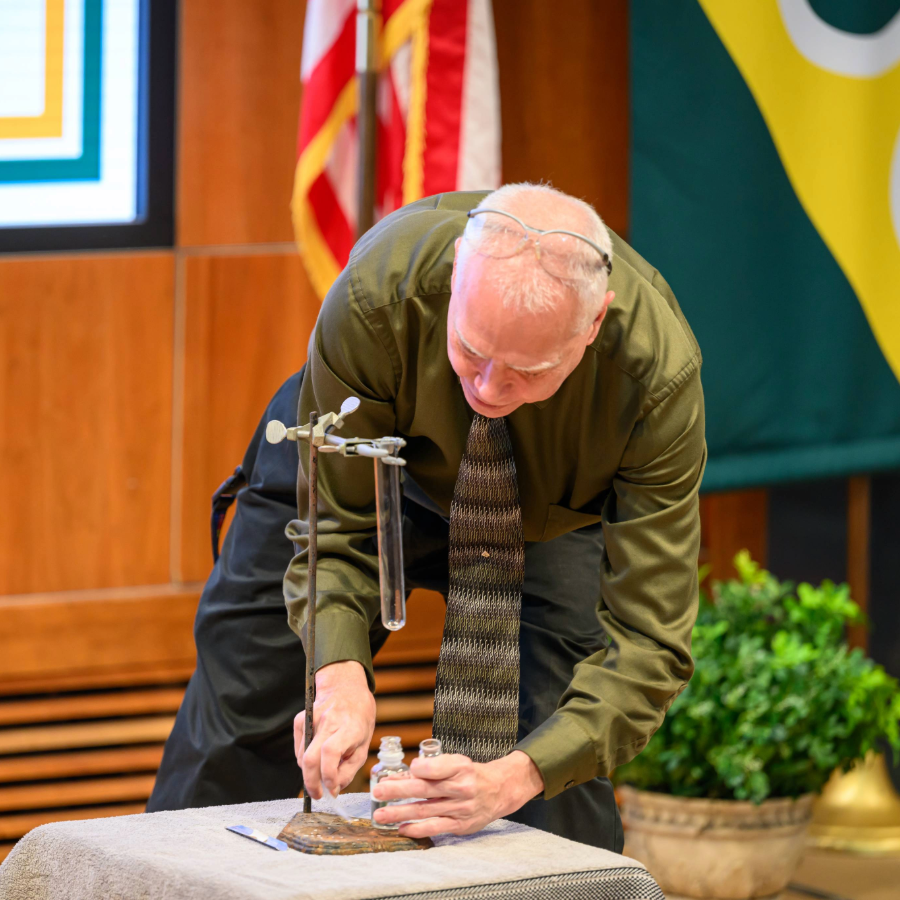
These events aren’t just for students - faculty spotlights are a key part of the day, too!
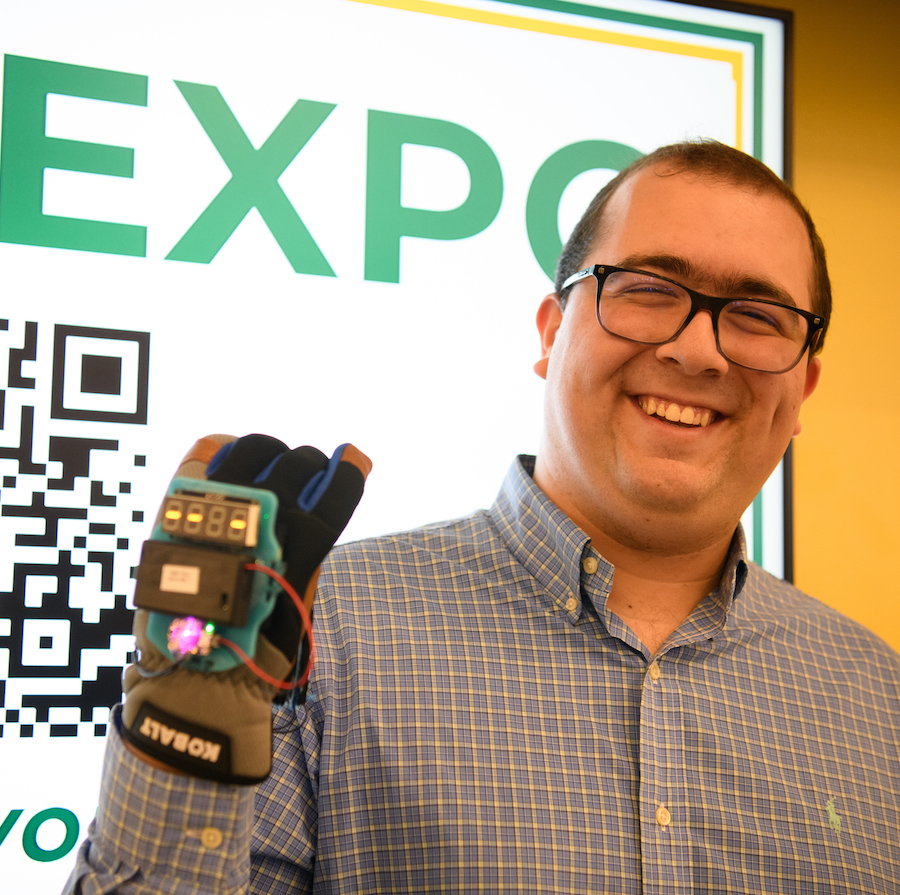
The most innovative projects seen during the Expo are often the ones that are the most cool!
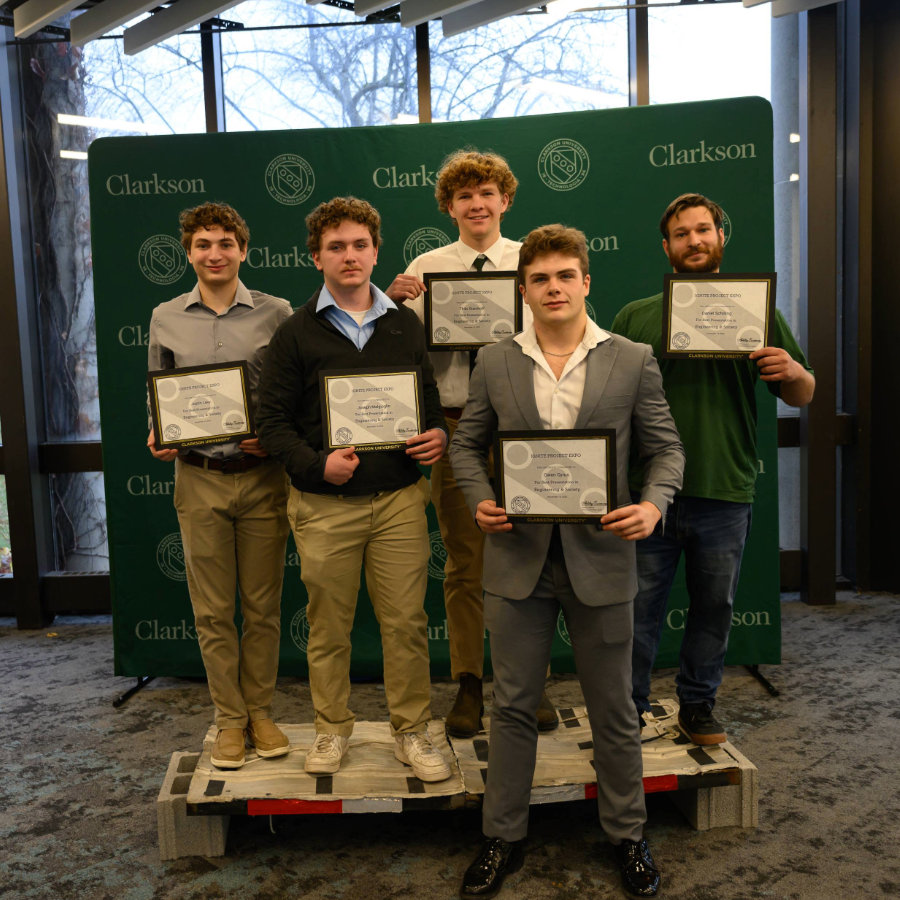
For many freshmen, the Expo is their first time receiving recognition at Clarkson. But it certainly won’t be their last.
Learn More About Ignite
What’s next for Ignite? A bright future filled with innovation, entrepreneurship, and all things creativity. Stay tuned!