
Image
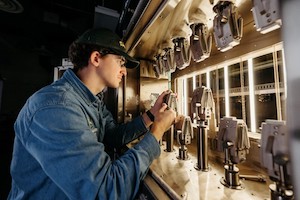
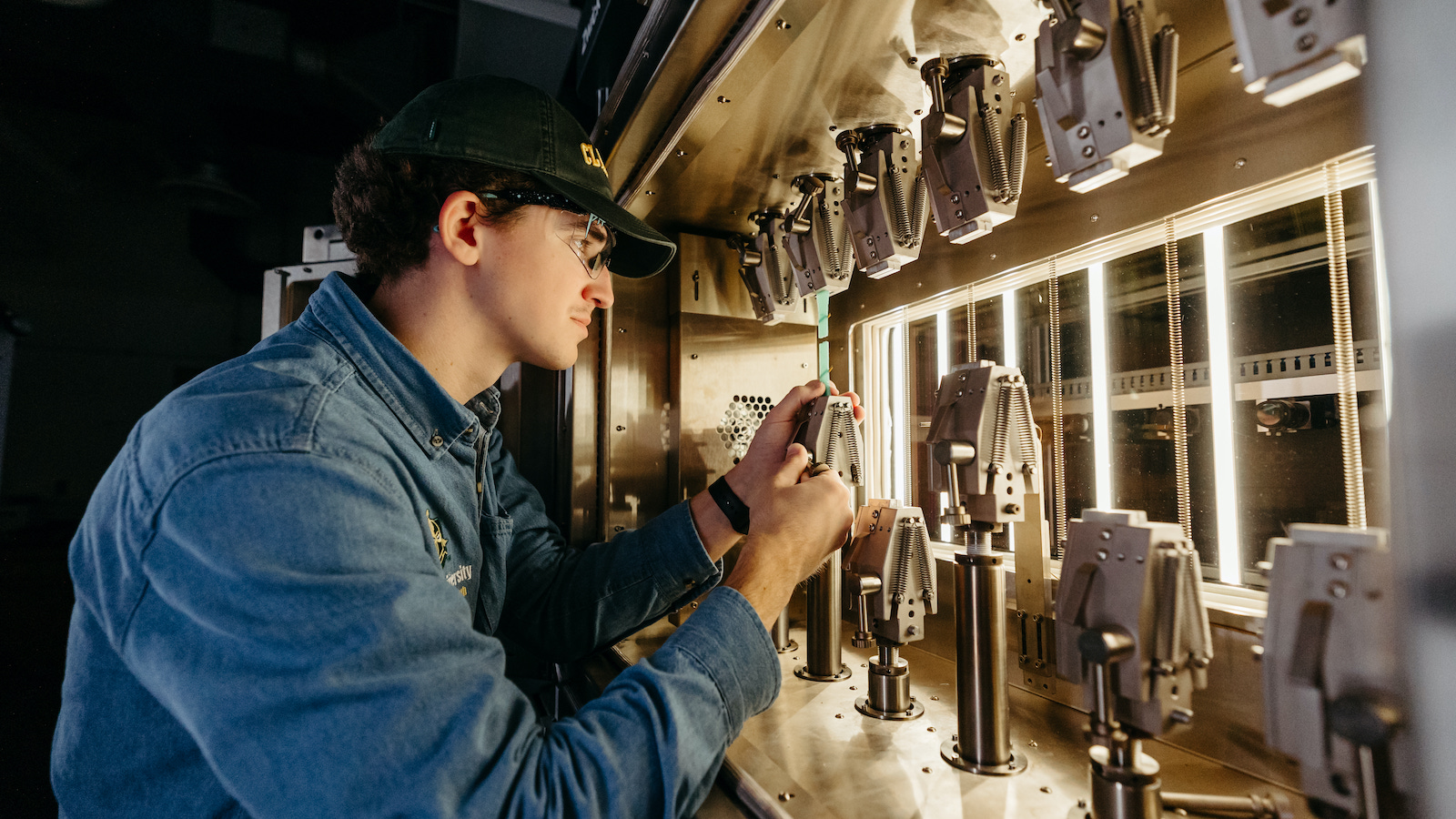
The Aerospace Testing and Life Assessment System (ATLAS) Laboratory is a state-of-the-art, multi-user research facility dedicated to testing materials under extreme environmental conditions, ranging from -150°C to 1200°C. Established through a $1.4 million grant from the Office of Naval Research, ATLAS stands as a unique facility in the country.
Our laboratory specializes in fatigue, creep, and failure tests on metallic, composite, and polymer materials. We are particularly focused on predicting the strength and durability of composite bonded joints for a diverse range of applications in the aerospace, maritime, and space industries.
ATLAS is equipped with advanced test frames that provide faculty and students with the opportunity to study and develop material models. This laboratory will serve as a valuable resource for industries such as aerospace, maritime, and space exploration, offering material testing services tailored to extreme environmental conditions.
Clarkson and non-Clarkson users:
Individuals interested in utilizing the equipment at ATLAS should contact the Mechanical and Aerospace Engineering department: email mae@clarkson.edu, 315-268-6586.
The 6-axis Multistation Kappa test frame is utilized for tensile creep tests of plastics ranging from -40℃ to +250℃, with a maximum load capacity of 10 kN. Non-contact videoXtens for independent strain measurements are available at each station. The system is equipped with the long-term test program and the All-In-Suite ZwickRoell software, enabling its application for standard tensile, tear/peel/adhesion tests up to the maximum test speed and travel of the system. Compression and flexure tests can also be conducted, but additional fixturing would be required.
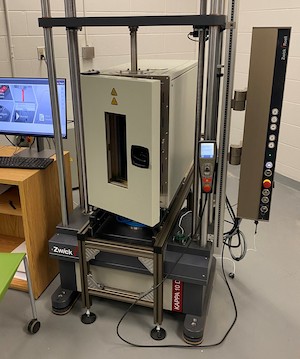
The Kappa DS10 creep test frame, featuring a 10 kN load cell, is equipped with all necessary components, including adapters for flat specimens in accordance with ASTM D 638. The chamber temperature range extends from -150℃ to +250℃. A clip-on extensometer with a 50 mm gauge length is adapted for strain measurements. Long-term test programs are available, as well as All-In-Suite ZwickRoell software, enabling the machine’s utilization for other tensile, compression, and flex tests within the specified speed and travel ranges, provided that alternative tools and fixtures are employed.
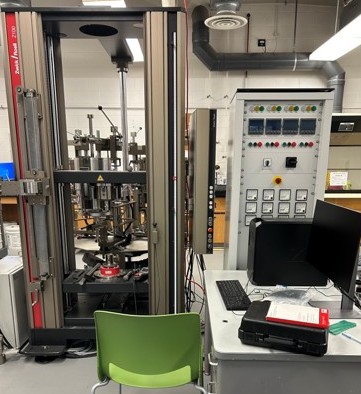
The Allround 100 kN Static Tester features four high-temperature furnaces capable of reaching up to 1250℃. It includes specimen inserts for round-threaded head M12. A LaserXtens cameras system provides a field of view of up to 120mm to capture the deformation of the specimen in real-time. The system can perform ASTM E8 tests at extreme temperatures. It is equipped with All-In-Suite ZwickRoell software. This machine can be used for tensile, flexure, and compression tests within a specified range of speed and travel, with or without the furnaces in place. Additional tests are available with appropriate upgrades.
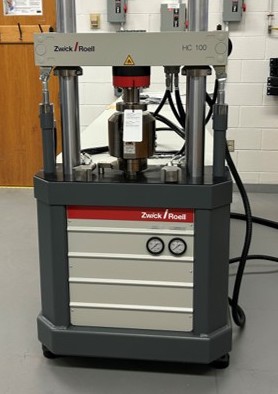
The HC100 Servohydraulic Tester is equipped with a 100kN load cell, featuring a hydraulic body with wedge grips and jaws suitable for both flat and round specimens up to approximately 10mm in diameter. This versatile machine can be equipped with additional tools such as compression and flexure capabilities. Furthermore, it includes TestXpert Research software from ZwickRoell for fatigue testing.